
Embedded RFID Reader Frequency Selection for Different Applications
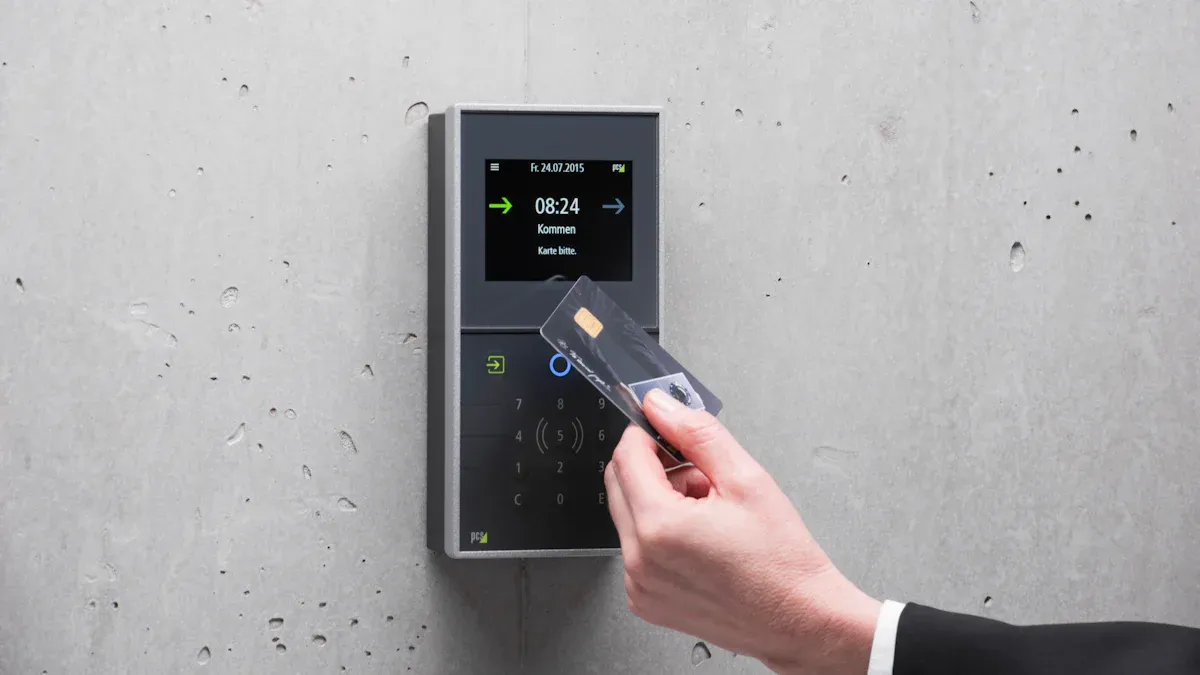
Choosing the right RFID reader frequency is very important. The frequency you pick changes how far your RFID reader can find tags. It also affects how well your system works in different places. RFID systems use different frequency bands. Each band has its own good points. LF and HF frequencies work well in hard environments. UHF can read tags from farther away. But UHF can have more problems with interference. Many places have strict rules for using frequencies. You can see this in the table below:
Region | Frequency Band (MHz) | Regulatory Body |
|---|---|---|
United States | 902 - 928 | FCC |
European Union | 865 - 868 | ETSI |
Now, new RFID technology like 2.4G active readers is changing asset tracking and IoT. Picking the right RFID reader frequency helps you follow the rules. It also makes sure your RFID system does what you need.
Key Takeaways
Pick the right RFID frequency for your read range. LF and HF work well in hard places. UHF and active RFID can read from farther away.
Think about the environment when you pick a frequency. LF and HF work better near metal and water. UHF may not work well in these spots.
Choose an RFID frequency that fits your data and speed needs. UHF and active RFID send data faster for big jobs.
Always follow local rules for RFID frequencies. Each area has its own rules. These rules can change how your system works and if it is legal.
Look at the cost of RFID systems before you buy. LF and HF tags cost less. UHF and active RFID have more features but cost more.
Use metal-mount tags in tough places. This helps stop interference and makes the signal stronger.
Pick a frequency that lets your system grow later. This helps your RFID system get bigger if you need it.
Talk to RFID suppliers about local frequency rules. This helps you follow the rules and keeps your system working well.
Key RFID Reader Frequency Selection Criteria
Read Range Needs
First, think about how far you need to read tags. The distance depends on the frequency, tag type, and antenna design. LF RFID systems have a short read range but work near metal and liquids. HF RFID gives a medium read range and is used for access control or tickets. UHF RFID can read tags from farther away. It is good for supply chains and inventory. Active RFID like 2.4G microwave systems can read even farther. This helps with asset tracking and IoT.
Antenna size changes how much energy a tag gets. This affects how far you can read the tag.
The material under the tag, like metal or plastic, can change the read distance.
Passive tags use the reader’s signal for power. They do not read as far as active tags with batteries.
UHF RFID readers are best for industrial use. They read tags from far away and can read many tags fast. This works well in warehouses, vehicle gates, and asset tracking. HF RFID readers are better for short-range places with lots of interference. These places include production stations or tool cabinets. Picking the right frequency helps your system read tags well and stay reliable.
Environmental Challenges
You must think about where you will use your RFID system. Different frequencies work differently with obstacles and interference. LF and HF RFID work better near metal and water. UHF and microwave frequencies can have trouble in these places. In warehouses or outside, you may face:
Radio frequency interference from Wi-Fi or cordless phones.
Physical obstacles like metal shelves or water tanks can block signals.
Extreme temperatures can hurt tags or change how they work.
High humidity can damage tags, especially passive ones.
If you use RFID on metal, use metal-mount tags. This stops interference and keeps signals strong.
Data and Speed Requirements
Match your frequency to how much data you need and how fast you need it. Different RFID frequencies have different data rates and speeds. Here is a simple table:
RFID Frequency | Frequency Range | Read Range | Data Transfer Rate |
|---|---|---|---|
Low Frequency (LF) | 30 kHz – 300 kHz | Up to 50 cm | Less than 10 kbit/s |
High Frequency (HF) | 3 MHz – 30 MHz | Up to 1 m | Up to 424 kbit/s |
If you need to read lots of tags quickly, use UHF or active RFID. These give faster speed and longer read range. For simple jobs like ID or access control, LF or HF is enough.
When you know your read range, environment, and speed needs, you can pick the best RFID reader frequency for your project.
Regulatory and Regional Rules
You must follow government regulations when you choose an RFID reader frequency. Each country sets rules for how RFID technology works. These rules help prevent interference and keep devices safe. If you ignore these rules, your RFID reader may not work or could break the law.
In the United States, RFID devices can use the UHF bands from 902 to 928 MHz, the 2400.0 to 2483.5 MHz band, and the 5725 to 5850 MHz band. The Federal Communications Commission (FCC) sets these rules. You can use up to 1 watt of power, or 4 watts with a directional antenna.
In the European Union, RFID devices use the 865 to 868 MHz band. The European Telecommunications Standards Institute (ETSI) controls these rules. You must follow special rules like listen times and transmission pauses. The maximum power is 2 watts ERP.
In China, the Standardization Administration of China manages RFID standards. China focuses on frequency allocation and tries to match global standards.
You need to check the rules in your country before you buy an RFID reader. Some regions limit the read range or the power you can use. These limits affect how far your RFID reader can detect tags. If you want to use advanced RFID technology, like 2.4G active readers for IoT, you must make sure your system meets local rules.
Tip: Always ask your RFID supplier about local frequency rules. This helps you avoid problems and keeps your system running smoothly.
Cost and Scalability
Cost is a big factor when you plan an RFID system. The price changes based on the frequency, tag type, and reader type. If you want to use RFID for a large project, you need to think about both the upfront cost and the cost to grow your system.
Here is a table that shows how tag and reader costs change with frequency:
Frequency Band | Tag Type | Cost Range |
|---|---|---|
LF | Passive | A few cents |
HF | Passive | $0.10 to $10 |
UHF | Passive | $10 to $20 |
UHF | Active | $15 to $50 |
UHF | Semi-passive | $5 to $20 |
Reader Type | Cost Range |
|---|---|
Passive Reader | $100 to $5,000 |
Active Reader | Several hundred to several thousand dollars |
If you use LF or HF RFID, you pay less for tags. These systems work well for simple jobs with short read distance. UHF and active RFID cost more, but they give you longer read range and more features. You may need to spend more if you want to track many items or use RFID technology for real-time monitoring.
You should match your budget to your needs. If you want to grow your system, pick a frequency that supports more tags and longer read distance. This helps you scale up without changing your whole setup.
Note: Advanced RFID readers, like 2.4G active models, may cost more at first, but they offer better performance for IoT and asset tracking.
RFID Frequency Ranges Explained
RFID frequency ranges are important for how your system works. Each range is good for different jobs and places. You should know the main RFID frequency bands before you choose one. The table below shows the most common frequency bands and what they are used for:
Frequency Band | Frequency Range | Applications |
|---|---|---|
Low Frequency (LF) | 30 KHz to 300 KHz (125-134 KHz) | Asset tracking, access control, animal tracking, automotive control, healthcare, POS applications |
High Frequency (HF) | 3 MHz to 30 MHz (13.56 MHz) | Smart cards, asset tracking, library books, airline baggage |
Ultra High Frequency (UHF) | 300 MHz to 1,000 MHz (433 MHz, 860-960 MHz) | Inventory management, asset tracking, shipment verification |
LF RFID (125-134 kHz)
Range and Specs
LF RFID uses the 125-134 kHz frequency range. It can read tags only up to 10 centimeters away. LF tags are slow, but they work well near metal and water. The signal does not go far, but it stays strong in hard places.
Typical Applications
LF RFID is used for:
Animal identification and livestock tracking
Access control for secure buildings
Industrial and agricultural tracking
Automotive control systems
LF RFID tags work well where there is a lot of interference. You can use them in factories, farms, or hospitals.
Pros and Cons
Pros:
Works well in tough environments
Not bothered much by metal or water
Lasts a long time
Cons:
Short read range
Slower data transfer
Tags are bigger than other types
HF RFID (13.56 MHz)
Range and Specs
HF RFID uses the 13.56 MHz frequency. It can read tags up to 1 meter away. HF tags send data faster than LF tags. Many HF systems support NFC, so you can use them for contactless payments.
Typical Applications
HF RFID is used for:
Tracking library books
Contactless payment cards
Smart cards for building entry
Airline baggage handling
HF RFID gives a good mix of range and speed. It is good for scanning at medium distances and for fast data needs.
Pros and Cons
Pros:
Sends data faster than LF
Supports NFC for mobile payments
Good for scanning at medium range
Cons:
Read range is shorter than UHF
Metal and liquids can cause problems
Not good for long-range tracking
UHF RFID (433 MHz, 860–960 MHz)
Active vs Passive UHF
UHF RFID has two main types: active and passive. Active UHF tags have a battery and can send signals far. Passive UHF tags use the reader’s energy and do not go as far. The table below shows the difference:
Type of RFID | Range | Power Requirements |
|---|---|---|
Active RFID | Up to 150 meters | Battery-powered transmitter |
Passive RFID | Up to 1.5 meters | Powered by the scanner's signal |
Range and Specs
UHF RFID works in the 433 MHz and 860–960 MHz bands. It can read tags from a few centimeters up to 150 meters, depending on the tag. UHF tags send data quickly and can read many tags at once.
Typical Applications
UHF RFID is used for:
Inventory management in warehouses
Asset tracking in logistics
Shipment verification in supply chains
UHF RFID helps track goods from the factory to the store. It makes supply chains faster and more accurate.
Pros and Cons
Pros:
Can read tags from far away, especially active tags
Sends data quickly
Can read many tags at the same time
Cons:
Metal and liquids can cause problems
Needs careful setup to stop interference
Active tags cost more than passive tags
Tip: If you need to track many items over long distances, UHF RFID is a good choice. For real-time tracking and advanced IoT, you can also try 2.4G active RFID solutions.
NFC (Near Field Communication)
Range and Specs
NFC stands for Near Field Communication. You use this technology every day when you tap your phone or card to pay for something. NFC works at a frequency of 13.56 MHz, which is part of the high frequency group in rfid frequency ranges. The read range is very short, usually less than 10 centimeters. This means you need to hold your device or card close to the reader for it to work. NFC uses radio waves to send data between two devices. You do not need a battery in the tag, so it is easy to use and maintain.
NFC is part of rfid frequency bands that focus on secure and fast data exchange. The short read range helps keep your information safe. You can use NFC in crowded places without worrying about interference from other devices. The frequency makes it perfect for quick transactions and identification.
Typical Applications
You see NFC in many applications around the world. The most common use is mobile payments. You can pay for groceries, snacks, or tickets by tapping your phone or card. NFC also helps you get on buses and trains faster. Many cities use NFC for public transportation. You tap your device on a reader, and the system takes care of your fare.
NFC makes life easier for commuters. You do not need cash or paper tickets. You can manage your fares with mobile apps. Transit agencies save money because they do not need to print tickets or handle coins. NFC also keeps your payments safe by using encryption.
Here are some examples of NFC in public transportation:
London’s Oyster Card System lets you tap in and out with NFC, using your phone or card.
New York’s OMNY System accepts NFC-enabled smartcards and smartphones for quick fare payment.
Seoul’s T-Money Card uses NFC for payments on buses, trains, and taxis.
NFC also helps with access control, smart posters, and sharing information between devices. You can use it to unlock doors, connect to Wi-Fi, or transfer photos.
Pros and Cons
You should know the strengths and weaknesses of NFC before choosing it for your rfid applications.
Pros | Cons |
|---|---|
Fast and secure transactions | Very short read range |
Easy to use and maintain | Limited to close contact |
Works well in crowded areas | Not for long-range tracking |
Saves time for commuters | Lower data transfer rate than some rfid technology |
Tip: NFC is best for quick, secure exchanges where you need to control who can access the system. You should use it for payments, ticketing, and access control. If you need to track items over long distances, look at other rfid frequency ranges.
NFC gives you speed, safety, and convenience. The frequency and short read range make it ideal for busy places like stores and train stations. You can trust NFC for secure transactions and easy access.
2.4G Active RFID Reader Frequency
What is 2.4G Active RFID?
2.4G active RFID is different from other RFID types. It uses the 2.4 gigahertz frequency band, which is higher than LF, HF, or UHF. The tags have their own battery, so they are called "active." These tags send signals to the reader by themselves. This gives you a longer read range and more reliable data. You can use 2.4G active RFID to track people, vehicles, or items in real time. This frequency works well in busy places, big buildings, or outside. You get fast updates and know where things are. This helps you manage your assets better.
Key Features and Specs
2.4G active RFID has many important features. It has strong anti-jamming, so it works even with other devices nearby. The read range can be changed and goes up to 80 meters. This is much farther than most passive RFID systems. You can track expensive items over large areas without losing the signal. It supports anti-collision, so you can read many tags at once. This is good for inventory or tracking lots of items quickly.
The tags have built-in batteries that last for years. You do not need to change them often, which saves time and money. These tags work well in hot or wet places. You can use them in factories, warehouses, or outside. The readers, like SHENZHEN MARKTRACE CO.,LTD. MR7901P, MR7902, and MR7903, work very well and are easy to use. The MR7901P can read from far away and gives real-time data. The MR7902 has wireless and Bluetooth, so it is good for mobile use. The MR7903 is great for big buildings and is simple to set up.
Tip: If you need to track things in hard places or over long distances, 2.4G active RFID gives you the reliability and flexibility you want.
Applications in IoT and Asset Tracking
You can use 2.4G active RFID in many ways. It is great for tracking assets in factories, warehouses, and schools. You can see where your items are in real time. This makes it easier to manage inventory and lowers mistakes. Security gets better because you can watch people and vehicles as they move.
Here are some common uses for SHENZHEN MARKTRACE CO.,LTD. MR7901P, MR7902, and MR7903 readers:
Real-time tracking of assets in big places.
Inventory management for fast-moving goods.
Better security in schools, offices, and factories.
The MR7901P reads tags from far away and gives quick data.
These readers help you save time and make fewer mistakes in busy places.
The MR7903 works well in large buildings or factories and is easy to set up.
You can connect these readers to your IoT systems. This lets you collect data automatically and make better choices. You get more control over your assets and improve your business.
Advantages and Limitations
When you use 2.4G active RFID, you get many good things. This frequency lets you track things from far away. You can watch assets, people, or cars over big spaces. You get updates right away, so you always know where your stuff is. The tags have batteries and send signals by themselves. This makes the system work well, even in busy places.
Here are some main advantages of using 2.4G active RFID:
Extended Read Range: You can track items up to 80 meters away. This is much farther than most passive RFID systems.
Real-Time Tracking: You get instant data about where your assets are. This helps you make fast choices and keeps things safe.
Strong Anti-Interference: The frequency works well near other wireless devices. You do not need to worry about losing the signal.
High Tag Capacity: You can read many tags at the same time. This is helpful for counting inventory and tracking lots of things.
Flexible Integration: You can connect the system to IoT platforms. This lets you collect data and use it for smart jobs.
Note: SHENZHEN MARKTRACE CO.,LTD. MR7901P, MR7902, and MR7903 readers use advanced rfid technology. They give you strong performance in many places.
There are also some limits to 2.4G active RFID. The tags need batteries, so you must check them sometimes. Some places have rules about this frequency, so always check before you set up your system. Active tags cost more than passive tags, but you get better tracking and a longer read range.
Here is a simple table to help you compare:
Feature | 2.4G Active RFID | Passive RFID |
|---|---|---|
Frequency | 2.4 GHz | LF/HF/UHF |
Read Range | Up to 80 meters | Up to 1.5 meters |
Tracking Type | Real-time | Limited |
Tag Power | Battery | No battery |
Tag Cost | Higher | Lower |
Data Speed | Fast | Varies |
You get many benefits with 2.4G active RFID, especially for tracking in big or tricky places. Pick this frequency if you need real-time data and want to connect to IoT. Always think about what you need and check the rules in your area before you choose.
How to Choose the Right RFID Module
Matching Reader and Tag Frequency
You must use the same frequency for your rfid reader and tags. If the frequencies do not match, they cannot talk to each other. Always check the frequency before you buy anything. This helps your system work right.
Make sure the reader and tag have the same frequency.
Think about where you will use the system. If there is a lot of interference, pick a frequency that works better there.
Use industry standards like EPCglobal Gen2 or ISO/IEC 18000. These help your rfid system work with other systems.
Look at how the antenna is made and where you put it. Good placement helps you read more tags.
Pick readers that can read many tags at once. This stops missed reads.
A fixed rfid reader is good if you need to scan lots of tags in one place. If you need to move around, use a handheld rfid reader.
Tip: Always look at the product details to check the frequency. This saves you time and money.
Assessing Application Needs
Think about what you want your rfid system to do. Different jobs need different frequencies and modules. Here are some things to think about:
Frequency: Pick the right one for your job. Use UHF for tracking goods in a warehouse. Use HF for doors and access control.
Read range: Make sure the module can read tags from the distance you need. If you need to scan from far away, pick a module with a long read range.
System compatibility: Check if the module works with your other systems. Look for common interfaces like Wiegand or TCP/IP.
Installation environment: Think about where you will use the module. If it is hot or dusty, pick a strong module.
Cost: Plan for all costs, not just the module price. Include setup and maintenance in your budget.
Match what you need with what each product offers. This helps your system work well and last longer.
Considering Environment and Regulations
You need to think about the place and the rules before you set up your rfid system. The table below shows what to check:
Factor | Description |
|---|---|
Tags may face heat, cold, or water. This can change how they work. | |
Temperature & Pressure | Make sure tags can handle heat or pressure in factories. |
Moisture & Chemicals | Use special tags if there is water or chemicals. This keeps them safe. |
Vibration & Flexing | Pick strong tags for places with lots of movement. |
Compliance with Standards | Use tags and readers that follow global standards for better compatibility. |
ISO Standards | These help your system work in many countries. |
EPC Gen 2 (ISO 18000-6C) | This is a common UHF standard for many industries. |
FCC & ETSI Regulations | Check local rules for allowed frequencies and power levels. |
Mandates from Organizations | Some companies or groups may need special tags for compliance. |
Retail Requirements | Stores may need certain tags for inventory tracking. |
Government & Military Mandates | Some jobs need tags for asset management by law. |
Healthcare Compliance | Hospitals need special tags for safety and tracking. |
Always check the rules in your country. Some places have strict laws about which frequency you can use. Following these rules keeps your system safe and legal.
Note: If you want to use your rfid system in many countries, pick modules that follow open standards. This makes your system easier to use everywhere.
Evaluating Cost and Integration
When you want to choose the right rfid module, you need to look at both cost and how well the system fits with your current setup. Cost is more than just the price tag. You should think about the total cost of ownership. This includes the price of readers, tags, software, installation, and future upgrades. You also need to check how easy it is to connect the new rfid system to your existing tools and processes.
Here are some steps to help you evaluate cost and integration:
Calculate Total Cost
Start by listing all the costs. You pay for rfid readers, tags, antennas, and cables. You also pay for software and setup. Some systems need special training or support. Make sure you include maintenance and possible upgrades. If you plan to expand, check how much it will cost to add more readers or tags.Compare Frequency Options
Different frequency bands have different costs. LF and HF tags usually cost less. UHF and 2.4G active tags cost more but give you longer read range and more features. You need to match the frequency to your needs and budget. If you want to use rfid technology for real-time tracking, you may need to invest in advanced readers like those from SHENZHEN MARKTRACE CO.,LTD.Check Integration with Existing Systems
You should see if the rfid module works with your current software and hardware. Some readers use standard interfaces like USB, Ethernet, or Bluetooth. Others need special connections. Make sure the frequency you pick does not cause problems with other wireless devices in your area. Good integration saves you time and money.Plan for Future Growth
Think about how your needs might change. If you want to track more items or add new locations, pick a system that can grow with you. Some rfid modules let you add more readers or tags easily. Others may need a full upgrade. Choose a frequency that supports your long-term goals.Ask About Support and Warranty
Reliable support helps you fix problems fast. Check if the vendor offers training, technical help, and warranty. This can lower your costs over time and keep your rfid system running smoothly.
Tip: You can use a simple table to compare costs and integration features for different frequency bands.
Frequency Band | Tag Cost | Reader Cost | Integration Level | Scalability | Maintenance Needs |
|---|---|---|---|---|---|
LF | Low | Low-Medium | Easy | Limited | Low |
HF | Low-Medium | Medium | Easy | Medium | Low |
UHF | Medium-High | Medium-High | Moderate | High | Medium |
2.4G Active | High | High | Advanced | Very High | Medium |
You should always balance cost with the features you need. A cheaper system may not give you the read range or speed you want. Advanced frequency bands like 2.4G active rfid cost more but offer better performance for asset tracking and IoT.
If your project is large or complex, talk to vendors or rfid experts. They can help you pick the best frequency and module for your needs. This makes sure you get a system that works well and fits your budget.
RFID Reader Applications Overview
Asset and Inventory Tracking
An rfid reader helps you keep track of items easily. It can show when things move in or out of a building. This helps stop theft and loss. Most asset tracking uses passive tags. These tags are cheap and last a long time. They do not need batteries. The reader gives them power. UHF frequency is used a lot for inventory. It lets you read tags from several meters away. You can scan many items at once, even if you cannot see every tag.
Inventory checks and stock updates can be automatic. This means less work for people and fewer mistakes. You can plan better with good data. Some rfid systems send alerts if someone tampers with a tag or if an asset leaves a safe area. You can use low frequency, high frequency, or UHF for tracking. UHF is good for big warehouses. Low and high frequency work well in smaller spaces.
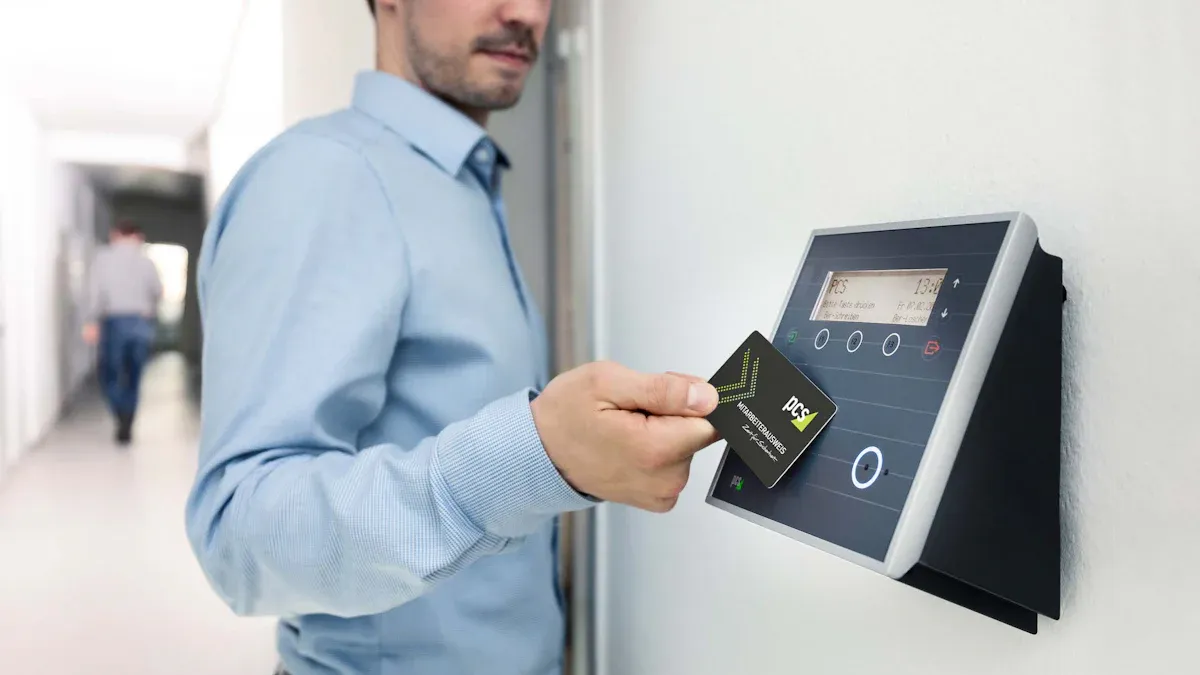
Access Control and Security
Rfid helps keep buildings and rooms safe. It is used for access control and attendance. Different frequencies work best for different jobs. The table below shows which frequency fits each use:
Frequency Band | Typical Applications | Read Range |
|---|---|---|
LF (125-134 kHz) | Access to buildings, rooms, cabinets | Near contact to a few centimeters |
HF (3-30 MHz) | Access to buildings, rooms, suites | Several inches |
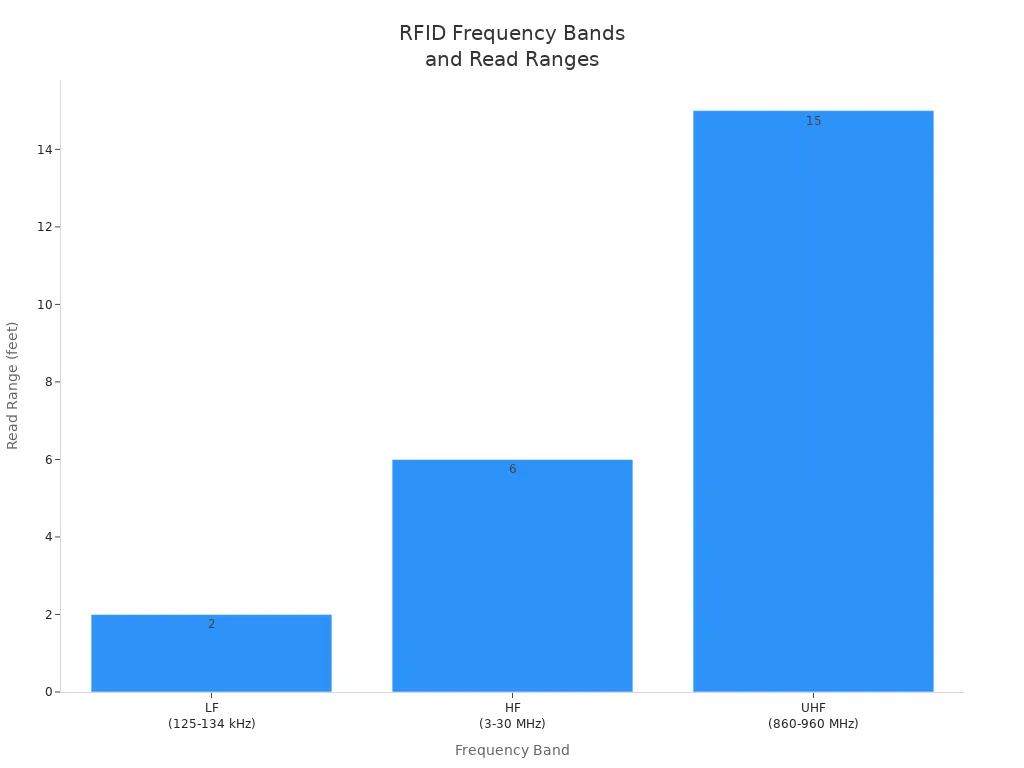
UHF (860-960 MHz) | Access to secure parking lots, roadways | Up to 30 feet (average 5-15 feet) |
Low frequency is good for doors and cabinets that need close security. High frequency works for building entry and office suites. UHF is best for parking lots or gates where you want to open barriers from far away. Rfid can also track attendance in schools or offices. This helps you know who is there and keeps your property safe.
Logistics and Supply Chain
Rfid makes moving goods easier and faster. It helps you track items from the warehouse to the store. You get better inventory accuracy and can see where things are. The frequency you pick changes how far and fast you can read tags. Low frequency is for short range. High frequency is for medium range. UHF is for long range and is used by most companies.
You can always know where your shipments are.
You can update stock levels without doing it by hand.
You make fewer mistakes and save time.
Rfid also helps in stores to stop theft. This keeps your products safe and your business running well.
Healthcare and Pharmaceuticals
You can use rfid technology to make hospitals and drug companies safer. When you put rfid tags on medicine, each package gets its own special code. This code lets you follow the medicine from the factory to the patient. It helps stop fake drugs from getting into the system. Hospitals use rfid to make sure patients get the right medicine. You can also keep track of medical tools and devices. This makes it easier to manage hospital equipment.
The U.S. Food and Drug Administration has strict rules for tracking medicine. RFID helps you follow these rules by giving real-time data and reports. You can always see where each drug is. If there is a recall, you can quickly find the right products. RFID also helps with the FDA’s Unique Device Identifier system. This makes sure you know where every device or drug comes from and if it is safe.
You can use different frequency bands for these jobs. Low frequency is good for tracking tools in tough places. High frequency works well for patient wristbands and medicine. UHF and 2.4G active rfid are best for big hospitals or warehouses because they read from farther away.
Tip: Using rfid in healthcare keeps patients safe and helps you follow all the rules.
Payment and Identification
You use rfid for payments and ID almost every day. When you tap your card or phone to pay, you use high frequency rfid. This makes paying fast and safe. You do not have to swipe or insert your card. Many stores and buses use rfid for quick payments. You can also use rfid for ID cards, building entry, and event tickets.
Here are some ways rfid is used for payment and identification:
Hospitals use rfid for patient ID and to control who enters rooms.
Stores use rfid for fast, touch-free payments.
Theme parks use rfid for tickets, rides, and buying food.
Buses and trains use rfid for fares and quick boarding.
You can pick the best frequency for your needs. High frequency is best for short-range payments and ID cards. UHF is good for things like parking gates that need longer range. Each frequency has its own benefits for different jobs.
IoT and Real-Time Monitoring
You can use advanced rfid frequencies, like 2.4G, for IoT and real-time monitoring. These systems help you track things, people, and equipment over big areas. You get instant updates about location, temperature, or movement. This helps you manage your things better and make smart choices.
The table below shows how 2.4G rfid tags work in different jobs:
Tag Model | Key Features | Applications |
|---|---|---|
SK2106A | Real-time current data, long battery life, tamper alarm | Smart equipment, lab tools, medical devices |
SK2108A | 400m range, waterproof, temperature and motion data | Smart farming, livestock tracking, traceability |
You can use 2.4G active rfid readers, like the MR7901P, MR7902, and MR7903 from SHENZHEN MARKTRACE CO.,LTD., for these jobs. These readers work well and can read tags from far away. You can connect them to your IoT system for better asset management and real-time control.
Note: Picking the right frequency helps you get the best results for your IoT and monitoring applications.
RFID Frequency Comparison Table
LF vs HF vs UHF vs NFC vs 2.4G Active
You may wonder how to choose the best rfid frequency for your needs. Each type of rfid frequency has its own strengths. You should look at the main features, read range, speed, and best uses for each one. The table below helps you compare the most common rfid frequency ranges.
Feature | LF (125-134 kHz) | HF (13.56 MHz) | UHF (860-960 MHz) | NFC (13.56 MHz) | 2.4G Active (2.4 GHz) |
|---|---|---|---|---|---|
Read Range | Up to 10 cm | Up to 1 m | Up to 15 m (passive) | Up to 10 cm | Up to 80 m |
Data Speed | Low | Medium | High | Medium | High |
Tag Type | Passive | Passive | Passive/Active | Passive | Active |
Power Source | Reader | Reader | Reader/Battery | Reader | Battery |
Best Environments | Metal, Water | General | Open, Dry Areas | Crowded, Secure | Large, Complex Areas |
Main Applications | Animal ID, Access | Library, Tickets | Inventory, Logistics | Payments, Access | IoT, Asset Tracking |
Cost | Low | Low-Medium | Medium-High | Low-Medium | High |
Tip: Use this table to match your project with the right rfid frequency. Think about where you will use the system and how far you need to read tags.
You can see that each rfid frequency band fits different jobs. LF works well in tough places with metal or water. HF is good for smart cards and tickets. UHF gives you long range and fast reads, which helps in warehouses. NFC is best for short, secure exchanges like payments. 2.4G active rfid stands out for real-time tracking in large spaces. This is why you see it in advanced IoT and asset tracking solutions.
When you compare rfid frequency ranges, you should also think about cost and how easy it is to add more tags or readers. Some systems, like 2.4G active, cost more but give you better tracking and more features. Others, like LF or HF, are cheaper and work well for simple jobs.
LF: Good for animal tracking and access control.
HF: Great for library books and smart cards.
UHF: Best for inventory and supply chain.
NFC: Perfect for payments and quick ID.
2.4G Active: Ideal for IoT and real-time asset tracking.
You should always pick the rfid frequency that matches your needs, your environment, and your budget. This helps your rfid system work well and last a long time.
Regulatory and Environmental Factors
Global RFID Standards
You need to know about global standards before you set up an rfid system. These standards help your devices work together, even if they come from different companies. The most common standards include ISO/IEC 18000 and EPCglobal Gen2. These standards tell you how rfid tags and readers should talk to each other. They also set rules for how much power you can use and which frequency bands are safe. When you follow these standards, you make sure your rfid system works well in many places.
Tip: Always check if your rfid equipment meets global standards. This helps you avoid problems when you use your system in different countries.
Country-Specific Frequency Rules
Every country has its own rules for rfid frequency bands. These rules help stop interference and keep wireless systems safe. You must follow government regulations when you pick a frequency for your rfid system. For example, the United States uses 902-928 MHz for UHF rfid, while the European Union uses 865-868 MHz. Some countries allow 2.4 GHz for active rfid, but others may have limits. If you do not follow the local rules, your system might not work or could even break the law.
Here is a simple table to show some common rfid frequency bands:
Region | UHF Frequency Band | 2.4G Active Allowed? |
|---|---|---|
United States | 902-928 MHz | Yes |
European Union | 865-868 MHz | Yes (with limits) |
China | 920-925 MHz | Yes |
You should always check the rules in your country before you buy rfid equipment.
Interference and Material Impact
The place where you use your rfid system can change how well it works. Some materials, like metal or water, can block or weaken the signal. The frequency you choose affects how much these things matter. Low frequency rfid works better near metal and water. High frequency and UHF rfid can have more trouble with these materials. If you use 2.4G active rfid, you get a longer read range, but you still need to think about walls and other obstacles.
You may also face interference from other wireless devices. Wi-Fi, Bluetooth, and even microwaves use similar frequency bands. Too many signals in one place can make your rfid system slow or cause missed reads.
Use special tags for metal or wet places.
Place your readers away from other wireless devices.
Test your system in the real environment before you finish your setup.
Note: Picking the right frequency and testing your rfid system in your own space helps you avoid problems with interference and materials.
You should always match the RFID reader frequency to your needs. Think about your application, the environment, and local rules. Use these steps to guide your choice:
Check the frequency that fits your project.
Pick RFID modules that work well in your space.
Follow all regulations for your area.
For advanced tracking, try 2.4G active RFID. If you have questions, talk to an RFID expert for the best advice.
FAQ
What is the main difference between active and passive RFID?
You will find that active RFID tags use a battery to send signals. Passive tags get power from the reader. Active tags give you a longer read range and work well for real-time tracking.
How does frequency affect RFID performance?
Frequency changes how far you can read tags and how well the system works near metal or water. Lower frequency bands work better in tough places. Higher frequency bands give you longer read range and faster data.
Which RFID frequency should I use for asset tracking?
You should use UHF or 2.4G active frequency for asset tracking. These options give you a long read range and let you track many items at once. They work well in warehouses and large spaces.
Can I use one RFID reader for all tag types?
You cannot use one RFID reader for all tag types. Each reader works with a specific frequency. You must match the reader and tag frequency for your system to work.
Are there rules for using RFID frequencies in different countries?
Yes, each country has its own rules for RFID frequency use. You need to check local laws before you set up your system. This keeps your RFID system legal and safe.
What is the best RFID frequency for payment systems?
You should use high frequency, like 13.56 MHz, for payment systems. This frequency supports fast and secure transactions. It works well for contactless cards and mobile payments.
How do I avoid interference with my RFID system?
You can avoid interference by picking the right frequency for your space. Test your system before you finish setup. Keep readers away from other wireless devices like Wi-Fi routers.
- Next>:Custom Embedded RFID Readers: When Standard Modules Are Not Enough

 2026-05-13
 Blogs
Blogs