
Choosing Industrial RFID Readers for Automated Warehouse Solutions
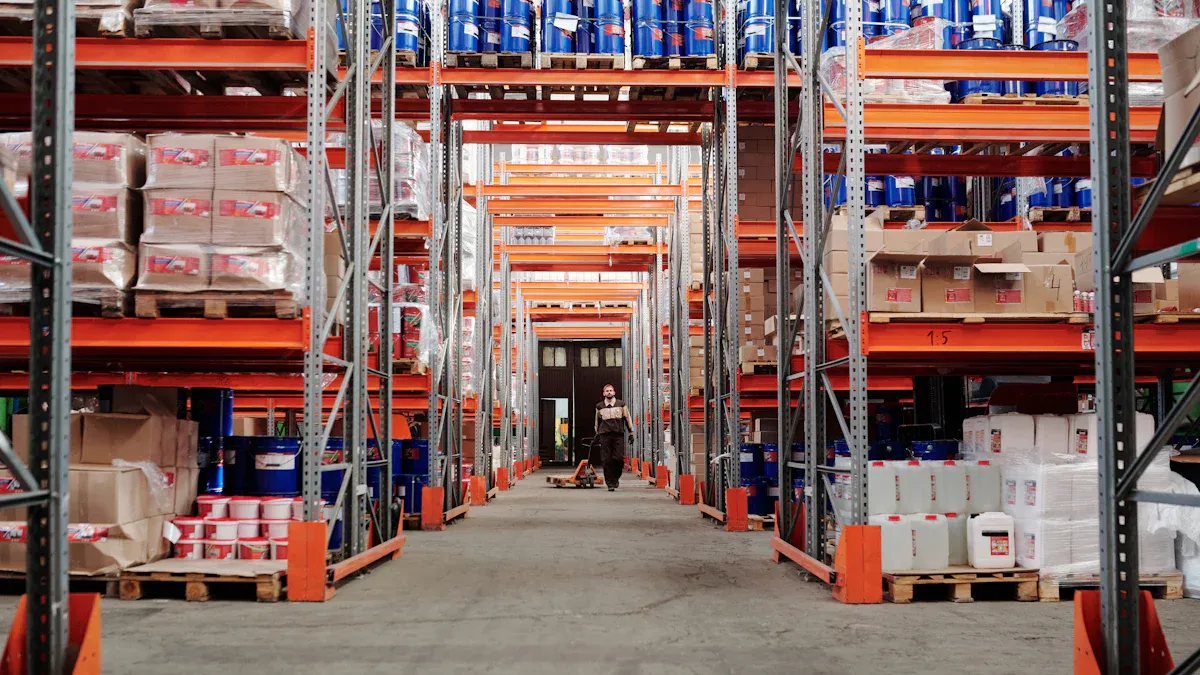
You want your warehouse to work better. RFID helps you do this by making jobs automatic and cutting down on manual tasks. When picking industrial rfid readers, look for features that match your warehouse. Range, durability, and simple setup are important. These tools help you find items, make automation faster, and get more correct results. Choosing carefully helps you use rfid in the best way for your warehouse.
Key Takeaways
Know what your warehouse needs before you pick RFID readers. Every warehouse has its own problems that technology can help fix.
Pick RFID readers by looking at how far they can read. Make sure the reader works well for your tasks so it does a good job.
Think about how tough the readers are and their ratings for the environment. Choose readers that can handle dust, water, and hot or cold weather so they last longer.
Plan where you put RFID readers with care. Good placement stops problems and makes your data more correct in the warehouse.
Make sure the readers work with your Warehouse Management System. This helps you get updates right away and manage inventory better.
Find RFID readers that support more than one protocol. This lets you change things later without buying new readers.
Check the help and service you get from the company. Good support keeps your RFID system working well for a long time.
Look at both the starting price and the cost over time. Knowing all the costs helps you choose the best way to spend money on RFID.
Warehouse Requirements for RFID
Before picking an RFID reader, you should know what your warehouse needs. Each warehouse is different and has its own problems. If you choose the right RFID technology, your warehouse works better. You can make things faster and have fewer mistakes.
Operational Goals
Inventory Tracking
You want to always know where your items are. An RFID tracking system scans tags on products as they move. You get updates right away about your inventory. This helps you find things fast and not run out of stock. Your inventory is more correct because you do not count by hand.
Asset Management
RFID helps you keep track of tools and equipment. You can see when someone moves something or when it leaves an area. This stops things from getting lost and helps you use your stuff well. Asset tracking also helps you plan repairs and stop work delays.
Process Automation
You want your warehouse to work with less manual labor. RFID lets you automate jobs like getting shipments, sorting packages, and sending orders. You can set up alerts when inventory is low or when items reach a spot. This makes your work go faster and helps warehouse automation.
Environmental Challenges
Temperature and Dust
Warehouses can be tough places. Hot or cold weather, dust, and wet air can hurt RFID readers. You need readers that can handle these hard conditions. The table below shows how different things can change RFID performance:
Environmental Challenge | Impact on RFID Performance |
|---|---|
Temperature Fluctuations | Can make normal RFID parts break down over time. |
Dust | Needs strong RFID readers to handle weather problems. |
Humidity | Can hurt how long RFID tags and readers last. |
UV Exposure | Can damage RFID parts over time. |
You should pick readers made for rough places. This keeps your RFID tracking system working well.
Interference and Layout
How you set up your warehouse changes how RFID works. You might have problems like tag collisions and reader-to-reader interference. These problems can make you lose data or miss scans. Here are some things to think about:
Where you put RFID readers changes how well they talk to tags because of tag collisions and reader-to-reader interference.
Tag collisions happen when many tags talk to one reader at the same time, so the reader cannot hear them all.
Reader-to-reader interference happens when two readers’ ranges cross and mess up signals, which can cause data loss.
You need good plans to stop these problems and make sure RFID works well in your warehouse.
You should plan where to put your readers carefully. This helps you get the best results from your RFID and makes your warehouse work better. When you fix these problems, your tracking and inventory systems work best.
Key Features of Industrial RFID Readers
Read Range and Accuracy
You need to match the read range of your RFID system to your warehouse tasks. The right range helps you track items, control access, and automate processes. Most industrial rfid readers in warehouses can read tags from 4 to 20 feet (1.2 to 6 meters). This range works well for scanning pallets with UHF passive tags as they move through racking aisles.
Long-Range Readers
Long-range rfid readers help you cover wide areas. You can use them at loading docks, entry points, or large storage zones. The MR6211E from SHENZHEN MARKTRACE CO.,LTD. is a good example. This reader uses advanced uhf rfid technology to scan tags from a distance. You get stable performance and reliable data, even when items move fast or are stacked high. Long-range rfid readers make it easy to automate check-in and check-out of goods.
Middle-Range Readers
Middle-range rfid readers give you a balance between distance and accuracy. You can use them in aisles, sorting areas, or workstations. The MR6221E model fits these needs. It uses uhf rfid technology to scan items at medium distances. You get accurate reads without picking up too many tags at once. This helps you manage inventory and track assets in busy parts of your warehouse.
Short-Range Readers
Short-range rfid readers work best for close-up scanning. You can use them at packing stations, quality checks, or tool cribs. The MR6261E is a short-range reader that gives you fast and precise data capture. You can scan items one by one and avoid mistakes. Short-range rfid readers help you control small, valuable items and make sure nothing gets missed.
Tip: Choose the right reader for each zone in your warehouse. This helps you get the best results from your rfid system.
You also need to think about accuracy. Some readers can scan over 1,000 tags per second. The table below shows how different models compare in speed and sensitivity:
Model | Max Read Rate | Max Receive Sensitivity | Transmit Power |
|---|---|---|---|
FXR90 | -92 dBm | Up to 36 dBm EIRP | |
FX7500 | Not specified | -82 dBm | Up to 31.5 dBm |
FX9600 | ~1,000 tags/sec | -86 dBm | Up to 33 dBm |
A high read rate and strong sensitivity help you capture more data with fewer errors. This makes your warehouse automation smoother and more reliable.
Durability and Ratings
Warehouses can be tough on equipment. You need industrial rfid readers that can handle dust, water, and shocks. Look for readers with high IP ratings, like IP68. This means the reader is dust-tight and can resist water. Some readers also meet MIL-STD-810 standards. These standards test for shock, vibration, and extreme temperatures.
IP and Environmental Protection
You should check the IP rating before you buy a reader. An IP68 rating means the reader can survive in dusty and wet places. This is important if your warehouse has outdoor areas or harsh conditions.
Shock Resistance
Shock resistance keeps your reader working even if it gets bumped or dropped. Readers that meet MIL-STD-810 standards can handle rough treatment. This helps you avoid downtime and keeps your rfid system running.
Note: Durable readers last longer and save you money on repairs.
Connectivity and Integration
You want your rfid readers to connect easily to your warehouse systems. Good connectivity lets you send data fast and keep your inventory up to date.
Wired and Wireless Options
Some readers use wired connections, like Ethernet, for stable data transfer. Others use wireless options, like Wi-Fi or Bluetooth, for flexible placement. You can choose the type that fits your warehouse layout.
WMS Compatibility
Your reader should work with your Warehouse Management System (WMS). This lets you see real-time data and control your inventory from one place. Many industrial rfid readers support common software and protocols. This makes setup and integration easier.
Tip: Check if the reader supports your WMS before you buy. This saves time and avoids problems later.
Tag and Frequency Support
You need readers that work with the tags you use. Most warehouses use UHF tags for long-range scanning. Some readers also support HF or LF tags for special uses.
UHF, HF, LF Bands
UHF rfid technology gives you the best range for warehouse tasks. HF and LF bands work better for short-range or special environments. Make sure your reader supports the right band for your needs.
Multi-Protocol Support
Some readers can read different types of tags and protocols. This gives you more flexibility as your warehouse grows. You can add new tags or change systems without buying new readers.
Choosing the right industrial rfid readers helps you automate your warehouse, reduce errors, and keep your operations running smoothly.
Tag and Frequency Support
When you choose an RFID reader for your warehouse, you need to think about the types of tags and the radio frequencies they use. This choice affects how well your system works and how flexible it can be as your needs change.
UHF, HF, LF Bands
RFID readers work with different frequency bands. Each band has its own strengths. You should match the band to your warehouse tasks.
UHF (Ultra High Frequency):
UHF is the most common band for warehouse automation. It covers a long range, often up to 20 feet or more. You can use UHF readers to scan many items at once, even if they move quickly on pallets or conveyors. The MR6211E, MR6221E, and MR6261E readers from SHENZHEN MARKTRACE CO.,LTD. all use advanced UHF technology. These models help you track inventory, manage assets, and automate processes with high speed and accuracy.HF (High Frequency):
HF works at a shorter range, usually up to 3 feet. You might use HF for tasks that need more security or for scanning items one by one. HF tags often appear in library books, ID cards, or special equipment.LF (Low Frequency):
LF has the shortest range, often just a few inches. You use LF for tracking animals, tools, or items in areas with lots of metal or water. LF tags work well in tough environments but scan fewer items at a time.
Tip:
UHF is best for most warehouse jobs because it reads fast and covers large areas. Choose HF or LF only if you have special needs.
Here is a quick comparison:
Frequency Band | Typical Range | Best Use Cases | Example Reader Models |
|---|---|---|---|
UHF | Up to 20 ft | Inventory, pallets, automation | MR6211E, MR6221E, MR6261E |
HF | Up to 3 ft | Secure items, ID cards | Specialized HF readers |
LF | Up to 1 ft | Tools, animals, harsh areas | Specialized LF readers |
Multi-Protocol Support
Your warehouse may use different types of RFID tags. Some readers only work with one protocol. Others can read many types. Multi-protocol support gives you more options and helps you grow your system in the future.
Flexibility:
When you use readers that support multiple protocols, you can add new tags or change your process without buying new equipment. This saves you time and money.Future-Proofing:
As your warehouse grows, you may need to track new items or use new tags. Multi-protocol readers let you upgrade your system easily.SHENZHEN MARKTRACE CO.,LTD. Readers:
The MR6211E, MR6221E, and MR6261E models support a wide range of UHF protocols. You can use them with many types of tags, which makes your warehouse system more flexible and ready for change.
Note:
Always check if your RFID reader supports the tags you plan to use. Multi-protocol readers help you avoid problems as your needs change.
When you pick RFID readers with the right tag and frequency support, you make your warehouse smarter and more reliable. You can track more items, reduce errors, and keep your operations running smoothly.
Matching RFID Readers to Warehouse Automation
Fixed vs. Mobile Readers
Use Cases for Fixed
Fixed rfid readers stay in one spot. You put them where items move along set paths. These spots can be loading docks, conveyor belts, or entry points. When you use a fixed reader, you see goods as they come and go. This helps you track inventory without stopping work. Fixed rfid readers connect to warehouse management systems easily. The MR6211E works well for long-range jobs at gates or big storage areas. This reader gives strong results and helps with check-in and check-out.
Use Cases for Mobile
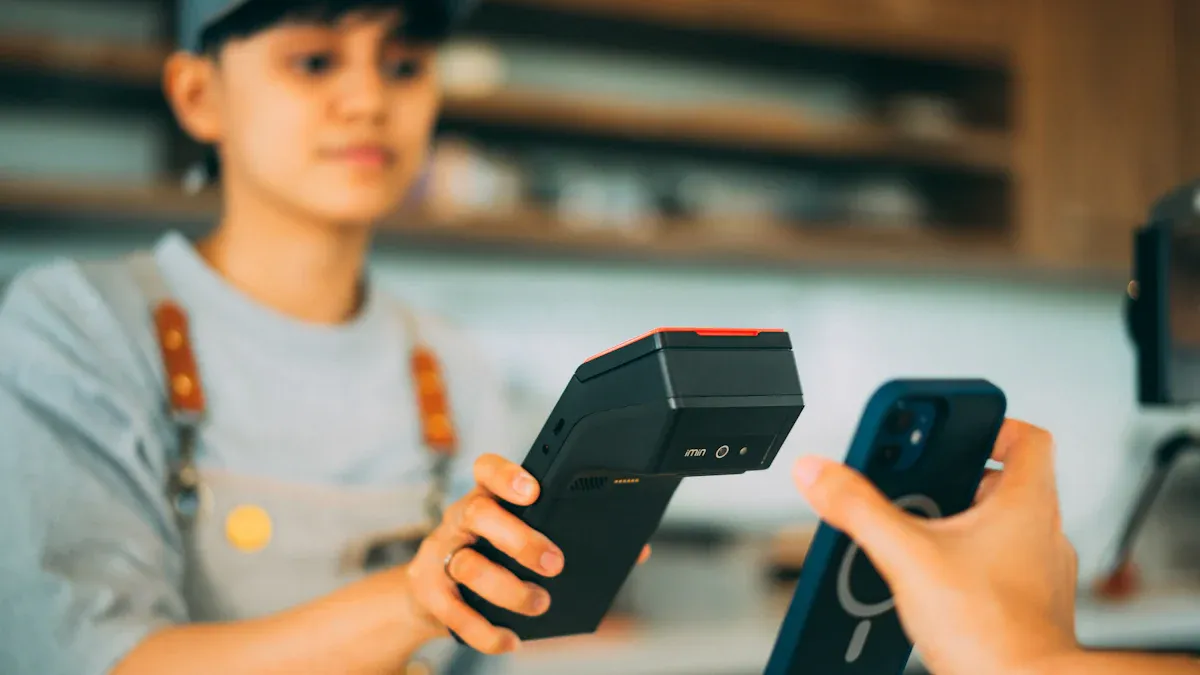
Mobile readers are easy to move around. You can carry them anywhere in your warehouse. They help you scan items on shelves, in bins, or in hard spots. Mobile readers are good for cycle counts or quick checks. You get real-time updates about your inventory and assets. The MR6261E is great for short-range jobs. You can use it at packing stations or for checking quality. Mobile readers help you find lost items and keep your data current.
Hybrid Approaches
Some warehouses use both fixed and mobile readers. This way, you get the benefits of both types. Fixed readers go at main doors, while mobile readers do detailed checks. The MR6221E is good for middle-range jobs like watching aisles or sorting. Using both types gives you better tracking and more flexible rfid solutions.
Zone Coverage and Placement
Entry/Exit Points
You need to watch entry and exit points. Put a reader at each door or dock. This lets you see shipments as they move in and out. The MR6211E covers wide areas at these spots. It helps you make fewer mistakes and work faster. When you know what comes and goes, your warehouse management system stays correct.
Aisle and Shelf Monitoring
Put readers along aisles or near shelves. This helps you track items as workers move them. The MR6221E works well in these places. You get updates on where things are right away. This helps you find items quickly and not lose stock. You also see what is happening all over your warehouse. Watching shelves keeps your warehouse management system working well.
Scalability and Expansion
Modular Design
You want your rfid system to grow with your business. Modular design lets you add antennas or upgrade software as you expand. This makes your rfid solutions ready for the future. You do not have to buy a whole new system when you grow.
Feature | Description |
|---|---|
Scalability | Modular readers can add antennas or software as you grow. |
Future-Proofing
Pick readers that work with new tags and protocols. This keeps your system ready for new technology. The MR6211E, MR6221E, and MR6261E support many UHF protocols. You can add features or connect to new warehouse management systems. This protects your money and keeps your warehouse ready for changes.
Tip: Think about growth when you plan your reader setup. This helps you keep real-time tracking and automation as your needs change.
When you pick the right industrial rfid readers for your warehouse, you see more, work better, and make your warehouse management system stronger. SHENZHEN MARKTRACE CO.,LTD. models fit many jobs and help your business grow.
Evaluating Vendors and ROI in RFID Usage
Software and Support
System Integration
You want your rfid system to fit your warehouse jobs. Good integration means your reader works with your software and devices. This lets you see data right away and manage your inventory. You should ask if the rfid readers work with your warehouse management system. SHENZHEN MARKTRACE CO.,LTD. has readers that match many types of software. This makes your work easier and helps you avoid trouble.
Updates and Upgrades
Your rfid system should always be current. Vendors need to give you updates and upgrades for your software. These updates fix problems and add new things. You want a vendor who helps your system for a long time. This keeps your warehouse safe and ready for new tech. Updates also protect your data and keep it safe.
Maintenance and Warranty
Service Agreements
You need your rfid readers to work well all the time. Service agreements help you get repairs and support when you need them. Ask vendors about their service plans. Good service means your warehouse does not stop for long. SHENZHEN MARKTRACE CO.,LTD. gives strong help to keep your system working.
Replacement Policies
Sometimes, a reader might break. You want a clear plan for getting a new one. This helps you get a new reader quickly. A good plan means your work does not stop for long. You should check if the vendor sends fast replacements and pays for shipping.
Cost and ROI Analysis
Initial vs. Long-Term Costs
You need to think about both starting costs and costs over time. The table below shows what you should expect:
Cost Type | Description |
|---|---|
Initial Costs | Includes the cost of RFID tags, readers, antennas, and installation of RFID infrastructure. |
Long-term Costs | Encompasses maintenance expenses, software updates, and operational costs throughout the system's lifespan. |
Total Cost of Ownership (TCO) | A comprehensive evaluation of all costs associated with the RFID system over time, including initial and ongoing expenses. |
Payback Period
You want to know how long it takes to save money. The payback period tells you when your rfid system starts to help you. A short payback period means you see good results faster. You should ask vendors for examples from other warehouses.
Hidden Costs
Some costs are hard to see at first. You may need extra training, special tags, or more security. You should ask vendors about all possible costs. This helps you plan your money and avoid surprises.
Tip: Pick a vendor with a good name, like SHENZHEN MARKTRACE CO.,LTD. You get strong help, good readers, and better safety for your warehouse.
When you check software, support, repairs, and costs, you make better choices for your warehouse. A good vendor helps you get the most from your rfid system.
You can pick the best industrial RFID readers by matching their features to what your warehouse needs. Think about your automation goals too. Look at the environment in your warehouse. Check how the readers connect to your other systems. Make sure the vendor gives good support. When you talk to vendors, remember these tips:
Description | |
|---|---|
Customized Solutions | Work with vendors to make RFID solutions that fit your products and how you work. |
Compliance with Standards | Make sure the RFID solutions follow rules like GS1 EPC and TDS. |
Comprehensive Approach | Have a full meeting with vendors to talk about every part of using RFID technology. |
Think about what makes your warehouse special. Work with vendors you trust to get the best results.
FAQ
What is an industrial RFID reader?
An industrial RFID reader scans RFID tags in warehouses or factories. You use it to track items, tools, or shipments. It works well in tough places with dust, heat, or cold.
How do I choose the right RFID reader range?
You match the reader range to your warehouse needs. Use long-range readers for large areas. Use short-range readers for close-up tasks like packing or quality checks.
Can RFID readers work in dusty or wet environments?
Yes, you can use readers with high IP ratings like IP68. These readers resist dust and water. They keep working even in harsh warehouse conditions.
Do RFID readers connect to my warehouse software?
Most industrial RFID readers support common warehouse management systems (WMS). You should check if your reader matches your software before you buy.
What types of RFID tags do these readers support?
You can use UHF tags for most warehouse jobs. Some readers also support HF or LF tags. Multi-protocol readers let you use different tag types.
How do I maintain my RFID readers?
You should clean your readers and check for damage often. Follow the vendor’s service plan. Good maintenance keeps your system running and avoids downtime.
What is the ROI for using RFID in my warehouse?
RFID helps you save time and reduce errors. You see faster inventory counts and fewer lost items. Most warehouses see a return on investment within one to two years.
Tip: Always ask your vendor for support and training to get the best results from your RFID system.
- Next>:Fixed RFID Readers vs Handheld RFID Readers: Which Is Better?

 2026-08-24
 Blogs
Blogs