
Fixed RFID Readers vs Handheld RFID Readers: Which Is Better?
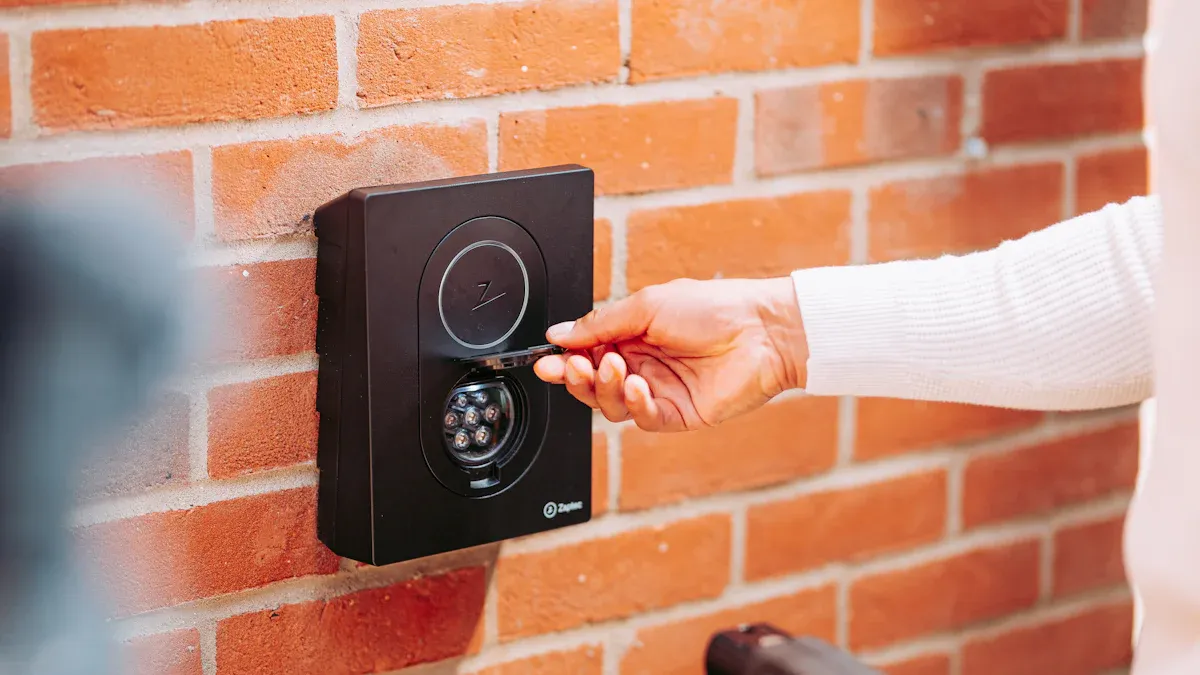
You might ask which RFID reader is best for your business. The answer depends on what you need. Fixed RFID Readers give real-time tracking and strong coverage in busy places. Portable readers let you move around and collect data anywhere. There are big differences in how each type works for you every day. Think about your goals and how you work before you choose.
Key Takeaways
Fixed RFID readers help you track things right away. They work best in busy places like warehouses and factories.
Portable RFID readers let you move around and scan items anywhere. This makes them great for checking inventory and doing jobs on the go.
Think about what your business needs before picking an RFID reader. Fixed readers are good for doing things automatically. Portable readers are better if you need to move a lot.
You can use both types of RFID readers together. This helps you track things better and faster.
Money is important. Fixed RFID readers cost more at first. Portable readers are cheaper and easier to start using.
Look at how big your business is. Big companies get more from fixed readers. Smaller businesses might like portable readers more.
Always try out RFID systems where you work before buying a lot. This makes sure they will work for you.
Teach your team how to use RFID readers the right way. This helps stop mistakes and makes your data better.
Fixed RFID Readers Overview
What Are Fixed RFID Readers
Fixed RFID readers stay in one place and read RFID tags by themselves. You often see them at doors, on conveyor belts, or at warehouse gates. They use RFID technology to find and follow tags on things, people, or cars as they go by. You do not have to move these readers. They work all the time, day and night, and keep collecting data. For example, the MR7901P and MR7903 from SHENZHEN MARKTRACE CO.,LTD. are advanced fixed RFID readers. These models use strong RFID technology to catch tag signals right away and cover big spaces.
You can see fixed RFID readers in many jobs. Here is a table that shows how they are used:
Industry | Application Description |
|---|---|
Inventory Management | Tracks assets as they move, making supply chains faster and more accurate. |
Asset Tracking | Finds valuable items and keeps them available. |
Access Control | Lets only approved people enter secure places using RFID badges or cards. |
Manufacturing | Follows work orders and assets, improving quality and production. |
Retail | Speeds up checkout, stops theft, and shows inventory levels. |
Healthcare | Manages patient records and tracks medicine and equipment. |
Transportation | Tracks packages and helps plan shipping routes. |
Agriculture | Watches livestock and crops, helping with research and farm management. |
Key Features of Fixed RFID Readers
Fixed RFID readers have many important features. They use RFID technology to give strong results and cover big areas. Here are some main features:
Full-Time Automation: Fixed RFID readers work by themselves. They scan tags and update your system right away.
High Efficiency: These readers can read lots of RFID tags at the same time. This is good for busy places like warehouse doors or conveyor belts.
Long Range and Wide Coverage: Fixed RFID readers often have more than one antenna. This helps them cover big spaces and read tags from far away.
Powerful Read Performance: Models like the MR7901P and MR7903 can find tag signals fast and correctly, even when it is crowded.
Here is a table that shows what makes fixed RFID readers special:
Specification | Description |
|---|---|
Installation | Put in one place, like at doors or on production lines. |
Use Cases | Best for automatic tracking in warehouses, factories, and stores. |
Coverage | Uses more antennas for bigger area coverage. |
Example Use Case | Watches goods as they go through a dock door. |
Benefits of Fixed RFID Readers
Fixed RFID readers give you many good things. They help your business work better. Here are some reasons to pick fixed RFID readers:
You get real-time data about your inventory and assets.
You do not need to do as much work by hand because the system updates itself.
You can track many items at once, which saves time.
You can cover big areas with just a few readers.
You can make your supply chain faster and more correct.
Tip: Fixed RFID readers help you stop slowdowns in your warehouse. They let you know where your items are at any time.
In warehouse management, fixed RFID readers can find up to 1300 tags every second. They help you move goods in and out without waiting. You do not need as many workers to count inventory, so you save money. You also get smart gateways that make sure every item is tracked with perfect accuracy. Fixed RFID readers use RFID technology to give you the best results in big operations.
Limitations of Fixed RFID Readers
You need to know that fixed RFID readers have some limits. These devices are good for steady, automatic tracking. But they do not work for every job. The biggest problems come from where you put them. You must think hard about where to install them because they stay in one place. If your business changes or you move things, you might need to move the readers or change your setup.
Here is a table that shows the most common limitations:
Limitation | Description |
|---|---|
Setting up fixed rfid readers requires careful placement and IT system integration. | |
Lack of Mobility | Unlike handheld readers, these devices cannot be moved for scanning in different locations. |
Where you put each reader matters a lot. If you change your layout or add new spaces, you might have more work and spend more money. Fixed RFID readers do not change fast when you need something new. It can be hard to scan things in places the readers do not reach. These readers are best for places where things do not move around much.
Other things to think about are:
You depend on where you put them first
It is hard to change them when things change
Note: If your business moves things a lot or needs to scan in many places, you should think about portable readers.
Best Uses for Fixed RFID Readers
Fixed RFID readers work best for jobs that need constant, automatic tracking. You get the most from them in places where things move along set paths, like doors or conveyor belts. These readers are great in big spaces where you want to track many things at once without extra workers.
You will find fixed RFID readers in many jobs. Here are some examples where they work best:
Automotive: You can track parts and manage inventory in car factories.
Retail: You can watch items in real time and keep stock right.
Manufacturing: You can follow assets and control how things are made.
Healthcare: You can help patients and keep track of equipment.
Agriculture: You can watch animals and crops to manage farms better.
In healthcare, fixed RFID readers help you keep patient records and track medicine. In retail, you can see what is on the shelf and stop stealing. Car factories use these readers to follow parts and keep things moving. Factories use them to check quality and track work orders. Farms use them to watch animals and crops.
Fixed RFID readers are best for places where you need real-time data and do not want to scan by hand. You can count on them to help your business run well when you need strong, automatic tracking.
Portable RFID Readers Overview

What Are Portable RFID Readers
Portable RFID readers are small and light. You can hold them in your hand. You use them to scan RFID tags on things, people, or tools anywhere you go. These readers do not stay in one spot like fixed readers. You can walk around your warehouse, store, or field and get data right from the source. Many portable RFID readers connect to your phone or tablet with Bluetooth. For example, the MR7902 from SHENZHEN MARKTRACE CO.,LTD. is a portable RFID reader. It uses Bluetooth and is good for collecting data while moving.
Portable RFID readers give you more choices. You can use them for quick checks, asset tracking, or at events. They help you get RFID data in places where fixed readers cannot reach. You do not need to set them up in one place. You just pick them up and start scanning.
Here is a table that shows how portable RFID readers and fixed models are different:
Characteristic | Portable RFID Readers | Fixed RFID Readers |
|---|---|---|
Portability and Flexibility | Lightweight and easily transportable | Generally stationary |
Ease of Use | User-friendly, minimal training required | May require more training |
Initial Cost | Lower initial investment | Higher initial investment |
Read Range | Shorter read range | Longer read range |
Operation | Manual scanning required | Automated scanning |
Antenna Capability | Single antenna limitation | Can accommodate multiple antennas |
Key Features of Portable RFID Readers
Portable RFID readers have many cool features. They are made for use in the field, on the shop floor, or anywhere you need to move. Here are some important features:
Mobility: You can take portable RFID readers anywhere. You can scan items without a fixed setup.
Ergonomic Design: Many portable RFID readers fit well in your hand. You can use them for a long time without getting tired.
Durability: Most portable RFID readers have strong cases. They often have IP ratings, so they keep out dust and water. Some can survive drops from over a meter high.
Long Battery Life: Some portable RFID readers work for more than 13 hours on one charge.
Real-Time Data Capture: These readers can send RFID data wirelessly or save it for later.
User-Friendly Feedback: Many portable RFID readers have lights, buzzers, or vibrations. These let you know when a scan works.
Here is a table that shows the main features:
Feature | Description |
|---|---|
Durability | IP55 rating, drop-resistant up to 1.5 meters |
Real-time Data Capture | Wireless transmission and offline storage |
User-friendly Design | LED indicators, buzzers, vibration alerts |
Long Battery Life | Over 13 hours of continuous use |
Application | Useful for outdoor events, fieldwork, and mobile asset tracking |
Tip: Portable RFID readers work well in tough places. You can trust them for outdoor events, warehouses, or field work.
Benefits of Portable RFID Readers
Portable RFID readers give your business many good things. You can use them to make inventory checks, track assets, and collect data better. Here are some key benefits:
You get more choices. You can scan RFID tags anywhere, even in hard-to-reach spots.
You save time. Portable RFID readers let you check inventory fast. You do not have to walk back to a fixed station.
You make fewer mistakes. RFID technology turns real items into digital data. You do not have to scan each item one by one.
You get better accuracy. RFID systems can make inventory accuracy between 95% and 99%.
You can scan many things at once. Portable RFID readers do not need to see each item. You can scan a whole shelf in seconds.
You share correct information with partners. This helps stop mistakes in shipments and orders.
You will find portable RFID readers helpful in many jobs. In retail, you can use them for inventory, stopping theft, and making customers happy. In logistics, you can track shipments, pick orders faster, and process up to 1,500 items each minute.
Here is a table of common ways to use portable RFID readers:
Use Case | Description |
|---|---|
Inventory Management | Real-time visibility for fast-moving products and omni-channel strategies |
Loss Prevention | Detects unauthorized movement and reduces theft |
Customer Experience Enhancement | Collects data to improve product range and promotions |
Logistics Efficiency | Improves traceability and reduces errors |
Order Picking Optimization | Helps with online order picking from physical shops |
High-Speed Processing | Processes large numbers of items quickly |
Note: Portable RFID readers help your business run well. You can change fast and collect RFID data wherever you need it.
Limitations of Portable RFID Readers
Portable RFID readers have many good points, but they also have some problems. These devices let you move around and scan things anywhere. But they can be hard to use in big or busy places.
One problem is tag interference. In crowded spots, lots of tags send signals at the same time. This can mix up the signals and make your data wrong. Reader collision is another issue. If two portable readers scan the same tag, you might get mistakes or miss some data.
Sometimes, portable RFID readers do not work well with your other systems. You might have trouble syncing data or matching your software to the reader. Your team also needs training. If workers do not know how to use the readers, they can make mistakes.
Here is a table that shows the main problems you might face:
Challenge | Description |
|---|---|
Tag Interference | Many tags send signals at once, which can lower accuracy. |
Reader Collision | Two or more portable readers scan the same tag, causing data errors. |
Integration Complexities | Hard to connect portable readers with your current systems and keep data in sync. |
Employee Training | Workers need training to use portable devices correctly and avoid mistakes. |
Portable RFID readers cannot scan from as far away as fixed models. You need to stand close to the tags to read them. The battery does not last forever. You must charge the device before you use it for a long time.
Tip: Give your team training often. This helps everyone use portable RFID readers the right way and makes fewer mistakes.
Best Uses for Portable RFID Readers
You can use portable RFID readers in many jobs. These devices are best when you need to walk around and scan things in different places. Portable readers are great for quick checks and spot audits.
In warehouses and shipping, you can use portable RFID readers to count items fast and track goods as they come or go. In stores, you can find products quickly, fill shelves, and stop stealing. In hospitals, teams use portable readers to track tools and manage patient info while moving.
On factory floors, portable RFID readers help you check work as it happens, look at molds, and control quality. In energy and power checks, you can use portable readers to find equipment and add photos during visits.
Here is a table that shows where portable RFID readers work best:
Industry/Field | Application Scenario |
|---|---|
Automated inventory counting, tracking inbound/outbound goods | |
Retail Stores | Rapid product identification, restocking, theft prevention |
Healthcare Management | Tracking equipment, managing patient info |
Manufacturing Floors | Work-in-progress tracking, mold identification, quality control |
Energy and Power Inspection | Device identification, on-site photo binding |
You can also use portable RFID readers at events, outside, or for tracking things on the go. These devices let you scan where fixed readers cannot reach. You get updates right away and can act fast when things change.
Note: Pick portable RFID readers if you need to scan in many places, do quick checks, or work where things change a lot.
RFID Reader Comparison
Performance
Read Range & Accuracy
It is important to know how far each RFID reader can scan. Fixed RFID readers can scan tags from more than 30 feet away. They are very accurate and work well in busy places. Warehouses and factories use them to track lots of items. Portable RFID readers scan up to 20 feet. They are good for counting inventory or doing quick checks. Their accuracy is okay for smaller jobs.
Here is a table that compares read range and accuracy:
Type | Read Range | Accuracy | Best For |
|---|---|---|---|
Fixed | 30+ feet | Higher accuracy | High-volume tracking |
Portable | 20+ feet | Moderate | Inventory counting |
Fixed RFID readers are best if you need to track many things at once. Portable readers are better for fast checks and moving around.
Speed & Throughput
Speed is important when you want to scan lots of items quickly. Fixed RFID readers can scan hundreds or thousands of tags every second. This helps you keep up with busy work. You do not have to stop or slow down. Portable RFID readers scan fewer tags at one time. You need to move the reader close to each group. This takes more time but gives you more choices.
If you have a big warehouse or factory, fixed RFID readers work best. Portable readers are good for smaller jobs or checking items in different places.
Cost Factors
Initial Investment
How much you spend matters when picking an RFID reader. Fixed RFID readers cost more at the start. You might pay $3,000 to $10,000 or more for each setup. This price includes cables, antennas, and software. Portable RFID readers cost less at first. They are easier for small businesses or short projects.
Fixed RFID readers need more equipment and installation, so they cost more.
Portable RFID readers have a lower starting price, so you can begin small and add more later.
Think about your budget before you choose which reader to buy.
Maintenance & Operations
You also need to plan for costs that come later. Both fixed and portable RFID readers need regular care. This means checking hardware, changing parts, and updating software. Sometimes you need to replace batteries for active tags. Support fees can add up over time.
Maintenance costs include routine checks, calibration, and updates.
You need to keep your system working well, so you spend money each year.
Ongoing maintenance usually costs 15-25% of your first payment. This means you might pay $500 to $1,000 every year.
Add these costs to your budget. Good care keeps your RFID system working its best.
Automation & Efficiency
Continuous Monitoring
Fixed RFID readers track items all day and night. You do not have to scan things by hand. The system collects data by itself. This helps you find problems early and fix them fast. Real-time tracking helps you keep inventory levels right and avoid delays.
Real-time tracking lets you fix machines before they break.
You can see your supply chain clearly and make changes if needed.
RFID technology collects data automatically. You make fewer mistakes and get better records.
Fixed RFID readers give you the most automation and efficiency. They are best for places where you need to track lots of items without stopping.
Labor Requirements
The right RFID reader can help you save time and money. Fixed RFID readers save you work every day. You do not need workers to scan items at doors or on conveyor belts. The system does this job for you. This is great for busy places.
Portable RFID readers save you setup work. You do not need to install lots of equipment. You get more choices for audits and mobile jobs.
Here is a table that shows how each type helps with labor:
Reader Type | Labor Savings Description | Best Use Case |
|---|---|---|
Fixed Readers | Save daily work for busy flows, needing no people to scan. | High-volume jobs at dock doors or conveyor belts. |
Handheld Readers | Save setup work and give choices for jobs that need moving. | Auditing and mobile jobs. |
Pick the reader type that matches how you work. Fixed RFID readers help you automate busy spots. Portable readers help you scan anywhere you need.
Tip: Use fixed RFID readers for non-stop, automatic tracking. Pick portable readers for flexible, on-the-go jobs.
Flexibility & Mobility
Deployment Options
You can set up fixed and portable RFID readers in different ways. Fixed readers stay in one spot. You put them at doors, gates, or on conveyor belts. They are best for scanning things in the same place every time. This setup is good for tracking items as they move in a warehouse or factory. Portable RFID readers give you more options. You can carry them anywhere you want. You can scan things in the warehouse, on the shop floor, or even outside. You do not have to install them in one place. This makes them easy to use for special jobs or places where you do not scan all the time.
Here is a table that shows how deployment options help you grow:
Reader Type | |
|---|---|
Fixed Readers | Used for automated scanning at specific locations, limiting flexibility in scaling. |
Portable Readers | Offer flexibility for various applications, allowing for easier adaptation as businesses grow. |
Tip: If your business changes a lot or you add new places, portable RFID readers help you change fast.
Adaptability
You need tools that can change when your business does. Portable RFID readers let you do this. You can use them in many places and for many jobs. You do not need a lot of setup. You can start using them right away. This saves you time and money. Portable readers are good for spot-checks, cycle counts, and audits. You can use them in one building today and another tomorrow. They work well in busy stores, warehouses, or even at outdoor events. You can scan things on the go and get data when you need it.
Here is a table that shows why portable RFID readers are easy to use:
Advantage | Description |
|---|---|
Easily carried across locations and used in diverse physical environments. | |
Low Infrastructure Requirements | Minimal setup needed, with no need for fixed installations. |
Flexible Applications | Suitable for spot-checking, cycle counting, or remote audits. |
Operational Mobility | Ideal for dynamic or multi-site operations, providing on-the-go scanning. |
Cost Efficiency at Entry | Lower upfront investment than portal systems, making it practical. |
Versatile Use Cases | Used in inventory auditing, shipment validation, and asset tracking. |
Greater User Control | Operators can decide when and where to scan for selective data capture. |
Simple Deployment | Can be rolled out rapidly with minimal disruption due to low requirements. |
Note: Portable RFID readers help you keep up with changes. You can use them for many jobs without a lot of planning.
Scalability
Expanding Coverage
You want your RFID system to grow with your business. Fixed RFID readers cover set areas. You add more readers to cover more doors or conveyor belts. This works well for big warehouses or factories. You get strong, automatic tracking in these spots. Portable RFID readers make it easy to grow. You can buy more readers as your business gets bigger. You do not need to change your building or add cables. You can use them in new places right away. This helps you keep up with new needs.
Here is a table that shows how each type helps you cover more space:
Reader Type | Key Features | Benefits |
|---|---|---|
Fixed RFID Reader | Mounted at key locations, continuous monitoring, high throughput | Automates tracking, reduces labor costs, ideal for high-volume environments |
Handheld RFID Reader | Portable, on-demand scanning, versatile | Flexibility for mobility, suitable for manual verification, enhances asset visibility |
Fixed RFID readers help you track lots of things in busy places.
Portable RFID readers help you scan things anywhere, even in new or changing spots.
System Integration
You need your RFID readers to work with your other systems. Fixed RFID readers connect to your main software. They send data all the time. This helps you keep track of inventory and assets without extra work. Portable RFID readers also connect to your software. You can use them for spot-checks or audits. They help you see what you have, even in places without fixed readers. You get more control over when and where you collect data.
When you grow your RFID system, you may have some problems:
Challenge Type | Description |
|---|---|
Managing many readers across locations can be hard. | |
Data Synchronization Issues | Keeping data the same everywhere can lead to errors. |
Vendor Relationship Management Burden | Working with many vendors can take time and resources. |
Staff Training and Knowledge Management | Training staff in many places can be tough. |
Technology Architecture Decisions | Choosing the right system at the start helps you grow later. |
Tip: Plan your system well from the start. This helps you avoid problems when you add more readers or places.
Data Management
Real-Time Collection
You want to know what is happening in your business right now. Fixed RFID readers give you real-time data. They scan things all day and night. You see updates as soon as items move. This helps you make quick choices and fix problems fast. Portable RFID readers collect data when you scan. You get updates when you need them. This is good for spot-checks or audits. You do not get updates all the time, but you get the data you need for your job.
Here is a table that compares real-time data collection:
Feature | Fixed RFID Readers | Handheld RFID Readers |
|---|---|---|
Mobility | Stationary, fixed in one location | Portable, can be used in various locations |
Real-Time Data Collection | Always-on, continuous data collection | Requires manual scanning, less frequent |
Efficiency | High-speed, automated data collection | Manual data collection, less efficient |
Ideal Use Cases | Warehouses, inventory management | Retail, logistics, mobile scanning |
Note: Use fixed RFID readers for real-time tracking. Use portable readers for flexible, on-demand data collection.
Software Integration
You need your RFID readers to work with your business software. Fixed RFID readers often connect to warehouse or inventory systems. They send data right away. This helps you keep records up to date. Portable RFID readers can also connect to your software. You can upload data after scanning. This helps you check inventory, track assets, or do audits. You get more control over when you send data.
Both types of readers help you manage your business better. You can see what you have, where it is, and what you need to do next. Good software integration helps you save time and avoid mistakes.
Tip: Pick RFID readers that work well with your software. This makes your job easier and helps your business grow.
Use Cases for RFID Readers
Fixed RFID Readers in Action
Asset Tracking
Fixed RFID readers help you track assets in many jobs. They let you know where your things are all the time. For example, rail, electronics, and rental companies use RFID to watch equipment and tools. The table below shows how different companies use RFID:
Company | Industry | RFID Application | Benefits |
|---|---|---|---|
Voestalpine | Rail Infrastructure | Monitoring condition, status, and location of rail wagons and components | Improved safety, richer visibility, reduced operational risk |
CHEP Pallecon | Returnable Containers | Real-time tracking of returnable containers throughout the supply chain | Reduced bottlenecks, minimized loss or damage, enhanced visibility |
DENSO | IT & Electronics | Tracking on-metal electronics and devices | Easy auditing and locating of assets in dense environments |
Aucxis | Rental Audiovisual | Tracking audio/video equipment used in live events | Reliable visibility under challenging conditions |
RFID can track inventory by itself. This helps you manage stock and make fewer mistakes.
Security & Access Control
Fixed RFID readers also help keep your business safe. You can use them to control who gets into secure places. Many stores and warehouses use RFID or GPS to watch over their things. This has helped lower theft by 15-20%. You can put readers at doors or gates. Only people with the right RFID tags can get in. This keeps your workplace safe and lets you see who comes and goes.
Tip: Fixed RFID readers help protect valuable things and make your business safer.
Portable RFID Readers in Action
Inventory Audits
Portable RFID readers make inventory checks faster and easier. You can walk around and scan lots of items quickly. This helps you keep your stock numbers right in stores and storage. Portable readers help you count inventory fast and keep records up to date. You can also use them to check items at checkout or when new stock arrives.
Scan many products fast for better inventory.
Make counting quicker and more correct.
Make sorting and stocking simple to keep shelves full.
Mobile Asset Tracking
Portable RFID readers let you track assets anywhere you go. You can move around your warehouse, store, or event. You can scan tools, equipment, or products as you walk. This helps you manage inventory where fixed readers cannot reach. You can also use portable readers at special events or pop-up shops.
Note: Portable RFID readers help you work in new places and meet changing needs.
Hybrid Solutions
Combining Fixed & Portable Readers
You get the best results by using both fixed and portable RFID readers. This gives you strong coverage and more choices. Use fixed readers at main doors and busy spots. Use portable readers for spot checks and moving jobs. This mix helps you see your inventory and assets right away.
Better supply chain visibility
Work gets done faster and easier
Get real-time data
Transition Strategies
You can start with portable RFID readers and add fixed ones as you grow. This helps you save money and learn how RFID works in your space. You can use portable readers to fill gaps while setting up fixed systems. Using both types helps with problems like connecting systems, getting data right, and training workers.
Tip: Make a plan for your RFID system that fits your business now and later.
How to Choose the Right RFID Reader
Selecting the best RFID reader for your business can feel overwhelming. You want a solution that fits your goals, budget, and daily work. This section will guide you through how to choose the right rfid reader for your needs. You will learn what questions to ask, what steps to follow, and what mistakes to avoid.
Key Questions to Ask
Before you decide, ask yourself a few important questions. These will help you match the right RFID reader to your business.
Business Goals
Think about what you want to achieve with RFID. Do you need to track thousands of items every day? Do you want to make your warehouse faster? Or do you need to check inventory in different places? Your goals will shape your choice.
If you want real-time tracking and automation, fixed RFID readers work best.
If you need flexibility and want to scan items in many places, portable readers are a smart pick.
Budget
Money matters when you choose technology. Fixed RFID readers cost more at the start. You pay for installation, antennas, and setup. Portable RFID readers cost less and are easy to start with. Look at your budget and decide what you can spend now and later.
Here is a table that compares key factors for each type:
Key Factors | Fixed RFID Readers | Handheld RFID Readers |
|---|---|---|
Mobility | Not mobile, fixed in place | Highly portable, easy to carry |
Environment of Deployment | Good for doors and large areas | Flexible for many settings |
Volume of Items to Track | Best for high volumes | Best for spot checks and finding items |
Cost Considerations | Higher upfront cost ($3K-$10K per portal) | Lower upfront cost ($1K-$2K per unit) |
Automation | Automated, hands-free reading | Needs manual operation |
Installation | Needs setup and wiring | Quick to use, no installation needed |
Flexibility Needs
Ask yourself how much you need to change or move your system. If your business changes often, you need tools that can move with you. Portable RFID readers give you this flexibility. You can use them in new places or for special jobs. Fixed readers work well when your layout stays the same.
Automation Level
Decide how much you want to automate. Fixed RFID readers scan items by themselves. You do not need workers to scan each tag. This saves time and cuts down on mistakes. Portable readers need someone to scan items. This gives you more control but takes more effort.
Scale of Operation
Look at the size of your business. Large warehouses and factories need strong, automatic tracking. Fixed RFID readers cover big areas and handle lots of items. Small shops or teams that move around do better with portable readers. You can start small and grow as you need.
Tip: Write down your answers to these questions. This will help you see what matters most for your business.
Selection Checklist
Use this checklist to help you with how to choose the right rfid reader. Check each item as you go:
Define your main business goal for RFID (tracking, automation, audits, etc.)
Decide on your budget for both starting and ongoing costs
List where you will use the RFID readers (warehouse, store, field, etc.)
Estimate how many items you need to track each day
Choose if you want full automation or manual control
Think about how often your business changes or moves
Check if you need real-time data or just spot checks
Make sure the reader works with your current software
Plan for training your team to use the new system
Test the reader in your space before buying many units
Note: Following this checklist helps you avoid surprises and pick the best RFID reader for your needs.
Common Mistakes to Avoid
Many businesses make mistakes when choosing the right reader. You can avoid these problems by planning ahead and testing your system.
Here is a table of common mistakes and how to avoid them:
Mistake | Explanation | Tip |
|---|---|---|
One Tag Fits All Assumption | Using one tag type for everything can cause scanning failures | Test different tags on your items before you order |
Improper Reader and Antenna Placement | Placing readers in the wrong spot can hurt performance | Do a site survey and place readers carefully |
Ignoring Tag Orientation and Placement | Tags not placed right may not scan | Test tag placement on real items before rollout |
Skipping a Pilot Test | Not testing first can lead to big problems | Run a trial to find issues early |
Underestimating Environmental Conditions | Weather or dust can affect RFID | Use rugged tags for tough environments |
Alert: Always test your RFID system in your real work area before you buy many readers. This helps you find problems early and save money.
Choosing the right reader means matching your business needs to the right technology. Take your time, ask questions, and test before you buy. This will help you get the most from your RFID investment.
Quick Reference Table: RFID Reader Comparison
You might want a quick way to see how fixed and portable RFID readers are different. This table shows the main features side by side. You can use it to help pick the RFID reader that works for you.
Feature | Fixed RFID Readers | Portable RFID Readers |
|---|---|---|
Installation | Mounted in one spot | Handheld and mobile |
Read Range | Long (up to 30+ feet) | Medium (up to 20 feet) |
Data Collection | Automatic and continuous | Manual and on-demand |
Coverage Area | Large spaces | Small or changing areas |
Mobility | Stationary | Move anywhere |
Labor Needs | Low (less manual work) | Higher (user must scan) |
Best For | Warehouses, factories, gates | Audits, spot checks, fieldwork |
Initial Cost | Higher | Lower |
Setup Time | Longer | Quick |
Flexibility | Less flexible | Very flexible |
Real-Time Tracking | Yes | Limited |
Integration | Strong with main systems | Good for mobile apps |
Tip: Look at this table when you compare RFID readers. It helps you see what is important for your job.
Here are some easy things to remember:
Fixed RFID readers give you strong tracking in busy places.
Portable RFID readers let you scan and collect data anywhere.
You can use both types together for better coverage.
If you need to track lots of items in one spot, fixed RFID readers are best. If you need to move around and scan in different places, portable RFID readers are a good pick. You can start with portable RFID readers and add fixed ones later as your business gets bigger.
When you choose an RFID reader, think about your space, your workers, and your goals. The right RFID reader will help you save time, make fewer mistakes, and keep your business working well.
Note: Always test your RFID system where you will use it before you buy a lot. This helps you find the best one for your needs.
You should pick the best rfid reader for your business. Think about what you do and where you work before you decide. Fixed rfid readers help you track things all the time and cover big areas. Portable rfid readers let you move around and scan rfid tags anywhere. Use the guide and checklist to see what rfid reader fits your needs. Look at all your rfid choices before you buy one. If you want help, ask an rfid expert or check out SHENZHEN MARKTRACE CO.,LTD. rfid products. Picking the right rfid reader helps your business get better.
FAQ
What is the main difference between fixed and portable RFID readers?
Fixed RFID readers stay in one place and scan items automatically. Portable RFID readers move with you. You scan items by hand wherever you need.
Can you use both fixed and portable RFID readers together?
Yes, you can combine both types. Fixed readers cover main entry points. Portable readers help you scan in hard-to-reach spots or do quick checks.
How far can RFID readers scan tags?
Fixed RFID readers can scan up to 30 feet or more. Portable RFID readers usually scan up to 20 feet. The range depends on the model and environment.
Do RFID readers need special software?
You need software to collect and manage RFID data. Many readers work with inventory or asset management systems. Always check if your reader matches your software.
Are RFID readers hard to install?
You can install portable RFID readers quickly. Fixed RFID readers need more setup. You may need to mount them and connect them to your network.
What industries use RFID readers the most?
You find RFID readers in retail, warehouses, healthcare, manufacturing, and transportation. They help track inventory, assets, and people.
How do I choose the right RFID reader for my business?
Think about your goals, budget, and work style. Use fixed readers for automation and large areas. Use portable readers for flexibility and mobile tasks.
Can RFID readers work outdoors?
Many RFID readers work outdoors. Look for models with weatherproof or rugged designs. Always check the product’s rating before using it outside.
- Next>:Types of RFID Readers: Handheld, Fixed, and Integrated Explained

 2026-06-29
 Blogs
Blogs