
The Future of Logistics with Long-Range Wireless RFID Readers
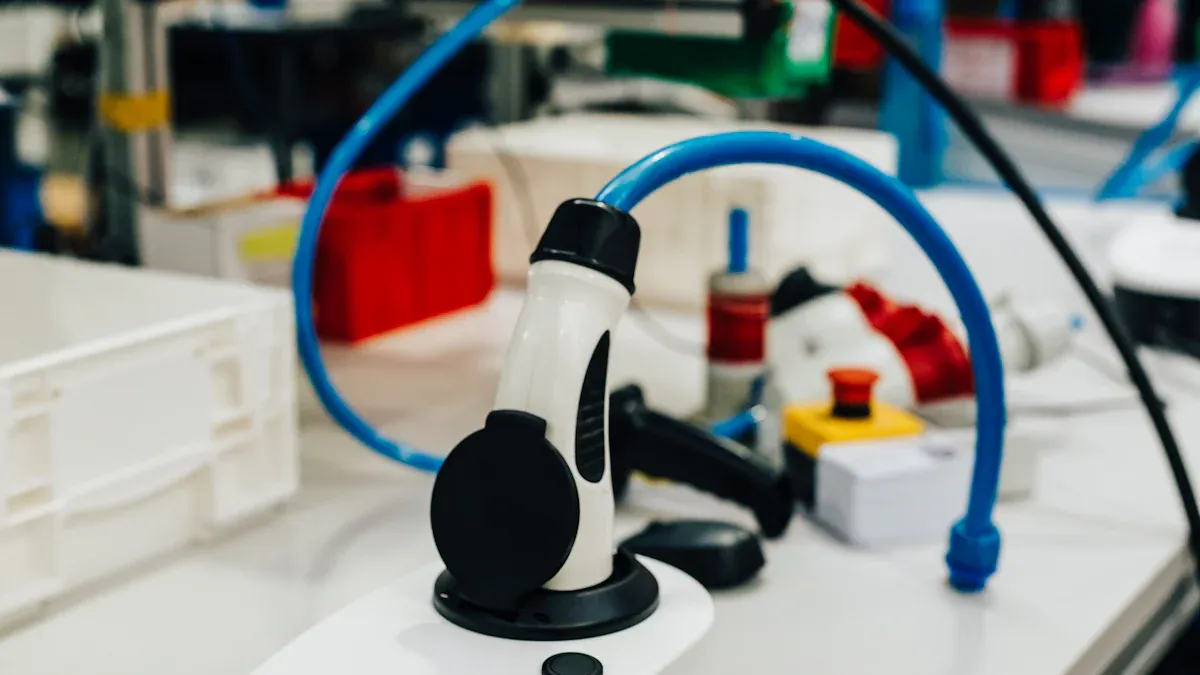
Imagine you can see where every item is right now in your warehouse. Long-range wireless RFID readers help you do this. Companies notice big changes when they use these systems. For example, loading dock time can go down by 40%. Labor costs also get lower. SHENZHEN MARKTRACE CO.,LTD. is a leader with advanced RFID technology. You can look at the table below to see the clear benefits:
Impact Area | Measurable Benefit |
|---|---|
Loading Dock Time | Reduced by up to 40% |
Inventory Accuracy | Enhanced through real-time tracking |
Labor Costs | Reduced due to automation |
Shrinkage | Minimized through better tracking |
Now you have the tools to change the Future of Logistics.
Key Takeaways
Long-range wireless RFID readers can find items from far away. This helps people see where things are in big warehouses.
Using RFID technology can make loading docks faster by up to 40%. This means work gets done more quickly.
RFID makes inventory more correct. It lets people track goods right away and stops mistakes.
Automation with RFID lowers labor costs. Machines can do jobs that people did before.
When RFID works with GPS and IoT, tracking gets better. It also helps fix problems fast.
RFID technology stops theft and loss. It gives real-time alerts if someone tries to get in without permission.
Companies can get back the money they spend on RFID in two years. This is because work is faster and there are fewer mistakes.
Training teams on RFID systems often is important. It helps workers know how to use the technology well.
RFID Technology in Logistics
RFID has changed how people handle logistics. Now, you can track items and work faster. Many jobs can be done by machines instead of people. RFID started a long time ago. Here are some important moments that helped RFID grow in supply chains:
In the 1940s, RFID helped find planes during wars.
In the 1950s, RFID made coal mines and nuclear places safer.
By the 1960s, stores used RFID to stop theft.
The 1970s brought RFID tags and keyless doors.
In the 1990s, IBM made the Ultra High-Frequency system. This led to the RFID we use today.
Today, you can use advanced RFID readers like MR6211E, MR6221E, and MR6261E from SHENZHEN MARKTRACE CO.,LTD. These readers help you track every part of your supply chain.
Real-Time Tracking
You want to know where your shipments are all the time. RFID lets you track things as they move. You always know where each item is. When you use RFID with GPS and IoT, tracking gets even better. You can see every move and know when things will arrive. This helps you fix problems before they get big. The MR6211E reader works well in big places. It makes tracking easy for large warehouses and yards.
RFID helps you track goods while they move.
You can use RFID with GPS and IoT for full tracking.
This gives better delivery times and quick fixes for problems.
Supply Chain Efficiency
Being efficient is very important in logistics. RFID helps you stop delays and slow spots. You can use machines to do jobs at loading docks and yards. This means less waiting and faster moving of goods. When you use RFID with Advanced Shipping Notices, you get faster receiving and sending. You can find pallets and cases right away. This makes everything work better and keeps things moving.
RFID lets machines do loading dock jobs.
You can find shipments right away.
Real-time tracking helps you fix problems fast.
RFID tags help you keep good inventory records and stop overstocking.
You lower the chance of lost or late shipments, so distribution works better.
The MR6221E reader is good for these jobs. It gives you the right mix of range and performance for supply chain work.
Automation in Logistics
Automation makes work easier and faster. RFID lets you use machines for many jobs. You do not need to type in data by hand. This saves time and lowers labor costs. You get better accuracy in shipping, receiving, and orders. Real-time tracking lets you control your supply chain and fix problems fast.
Advancement | Description |
|---|---|
Inventory Accuracy | RFID gives you almost perfect accuracy in shipping, receiving, and orders. |
Order Processing Speeds | RFID makes order processing faster by tracking goods automatically. |
Labor Cost Reductions | Using RFID means you need less manual work. |
Real-time Visibility | RFID lets you track goods right away and fix problems quickly. |
The MR6261E reader is great for short-range jobs. You can use it for access control or point-of-sale systems. This makes your work even more efficient.
You can see how RFID, especially with advanced readers from SHENZHEN MARKTRACE CO.,LTD., makes every part of your supply chain better. You get better shipment tracking, real-time tracking, and automation that changes how you work.
Long-Range RFID Readers Overview
What Are Long-Range RFID Readers
Long-range RFID readers help you find and track things from far away. These readers use rfid technology to scan tags that are many meters away. You do not have to stand close to the item. This makes your job quicker and easier. You can use these readers in big warehouses, shipping yards, or large stores. Long-range rfid readers let you see where your items are all the time. You can count on them to work in busy and loud places.
Here is a table that shows what makes top long-range rfid readers special:
Specification | Details |
|---|---|
Frequency | |
Power Output | Higher power output for extended range |
Antenna Design | Advanced designs for improved signal |
Data Transfer Rate | Efficient rates for quick communication |
Environmental Tolerance | Built to withstand harsh conditions |
Connectivity Options | Ethernet, Wi-Fi, Bluetooth |
Differences from Traditional RFID
You might wonder how long-range rfid readers are not the same as regular ones. Regular rfid readers only work when you are close to the tag. Long-range rfid readers use higher frequencies and stronger signals. You can scan lots of items at once, even if they are far away. This helps you keep track of big inventories and find things across wide spaces.
See the table below for an easy comparison:
Type of RFID Reader | Read Range | Frequency | Applications |
|---|---|---|---|
Short-Range RFID Readers | A few centimeters to a couple of meters | LF (125-134 kHz) or HF (13.56 MHz) | Access control, payment systems, close proximity tracking |
Long-Range RFID Readers | Several meters to tens of meters | UHF (860-960 MHz) | Logistics, supply chain management, asset tracking, large-scale inventory management |
Wireless Capabilities
You want your rfid system to work without wires. Long-range rfid readers let you do this. You can put them wherever you need them most. You do not have to worry about cables or hard-to-reach places.
Frequency and Range
Long-range rfid readers use UHF frequencies. These frequencies let you read tags from far away. You can cover a big area with just a few readers. This makes rfid technology great for logistics and supply chain jobs.
Connectivity Options
You can connect long-range rfid readers in many ways. Most readers work with Ethernet, Wi-Fi, and Bluetooth. This means you can send data fast to your computer or cloud system. You can also use different wireless protocols to fit what you need.
Here is a table of common wireless protocols:
Protocol | Description | Use Case |
|---|---|---|
Sets rules for UHF RFID systems, good for medium to long-range communication. | Supply chain management, asset tracking | |
EPC Gen2 (ISO 18000-6C) | Second generation standard for UHF RFID, used for medium and long-distance jobs. | Logistics, electronic toll collection |
Tip: If you pick rfid technology with strong wireless options, your logistics system gets more flexible and powerful.
You can see how long-range rfid readers change the way you track, manage, and move goods. You get better control, faster work, and more reliable data with advanced rfid technology.
Key Benefits of RFID and Automation
Improved Tracking Accuracy
You want to know where every item is at all times. RFID gives you this power. When you use rfid technology, you can track goods from the moment they enter your warehouse until they leave for transportation. You do not have to guess or search for missing items. You see real-time updates on your screen. This level of tracking helps you avoid mistakes and delays.
You can increase the number of order preparation lines served per shift by 15% with rfid.
You reach over 99% accuracy in tracking component inventories.
You reduce incidents caused by missing parts by 20%.
RFID advancements let you track thousands of items at once. You do not need to scan each tag by hand. Automated systems do the work for you. You get better tracking for every shipment, pallet, and box. This means you can trust your inventory numbers. You can also track items as they move through different stages of transportation. You always know what you have and where it is.
Enhanced Security
You want your goods to stay safe. RFID technology helps you protect your assets. You get real-time alerts if someone tries to access or tamper with your shipments. You can set up automated systems to watch for unusual activity. If someone tries to move high-value cargo without permission, you get a warning right away.
You use advanced theft prevention strategies with rfid.
You get real-time alerts for unauthorized access.
You protect high-value cargo with better tracking.
You meet strict rules for data and safety with accurate records.
RFID advancements give you real-time visibility. You can track who enters and leaves your warehouse. You can also track when goods move from one place to another. Automation helps you follow every step. You do not have to worry about lost or stolen items. You keep your transportation secure and your customers happy.
Cost Savings
You want to save money in your operations. RFID and automation help you do this. You spend less time on manual tracking and more time on important work. You do not need as many workers to scan or count items. Automated systems handle tracking and reporting for you.
Many companies recover their investment in rfid within two years.
You can see a 10-15% improvement in operational efficiency in the first year.
You reduce errors and waste, which saves money on returns and lost goods.
RFID technology helps you use your resources better. You do not waste time searching for lost items. You move goods faster through transportation. You can scale your operations without adding more workers. Advancements in rfid make your business stronger and more competitive. You get more value from every shipment and every asset you track.
Labor Reduction
When you use RFID technology, your team changes a lot. Machines now do jobs that people did before. You do not have to spend hours checking inventory. You also do not need to type in data by hand. RFID readers like MR6211E, MR6221E, and MR6261E scan tags for you. They update records without you doing anything. This lets you work on more important things.
RFID systems check inventory and enter data by themselves.
You do not spend much time on simple jobs.
Workers can do tasks that matter more.
Orders get done faster and there are fewer mistakes.
You need fewer people for tracking and counting, so labor costs drop.
You can get more work done in your warehouse or store. RFID readers help you finish tasks quickly and with fewer errors. You do not have to worry about mistakes from typing things in. Automation makes your team better and faster. You can handle more orders and shipments without hiring more people.
Tip: If you use advanced RFID readers from MARKTRACE, you can save time and money. Your team can help your business grow instead of just counting boxes.
Applications of RFID in Logistics
Inventory Management
You want to know where every item is in your warehouse. rfid helps you do this easily. You can scan many items at the same time. You do not need to count each item by hand. This saves you time and stops mistakes from happening. When you use rfid, you see your inventory right away. You know if your stock is low or if you need to order more. This helps you avoid running out of important things.
The MR6211E reader from SHENZHEN MARKTRACE CO.,LTD. works well in big warehouses. You can put it at doors where items come in or go out. It scans everything that moves through these points. You get updates on your inventory instantly. This means you do not lose track of your goods.
Here is how rfid makes inventory management better:
Evidence Description | Key Points |
|---|---|
rfid inventory management cuts down on manual counting and mistakes. | Makes inventory more accurate and helps you see everything in your supply chain. |
rfid technology helps you watch goods move easily. | Shows you inventory levels and locations in real time. |
Tip: Use rfid to stop mistakes and keep your warehouse working well.
Asset Tracking
You need to know where your tools and equipment are all the time. rfid helps you do this. You put rfid tags on each asset. The MR6221E reader can scan these tags even if the assets are far away. You see where every item is on your computer. This stops loss and theft.
rfid also helps you check equipment in and out. Workers scan items when they take or return them. You always know who has what. This makes asset management easy and clear.
See how rfid makes asset tracking better:
Evidence Description | Key Points |
|---|---|
rfid technology helps you see assets, makes things more accurate, and helps your work go faster. | Tracks inventory in real time, automates jobs, and helps manage high-value items. |
Note: rfid lets you track expensive assets without extra effort.
Fleet Monitoring
You want to keep your vehicles safe and on time. rfid helps you watch your fleet as it moves. You put rfid tags on each truck or van. The MR6211E reader scans these tags as vehicles enter or leave your yard. You know where every vehicle is and when it moves.
rfid gives you many good things for fleet monitoring:
Benefit | Description |
|---|---|
Enhanced Visibility | Watch fleet movements in real time, keep cargo safe, and make sure deliveries are on time. |
Operational Efficiency | Make routes better using live data, save fuel, and cut delivery times. |
Loss Prevention | Geofencing alerts stop unauthorized vehicle use and lower theft risks. |
Reduced Downtime | Fix problems before they cause breakdowns, so your fleet is ready to go. |
Cost Savings | Preventive maintenance saves money on repairs and makes vehicles last longer. |
You can set up alerts for vehicles used without permission. You can also track fuel use and plan better routes. This keeps your fleet running well and saves money.
Tip: rfid makes fleet monitoring simple and helps you fix problems before they get big.
Cold Chain Logistics
You need to keep products at the right temperature during transport. Cold chain logistics helps you move food, medicine, and other items that must stay cold. If the temperature changes, products can spoil or become unsafe. RFID technology gives you a way to watch these items every step of the way.
You can use RFID readers like the MR6211E from SHENZHEN MARKTRACE CO.,LTD. to track shipments in real time. These readers scan RFID tags on boxes or pallets. You see where your goods are and know if they stay at the right temperature. You do not have to guess if your products are safe. You get alerts if something goes wrong.
Here is how RFID helps you in cold chain logistics:
You track temperature-sensitive goods from the warehouse to the store.
You get real-time data on location and temperature.
You receive alerts if the temperature goes above or below safe levels.
You keep records for safety checks and audits.
You reduce waste by catching problems early.
Let’s look at an example. You ship vaccines that must stay cold. You place RFID tags with temperature sensors on each box. The MR6211E reader scans these tags as the boxes move through your supply chain. If a box gets too warm, you get an alert right away. You can fix the problem before the vaccines spoil.
You can also use RFID to check delivery times. If a shipment is late, you know where it is. You can call the driver or send help. This keeps your products safe and your customers happy.
Here is a table showing how RFID improves cold chain logistics:
Benefit | Description |
|---|---|
Real-time Monitoring | You see temperature and location instantly. |
Fast Problem Solving | You get alerts and can act quickly. |
Better Record Keeping | You keep proof for safety and quality checks. |
Less Waste | You stop spoilage before it happens. |
Customer Trust | You deliver safe products every time. |
Tip: Use RFID readers from MARKTRACE to make your cold chain logistics safer and more reliable.
RFID technology gives you control over your cold chain. You protect your goods, save money, and build trust with your customers. You can count on your products to arrive fresh and safe.
Future of Logistics with RFID
Trends and Innovations
You will see lots of changes in logistics soon. RFID technology gets better every year. New trends change how you handle your supply chain. RFID tags are getting smaller and smarter. These tags work in more places and share more details. Companies use both passive UHF tags and active tags for different jobs. Data security is now very important. Keeping your information safe matters a lot.
Here is a table that shows the main trends to watch:
Trend | Description |
|---|---|
Emerging RFID Tag Technologies | Mini tags and new features help track things better. |
Integration with IoT Devices | More devices connect with RFID for better data and analysis. |
Enhanced Data Security | Stronger security keeps your information safe. |
You will see more automation and real-time data checks. These changes help you work faster and save money. The future will bring more ways to use RFID for better results.
RFID technology keeps getting better.
More IoT devices connect with RFID.
Data security features get stronger.
Companies want to save time and money.
Automation and real-time data checks are used more.
IoT Integration
You can make your supply chain smarter with IoT and RFID. This step changes how you track and manage goods. RFID tags on shipments give you instant updates. You do not lose track of your inventory. Automated scanning means you make fewer mistakes. You can scan many items at once, so work goes faster.
The future of logistics depends on this strong connection. RFID and IoT together let you watch your goods in real time. You can also check things like temperature and humidity. This helps you make better choices. You do not need to check everything by hand. Your system does the work for you.
Note: IoT and RFID together give you easy tracking and real-time checks. You can automate jobs and make fewer mistakes.
Predictive Analytics
You can use predictive analytics to plan for the future. RFID data helps you see what might happen next. You can use this information to make smart choices. Predictive analytics helps you know how much stock to order. It also helps you plan when to fix your equipment.
With RFID, you can spot problems before they happen. You know if a shipment might be late. You can fix problems early and keep things running well. AI tools from predictive modeling help you plan better. You can work faster and save money.
Predictive analytics helps you make better choices.
You use RFID data to work better.
You can guess what you will need next.
AI helps with stock and equipment planning.
You find delays and make your process better.
The future of logistics will use these tools. You will see better results and have more control over your supply chain.
Sustainability
You can make your logistics better for the planet with RFID technology. Using RFID helps the environment and your business at the same time. RFID makes checking inventory much faster. You do not spend as much time or use as many resources to count stock. This saves energy and cuts down on waste.
RFID lets you manage your stock in a smarter way. You do not end up with too much or too little inventory. This means you use your resources wisely. You throw away fewer products because you know what you have and what you need. Managing stock better leads to less waste and more money saved.
Here is a table that shows how RFID helps with sustainability in logistics:
Aspect | Contribution to Sustainability |
|---|---|
Inventory Counting Speed | RFID makes inventory checks faster, so you use less time and resources. |
Stock Management | Helps avoid running out or having too much, so you use resources better. |
Environmental Impact | Less waste happens because inventory is managed better. |
RFID gives you a clear view of your supply chain. You always know where your goods are. This helps you make smart choices and follow environmental rules. You can use tools that track and identify products automatically. These tools help you reach your green goals.
RFID makes logistics more open and easy to manage.
It uses automatic identification and tracking tools.
Helps you make choices based on data and follow the rules.
Many companies now use RFID as part of their green plans. You can use RFID data to find new ways to save energy and cut waste. When you pick advanced RFID readers from SHENZHEN MARKTRACE CO.,LTD., you help your business and the earth.
Tip: Using RFID in logistics helps you reach green goals and makes your work better.
Industry Standards
You must follow industry standards when using RFID in logistics. These rules help your system work well with others. They also keep your data safe and correct. Following the rules gives you better tracking and real-time data.
Many companies, like Klik e-Seal and Lowry Solutions, use standards to make their RFID systems strong. These rules help you track goods with care. You can automate your supply chain and work more efficiently. You also make sure you follow all the industry rules.
Here is a table that shows how industry standards help with RFID in logistics:
Source | Key Points |
|---|---|
Klik e-Seal | Follows rules for RFID, so tracking is correct and data is real-time. |
Lowry Solutions | RFID makes logistics better with good tracking, automation, and efficiency. |
Lowry Solutions | RFID means less human work, so managing the supply chain is easier. |
When you use RFID readers that follow these rules, your system works everywhere. You can connect with partners and customers without trouble. You also protect your business from mistakes.
Note: Picking RFID solutions that meet industry standards, like those from SHENZHEN MARKTRACE CO.,LTD., helps you stay ahead in logistics and keeps your work smooth.
Challenges and Implementation
Technical Barriers
There are some hard things about using rfid in logistics. You need to spend money on new equipment. You have to connect rfid readers and tags to your system. Sometimes, radio waves get mixed up in busy places. If you use a lot of active rfid tags, it costs more. Hardware and software are expensive to buy. You also pay for fixing and keeping the system working. Sometimes, rfid tags or readers bump into each other and cause mistakes. Water or metal can mess up the signals. These problems make it harder to set up rfid.
You need to buy equipment for rfid systems.
It can be tricky to connect everything together.
Radio waves can mess up how rfid works.
Using lots of active rfid tags costs more money.
Buying hardware and software is expensive.
You keep paying for repairs and updates.
Tags or readers can get mixed up and cause mistakes.
Water and metal can block rfid signals.
You should think about these problems before you start. You can ask experts for help with tough issues. You can pick rfid readers that work well even with interference.
Data Security
You need to keep your data safe when you use rfid. People can try to read rfid signals without permission. Some people might copy rfid tags and make fake ones. Hackers can steal information if they catch the signals. You need strong ways to protect your data. You can use rfid-blocking tools. You can scramble the data on rfid tags. These steps help keep your information safe.
People without permission can get your data.
Copying makes fake rfid tags.
Hackers can steal data from signals.
RFID-blocking tools keep your system safe.
Scrambling data on tags keeps it secret.
You should check your data safety often. You can update your system to stop new dangers. You can teach your team how to spot problems. Protecting your data keeps your business safe.
Cost and ROI
You want to know if rfid is worth the money. Companies that use rfid get big rewards. Inventory counts are almost always right. You save time because machines scan inventory for you. You do not need to check things by hand. Workers can do their jobs faster. When inventory is right, orders go out on time. Customers trust your company more. Most companies get their money back in two years. Saving money and selling more helps you reach this goal.
Benefit | Description |
|---|---|
Inventory Accuracy | RFID lets you track items almost perfectly. |
Labor Efficiency | Machines scan items and save time. |
Customer Satisfaction | Orders arrive on time because inventory is right. |
ROI | Companies get their money back in two years. |
You can see how much you save by checking your rfid data. You will see fewer mistakes. You will see orders go out faster. You will see happier customers. You can use this data to see how well rfid works. You can change your system to get even better results.
Tip: You can use your rfid data to show how much you save. You can share these numbers with your team.
Workforce Training
You need to prepare your team for RFID technology. Training helps everyone understand how to use new tools and systems. When you bring RFID readers into your warehouse or supply chain, your workers must learn new skills. You want your team to feel confident with the technology.
Start by teaching basic RFID concepts. Show your team how RFID tags work and how readers scan them. Explain the difference between long-range and short-range readers. Use simple examples from your own workplace. You can set up practice sessions where workers scan items and see results on a computer screen.
You should focus on these key skills:
Operating RFID readers like the MR6211E, MR6221E, and MR6261E.
Understanding how to place RFID tags on items.
Reading data from RFID systems.
Troubleshooting common problems.
You can use hands-on training to make learning easier. Workers learn best when they try things themselves. Give them real items to scan and track. Show them how to fix mistakes if a tag does not scan. You can use role-playing to practice different situations.
Tip: Use visual aids and step-by-step guides to help your team remember each step.
You can also use a table to organize your training plan:
Training Topic | Activity Type | Goal |
|---|---|---|
RFID Basics | Classroom session | Understand RFID technology |
Reader Operation | Hands-on practice | Scan and track items |
Tag Placement | Demonstration | Attach tags correctly |
Data Management | Computer training | Read and use RFID data |
Troubleshooting | Scenario practice | Solve common problems |
You need to check how well your team learns. You can use quizzes or simple tests. Ask workers to show what they know. If someone struggles, offer extra help. You want everyone to feel comfortable with RFID systems.
You can also encourage teamwork. Workers can help each other learn. You can set up buddy systems where experienced workers guide new ones. This builds confidence and makes training more fun.
You should update training as technology changes. RFID systems get better every year. You need to keep your team up to date. You can invite experts from SHENZHEN MARKTRACE CO.,LTD. to lead workshops or answer questions.
Note: Good training helps your team use RFID readers safely and efficiently. You get better results and fewer mistakes.
You can make workforce training a regular part of your logistics plan. When your team knows how to use RFID, your business runs smoothly. You save time, reduce errors, and stay ahead in the industry.
Maximizing RFID Value
Adoption Best Practices
You want to get the most from your rfid system. Start with a pilot program. This helps you see if rfid works well for your business. You can check if it saves time and money. Use middleware to connect rfid with your ERP and WMS systems. This makes your data flow smoothly. Work with experts who know rfid. They can help you design a system that fits your needs. Roll out rfid in phases. This keeps your work running while you add new tools. Pick the right tags and plan your frequencies. This stops problems like signal reflection.
Here are some best practices for rfid adoption:
Launch a pilot program to test rfid in your warehouse.
Use middleware to connect rfid with your main business systems.
Partner with rfid experts for custom solutions.
Deploy rfid step by step to avoid big changes all at once.
Choose the right tags and plan for signal strength.
Tip: Testing rfid in a small area first helps you find and fix problems before you use it everywhere.
Partnering with Providers
You need a strong partner when you start with rfid. Look for companies with lots of experience. They know how to set up rfid for different jobs. SHENZHEN MARKTRACE CO.,LTD. offers advanced rfid readers for many uses. You can ask them for advice on system design and setup. Good partners help you pick the right hardware and software. They also train your team and give support after you start.
A good provider will:
Listen to your needs and goals.
Suggest the best rfid readers for your work.
Help you plan where to put readers and tags.
Offer training for your staff.
Give support if you have questions or problems.
Note: Working with a trusted rfid provider makes your project smoother and more successful.
Performance Optimization
You want your rfid system to work at its best. Check your system often to see if it reads tags quickly and correctly. Move readers or change settings if you find weak spots. Update your software to get new features and better security. Train your team to use rfid tools the right way. Review your data to spot trends and fix issues fast.
Here are ways to keep your rfid system strong:
Test your readers and tags in real work areas.
Adjust reader power and tag placement for best results.
Keep your software up to date.
Train your team on new rfid features.
Use reports to find and solve problems early.
Tip: Regular checks and updates keep your rfid system running smoothly and help you get the most value.
You can use these steps to make rfid a strong part of your logistics plan. You will see better tracking, faster work, and fewer mistakes.
Future-Proofing Operations
You want your logistics system to stay strong as things change. Future-proofing means you get ready for new problems and chances. You can keep your RFID system ready for growth and new needs. Here are steps you can follow to make your logistics future-proof.
1. Choose Scalable Solutions
Pick RFID readers and software that can grow with your business. You can add more readers or tags when your warehouse gets bigger. SHENZHEN MARKTRACE CO.,LTD. has models like MR6211E, MR6221E, and MR6261E. These readers work in many places and for different jobs. You do not have to buy a new system when your business grows.
2. Stay Updated with Technology
You should look for new features and updates often. RFID technology gets better every year. You can update your software for better safety and speed. MARKTRACE gives support and upgrades for their products. This keeps your system working well and safe.
3. Integrate with Other Systems
You can connect your RFID system with other tools like IoT devices, ERP, and WMS. This helps you get more data and control. You can track goods, watch conditions, and manage inventory in one place. Integration makes your logistics smarter and faster.
4. Plan for Industry Standards
You need to follow rules and standards in logistics. Standards change as technology gets better. You can use RFID readers that meet world rules. MARKTRACE makes products that fit these rules. You stay ready for new laws and changes.
5. Train Your Team Regularly
You should teach your team about new RFID features and best ways to use them. Training helps workers use the system well. You can ask experts from MARKTRACE to lead classes. Your team stays skilled and sure of what to do.
Tip: Check your RFID setup every year. Look for ways to make it better and get ready for new trends.
Here is a table that shows how you can future-proof your operations:
Action | Benefit |
|---|---|
Use scalable RFID readers | Grow your system easily |
Update software | Get better security |
Integrate with other tools | Manage everything together |
Follow industry standards | Stay compliant |
Train your team | Keep skills up to date |
You can future-proof your logistics by making smart choices now. You build a system that lasts and can change. You stay ahead of others and ready for new problems. MARKTRACE’s advanced RFID readers help you keep your operations strong and flexible.
You can see how long-range wireless rfid readers change logistics. These tools give you more speed and better control. You can use rfid to make your work easier and safer. Explore advanced solutions from SHENZHEN MARKTRACE CO.,LTD. to stay ahead. New rfid technology will keep growing. Stay ready for the future by using smart tools today.
FAQ
What is a long-range wireless RFID reader?
A long-range wireless RFID reader scans RFID tags from several meters away. You can track items in large spaces like warehouses or shipping yards. This tool helps you see where your goods are without walking close to them.
How do RFID readers improve logistics?
RFID readers help you track items in real time. You get accurate inventory counts and faster order processing. You can reduce mistakes and save money. Automation makes your supply chain work better.
Can you use RFID readers outdoors?
Yes, you can use RFID readers outdoors. Many models, like the MR6211E, work in harsh environments. You can track assets in yards, parking lots, or loading docks. Weather and dust do not stop these readers.
What types of items can you track with RFID?
You can track boxes, pallets, vehicles, tools, and even temperature-sensitive goods. RFID tags attach to almost anything. You see updates on your computer or phone. This helps you manage inventory and assets easily.
How do you connect RFID readers to your system?
You connect RFID readers using Ethernet, Wi-Fi, or Bluetooth. You can send data to your warehouse management system or cloud platform. This lets you see information anywhere and make quick decisions.
Is RFID technology safe for your data?
RFID technology uses secure protocols. You can protect your data with encryption and access controls. You get alerts for unauthorized access. This keeps your information safe and your assets secure.
Do you need special training to use RFID readers?
You need basic training to use RFID readers. You learn how to scan tags, place readers, and read data. Many providers, like SHENZHEN MARKTRACE CO.,LTD., offer guides and support. Training helps your team use the system well.
- Next>:Wholesale High-Frequency Wireless RFID Readers: What Buyers Need to Know

 2026-08-03
 Blogs
Blogs