
Wholesale High-Frequency Wireless RFID Readers: What Buyers Need to Know
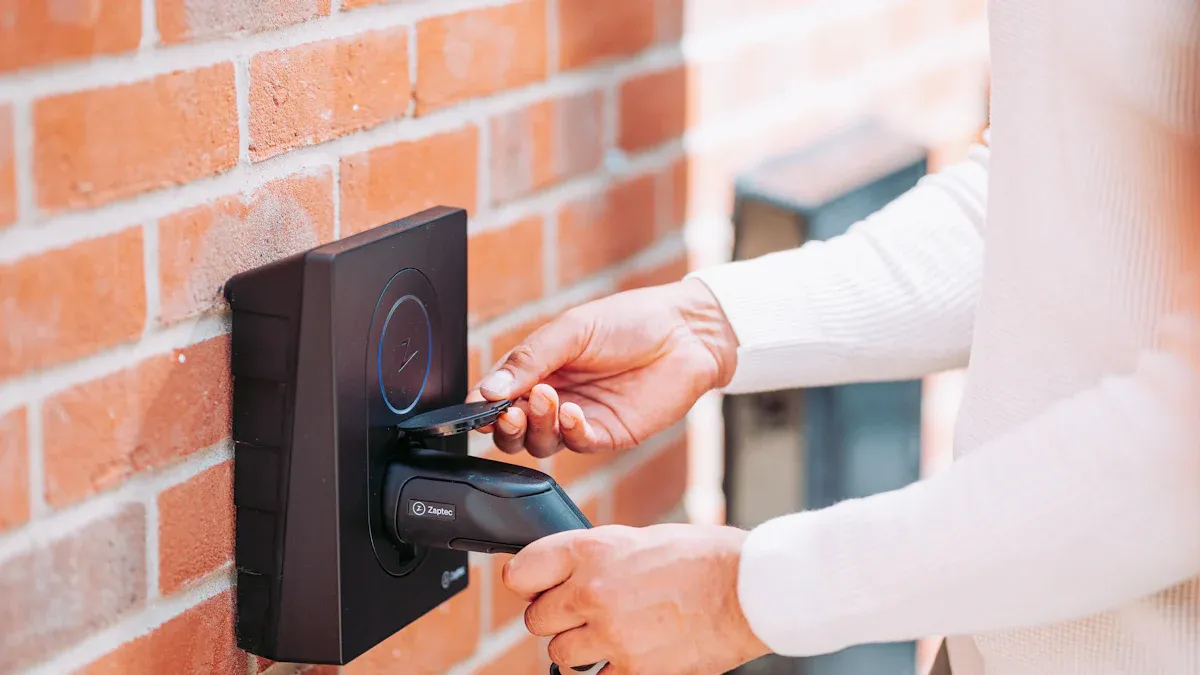
You should know what is important before you buy High-Frequency Wireless RFID Readers in large amounts. Technical standards like 13.56 MHz help you pick the best device for your needs. Wireless features let you move around more in busy places. Top brands, like SHENZHEN MARKTRACE CO.,LTD., have models for many jobs. The world market for these readers is getting bigger fast. It will reach $15.8 billion by 2033 with a 9.5% yearly growth rate. Make sure you choose products that fit your systems, come from trusted sellers, and help you avoid common mistakes.
Key Takeaways
Know why the 13.56 MHz frequency is important for working well in many uses.
Pick wireless RFID readers to make setup easy and help your business grow.
Make data safe by choosing readers with good encryption and access controls to keep information private.
Check that RFID readers have the right certifications for your area to make sure they follow rules and are good quality.
Always try one reader first before buying many to find any problems early.
Key Features
13.56 MHz Standard
The 13.56 MHz frequency is common in High-Frequency Wireless RFID Readers. This frequency is used all over the world. It works well in many places and for many jobs. You can use it for asset tracking, inventory, and contactless ID systems. These readers usually read from 10 centimeters to 1 meter away. This distance works for stores, libraries, and secure doors.
Here is a table that explains why the 13.56 MHz standard is special:
Advantage | Description |
|---|---|
Global Standard | Used everywhere, so it works with many things. |
Resistance to Interference | Not bothered much by water or metal, so it is reliable. |
Advanced Security | Has strong encryption, which is good for safe payments. |
Interoperability | Works with most devices and systems, so upgrades are easy. |
Application Versatility | Used in many fields, like healthcare and shipping. |
Wireless Capabilities
Wireless features let you set up your RFID system more easily. You do not need to use cables everywhere. This makes setup faster and cheaper. Wireless readers connect to networks and other devices without trouble. They use protocols like ISO/IEC 14443 and ISO/IEC 15693. These help your system work with different tags and uses.
Protocol | Range | Use Cases |
|---|---|---|
ISO/IEC 14443 | Up to 10 cm | Access control, public transit, payment systems |
ISO/IEC 15693 | Up to 1 m | Inventory, library systems, asset tracking |
Wireless connections help you grow your system. You can add more readers when you need them. Real-time data and cloud storage make your work faster and better. Many companies use wireless RFID to work quicker and make fewer mistakes.
Tip: Wireless RFID readers help you add more readers as your business gets bigger.
Read Range & Performance
Read range and speed are important for High-Frequency Wireless RFID Readers. The read range changes with the model, antenna power, and where you use it. For example, the MR6211E from SHENZHEN MARKTRACE CO.,LTD. reads far, which is good for big warehouses. The MR6221E is for medium range, so it fits stores or shipping. The MR6261E is best for short range, like tracking workers.
Metric | Value |
|---|---|
Read Range | 1–10 cm (typical) |
10 cm – 1 m (varies) | |
Data Transfer Rate | 106 kbit/s – 26 Mbit/s |
Things like metal or water can make reading harder. Put readers where there is less interference for best results.
Machines or power lines can mess up signals.
Metal bounces RFID signals, and water soaks them up, so reading is harder.
Data Security
Security is very important for RFID systems. High-Frequency Wireless RFID Readers use strong encryption like AES to keep data safe. They also use access controls, so only allowed people can use the system. Some readers use multi-factor authentication for extra safety. Regular checks and AI tools help find problems early.
Protocol Type | Description |
|---|---|
Encryption Protocols | AES encryption keeps your data safe and private. |
Access Controls | Only approved users can use the system. |
Multi-Factor Authentication | Needs more than one way to prove who you are, so it is safer. |
Blockchain Integration | Keeps records safe and unchanged, which helps with tracking and checking. |
AI-Driven Threat Detection | Finds threats fast by looking at data right away. |
Note: Always check if your RFID reader has the newest security features to keep information safe.
Durability
You want your RFID readers to last a long time, even in tough places. Many High-Frequency Wireless RFID Readers have strong plastic cases or high protection ratings. Some readers have an IP54 rating, so they keep out dust and splashes. Others, like advanced models, have IP65, so they block dust and water jets.
Category | Characteristics | IP Ratings |
|---|---|---|
Material & Design | Strong plastic | IP54 |
Advanced | Blocks dust and water jets | IP65 |
Brands like SHENZHEN MARKTRACE CO.,LTD. focus on making reliable products. They ship on time and answer support questions fast. You can ask about their quality checks and risk plans to make sure you get a good product.
Tip: Pick readers with higher IP ratings if you will use them outside or in factories.
Quality & Compatibility
Industry Certifications
Always check if your RFID readers have the right certifications. These show the products follow safety and quality rules in each area. For example, CE is needed in the European Union. FCC is needed in North America. RoHS means the product is safe for the environment. IP65 means the reader can handle dust and water. Here is a quick guide:
Certification | Region |
|---|---|
CE | EU |
FCC | North America |
RoHS | Global |
IP65 | Global |
Make sure your High-Frequency Wireless RFID Readers have the certifications for your market.
System Integration
Make sure your RFID readers work with your current systems. First, learn about RFID tags, antennas, and middleware. Pick the system that fits your needs. Plan where to put the readers to avoid signal problems. Install the hardware and connect it to your software. Test everything before using it every day. If you find problems, change the setup. Good planning helps you avoid signal issues. You can use new tools like AI to make your system better.
Best Practices for Integration:
Learn about all RFID parts.
Pick the right system for your job.
Place readers to avoid signal problems.
Test and adjust before full use.
Vendor Reputation
Buy from trusted suppliers. Look for companies with good reviews and a strong history. SHENZHEN MARKTRACE CO.,LTD. is known for reliable products and support. They have many models for different needs. A good vendor will answer your questions and help you solve problems.
Warranty & Support
Warranty and support are important for long-term value. Most suppliers give a 2-year warranty for RFID readers and 1 year for tags. Some offer life-long maintenance, but you may pay for repairs after the warranty ends. Good support means you get help by phone, email, or online chat. You can also find guides and FAQs on their website. Some companies give you a personal contact for big projects.
Warranty Type | Duration | Support Details |
|---|---|---|
RFID Readers | 2 years | Free replacement for defects during warranty period. |
RFID Tags | 1 year | Free replacement for defects during warranty period. |
Maintenance | Life-long | Paid service after warranty, not including shipping. |
Tip: Always ask about warranty and support before you buy.
Pricing & Sourcing
Bulk Pricing
There are different ways to set prices when you buy High-Frequency Wireless RFID Readers in large amounts. Some companies charge more for special features. Others have lower prices for basic models. Some prices change depending on how many you buy. Certain brands make it easy to connect their readers to your system. Some help with shipping lots of products. Here is a table to help you compare:
Manufacturer | Product Type | Pricing Model | Features |
|---|---|---|---|
Shenzhen RZX | OEM RFID Readers | Premium pricing | Works with Fortune 500 companies |
Guangzhou Wangyuan | Desktop Readers | Budget-friendly | Good for small-scale use |
Quanzhou Hecere | Tunnel Reader | Premium pricing | Best for high-volume logistics |
Shenzhen Toptag | Handheld Android Device | Variable pricing | Mobile for many applications |
Synco | Fixed Readers | Cost-effective bulk | Great for large deployments |
Order Quantities
Buying many readers at once saves you money. Websites like Alibaba give you a lower price for each reader if you order more. For example, one RFID reader costs $1.50 on Alibaba. On Amazon, the same reader costs $17.56. You get better deals and make more money back. Many sellers let you buy just one reader to try it out.
Buying in bulk means you pay less for each.
Small orders let you test before buying a lot.
You save more money than buying one at a time.
Trusted Channels
You should buy your RFID readers from trusted sellers. Shenzhen in China is well-known for making electronics. The Pearl River Delta has many factories and good shipping. Alibaba and Global Sources help you find sellers. Big events like RFID Journal LIVE let you meet real manufacturers.
Tip: Always look at supplier reviews and check their certifications before you buy a lot.
Import/Export Rules
Import and export rules are different in each country. In China, you need SRRC approval for RFID equipment. Testing must be done in a special lab in China. If your device uses public networks, you need a Network Access License. Some telecom products need CCC certification. Follow these rules so your order is not delayed.
You need SRRC approval in China.
Testing must happen in China, not other countries.
NAL is needed for devices that use public networks.
CCC is needed for some telecom and IT products.
Note: Always ask your seller about import and export rules for your country.
Common Pitfalls
When you buy many high-frequency wireless RFID readers, you must be careful. There are some mistakes that can waste your time and money if you do not notice them.
Compatibility Issues
Sometimes, new RFID readers do not work with your old systems. This can happen for different reasons. Your old software might not read the new data. The hardware may not connect because the ports are different or the firmware is old. You could also have trouble if your software cannot save or use RFID data.
Here is a table that lists the most common compatibility problems and how to fix them:
Compatibility Issue | Description | Solution |
|---|---|---|
Data Format Mismatches | Old systems use data formats that do not match RFID data. | Use middleware to change RFID data into the right format. |
Hardware Communication Barriers | Old ports or old firmware stop devices from connecting. | Use protocol converters and update firmware to help them talk to each other. |
Software Limitations | Old systems may not have places for RFID data. | Set up middleware to sort data and use special databases to store it. |
Always make sure your RFID readers will work with your current system before you buy them.
Lack of Support
You need good help when setting up and using RFID readers. If your supplier does not help you, you might get stuck. You could have questions about how to install or fix the readers. Without support, you may lose time and have more trouble. Pick suppliers who answer your questions and give you guides or training. Good support helps you solve problems quickly and keeps your system working.
Low-Quality Offers
Some deals seem too good to be true. You should know the signs of fake or bad RFID readers. Here are the main things to look out for:
Unrealistic Pricing: If the price is much lower than normal, the product may be fake or poor quality.
Lack of Documentation: Good suppliers give you certificates and datasheets. If they do not, be careful.
Poor Communication: If a supplier does not answer your questions or explain where the products come from, this is a warning sign.
No Physical Address or Verifiable History: Good suppliers have a real address and a history you can check.
Tip: Always buy from trusted brands and suppliers with a good record. This helps you avoid expensive mistakes.
Buying Checklist
You should use this checklist before you buy a lot of High-Frequency Wireless RFID Readers. It will help you make good choices and stop problems before they start.
✅ Essential Checklist for Buyers
Check Frequency Standard: Make sure the reader uses the right frequency, like 13.56 MHz, for your needs.
Review Wireless Features: Check if the reader can connect wirelessly and fits your setup.
Test Read Range: Pick a reader with the right range for your job, like short, medium, or long.
Inspect Data Security: Look for strong encryption and access controls to keep your data safe.
Assess Durability: Choose readers with high IP ratings if you need them for tough places.
Verify Certifications: Make sure the product has the right certifications for your country or region.
Plan System Integration: Check that the reader works with your current software and hardware.
Evaluate Vendor Reputation: Look up the supplier’s history and read customer reviews.
Understand Warranty & Support: Ask how long the warranty lasts and what support you get.
Compare Bulk Pricing: Look at prices for different order sizes and see if there are discounts.
Review Import/Export Rules: Find out if you need any rules or licenses for your country.
Tip: Always test one reader before you buy a lot. This helps you find problems early.
Quick Reference Table
Step | Why It Matters |
|---|---|
Frequency Standard | Makes sure it works with your system |
Wireless Features | Makes setup easier |
Read Range | Fits your needs |
Data Security | Keeps your information safe |
Durability | Lasts longer in hard places |
Certifications | Follows the law |
System Integration | Works with your setup |
Vendor Reputation | Lowers your risk |
Warranty & Support | Helps fix problems |
Bulk Pricing | Saves you money |
Import/Export Rules | Stops shipping delays |
If you follow this checklist, you will pick the right High-Frequency Wireless RFID Readers for your business.
When you buy high-frequency wireless RFID readers, look at the most important things. Check what features the readers have. Make sure the readers work with your system. Pick suppliers you can trust. Good support helps you fix problems quickly. Use the checklist to help you make choices.
Remember: Well-known brands like SHENZHEN MARKTRACE CO.,LTD. make good products and give strong support. This helps your business get bigger and do well.
FAQ
What is the main benefit of using high-frequency wireless RFID readers?
You get fast and accurate tracking. These readers work well for inventory, asset management, and access control. Wireless features let you move devices easily and set up your system quickly.
How do I know if an RFID reader is compatible with my system?
Check the frequency standard, supported protocols, and software requirements. Ask your supplier for a compatibility list. Test one reader with your system before you buy in bulk.
Do I need special training to install these readers?
Most readers come with user guides and simple setup steps. You can follow the instructions or watch online videos. For large projects, you may want expert help.
What should I do if my RFID reader stops working?
First, check the power and connections. Restart the device. If it still does not work, contact your supplier’s support team. Good vendors offer quick help and replacement options.
- Next>:How Multi-Protocol Wireless RFID Readers Improve Asset Tracking

 2026-08-17
 Blogs
Blogs