
How Multi-Protocol Wireless RFID Readers Improve Asset Tracking
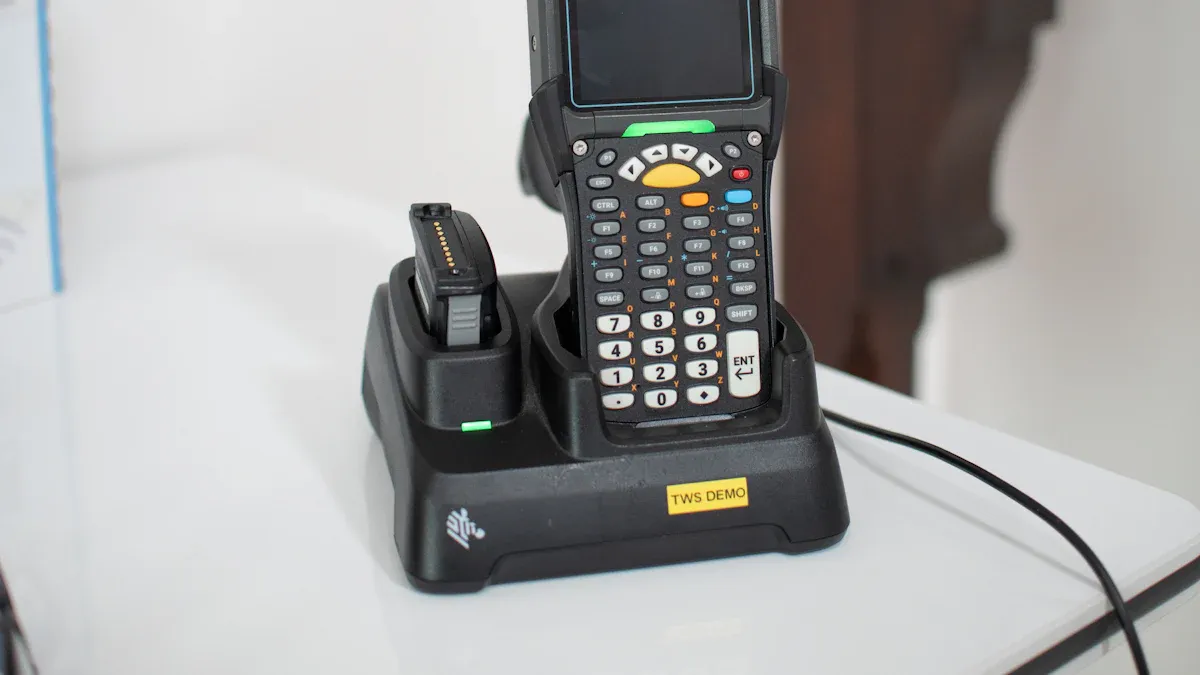
Multi-protocol wireless rfid readers help you track assets easily. You get real-time and correct information about your things. These readers work much better than old tracking systems.
The highest tracking accuracy is 98.70%.
Delivery is 18.25% faster in the same province and 20% faster in the same city.
You need compatibility, automation, and security to manage assets well.
Aspect | Impact on Asset Management |
|---|---|
Compatibility | Makes sure data moves smoothly for good threat detection and response. |
Automation | Makes it easier to find and fix security problems. |
Security | Gives you real-time updates to lower risks. |
Solutions like SHENZHEN MARKTRACE CO.,LTD.'s RFID Based IT Assets Management Solution help you keep track of your things and keep them safe.
Key Takeaways
Multi-protocol RFID readers help you track items better. They make sure you find things fast and right, with 98.70% accuracy.
These readers make deliveries faster by 18.25% in the same province. They also make them 20% faster in the same city. This helps your business work better.
They work with many RFID standards. This means they fit well with systems you already use. Managing your things becomes much easier.
You can see data right away. This helps you watch your items all the time. It also cuts down on mistakes and helps you make good choices.
Automation makes tracking simple. You can spot problems fast and manage your inventory well.
Better security keeps your things safe from theft and people who should not get in. It also keeps your data safe.
These tracking systems are flexible. You can add more as your business gets bigger. You do not need to change a lot.
Using multi-protocol readers saves you time and money. You do not need lots of devices. This makes tracking your things easier.
Multi-Protocol Wireless RFID Readers Explained
Multi-protocol wireless rfid readers help you track things in many ways. You can use them in places like factories, hospitals, stores, and warehouses. These readers work with uhf, Bluetooth, and other wireless types. You get more choices and better results with these new devices.
Core Features of Multi-Protocol Readers
Multi-protocol readers scan many kinds of rfid tags. They work with uhf, Bluetooth, and other wireless signals. You do not need to buy a different reader for each tag. The MR7902 2.4G RFID Reader from SHENZHEN MARKTRACE CO.,LTD. is one example. You can use it in factories, hospitals, stores, and for shipping. It helps you track raw materials, medical tools, store items, and expensive goods.
Tip: Multi-protocol readers help you save money and time. You do not need to set up lots of systems.
How Multi-Protocol Functionality Works
Multi-protocol readers use uhf and Bluetooth to read rfid tags. You can track things right away, even with different tags. This makes your tracking system strong and flexible.
Supported RFID Standards
You can use uhf bluetooth readers with many rfid standards. These include EPC Gen2, ISO 18000-6C, and Bluetooth Low Energy (BLE). You can track many things, even if they use different rfid types.
Wireless Communication Methods
Multi-protocol readers use uhf, Bluetooth, and sometimes Wi-Fi. You can connect them to your network without wires. This makes it easy to set up and move your readers. You can use uhf bluetooth readers in offices, factories, and stores.
Single vs Multi-Protocol Readers
It is important to know the difference between single-protocol and multi-protocol readers. Single-protocol readers only work with one kind of rfid tag. Multi-protocol readers work with many kinds. You get more choices and can use them in more ways with multi-protocol readers.
Feature | Single-Protocol Readers | Multi-Protocol Readers |
|---|---|---|
Flexibility | Limited | High |
Compatibility | Specific to one type | Supports multiple types |
Application Range | Narrow | Broad |
You can also look at the cost of different asset tracking tools. Multi-protocol uhf bluetooth readers let you use both cheap passive rfid tags and Bluetooth tags. This helps you save money and get good results.
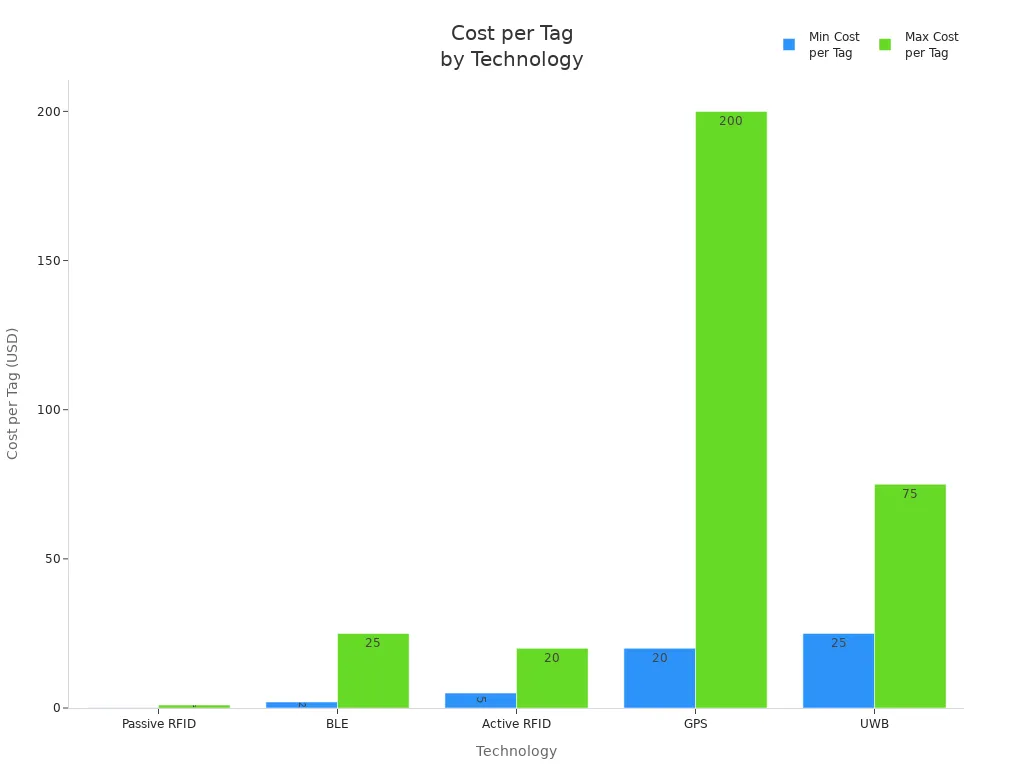
You can use uhf bluetooth readers in many jobs:
Manufacturing: Track materials and finished products.
Healthcare: Find medical tools and medicine fast.
Retail: Keep track of items and stop stealing.
Logistics: Track important things right away.
You get better tracking with multi-protocol uhf bluetooth readers. You can use uhf rfid and Bluetooth together. This gives you more ways to track things and better results.
Key Benefits for Asset Tracking
Compatibility with Multiple RFID Standards
You need asset tracking tools that work with many RFID standards. Multi-protocol wireless RFID readers let you connect with different tags and systems. You can use these readers with Android, Windows, or iOS devices. They also support cross-platform SDKs, so you can make custom apps for tracking. This makes your system flexible and simple to use. You can track assets in offices, factories, and stores without worrying about compatibility.
Advantages | |
|---|---|
Android | Flexibility, app support, integration with cloud services |
Windows | Ideal for Microsoft-based enterprise software and legacy systems |
iOS | Suitable for environments dominated by Apple devices |
Cross-platform SDKs | Allows custom application development regardless of OS |
You can use asset tracking solutions like SHENZHEN MARKTRACE CO.,LTD.'s RFID Based IT Assets Management Solution to track IT assets, medical tools, and store items. You get instant visibility and real-time data capture. You can find assets quickly and keep your inventory correct. You also stop loss and theft by tracking assets in different places.
Flexibility and Scalability in Asset Tracking
You want asset tracking systems that can grow with your needs. Multi-protocol wireless RFID readers give you flexibility. You can add new tags or devices without changing your whole system. You can track assets in small offices or big factories. You can make your asset tracking bigger as your business grows.
You can use RFID asset tracking for inventory, production lines, and IT asset management. You can get real-time data from many sources. You can track assets as they move through different areas. You can use real-time location systems to find assets fast. You can work better and lose less. You can keep your asset tracking system easy to manage.
Note: You can make your asset tracking system bigger without extra cost or effort. You can use automated tracking to keep your records up to date.
Real-Time Data and Automation
You need real-time data to keep your asset tracking correct. Multi-protocol wireless RFID readers help you get real-time information about your assets. You can see your inventory and equipment right away. You can track assets as they move and get alerts if something is wrong.
You can make fewer mistakes with real-time data and automation. You can send asset information straight to your database. You can track cycle times and important numbers automatically. You can record inventory moves digitally for real-time tracking. You can sync real-time data with your ERP system. You can watch equipment efficiency rates live. You can get alerts for production problems right away. You can check things like temperature and humidity. You can see your production status on dashboards.
Direct data flow sends machine information to your database.
Automated measurements track cycle times and key numbers.
Digital tracking records inventory moves for real-time visibility.
ERP integration keeps your asset tracking with your business systems.
Live performance tracking helps you fix problems fast.
Immediate alerts tell you about issues or failures.
Continuous monitoring checks environmental conditions for asset safety.
Dynamic dashboards show up-to-the-minute asset tracking status.
You can use RFID asset tracking to make inventory more accurate and stop loss. You can protect your assets from theft and losing them. You can make better choices with real-time tracking and instant visibility.
Enhanced Security and Accuracy
You want your things to be safe and your data right. Multi-protocol wireless RFID readers help with both jobs. These readers stop stealing and keep mistakes low. Only the right people can use or move your things.
These readers have special features for better security. Here are some ways they keep your things and data safe:
You use strong codes and checks. This keeps hackers from seeing or changing your data.
You can use RFID shields, like Faraday cages or blocking wallets. These stop unwanted scans and keep your info secret.
You set up extra steps for access. Only people with the right tags and codes can get to important places or tools.
You teach your team about RFID safety. When everyone knows the risks, you lower hacking and mistakes.
You also get better accuracy with real-time tracking. The RFID Based IT Assets Management Solution from SHENZHEN MARKTRACE CO.,LTD. shows where your IT things are all the time. You get alerts if someone tries to move something without permission. You can check records fast and find errors before they cause trouble.
These tools help you make fewer mistakes. You do not need to write numbers or scan barcodes by hand. The system updates your records for you. You always know what you have and where it is.
Tip: Set up alerts for strange asset moves. This helps you act fast if something is wrong.
You can trust your asset data and keep your business safe with these RFID solutions.
RFID Asset Tracking System Use Cases

IT Asset Tracking in Organizations
RFID asset tracking makes it easy to manage IT equipment. SHENZHEN MARKTRACE CO.,LTD.'s RFID Based IT Assets Management Solution helps you watch computers, servers, and other devices in real time. You put RFID tags on each item. The system shows where your things are as they move. This helps you find lost equipment and stop theft.
You get lots of good things from using RFID for IT assets:
Real-time tracking keeps your list correct.
Geo-fencing and alerts tell you if someone moves an asset without permission.
Automated workflows record every asset action, so you do not have to type in data.
You can set up stronger access rules and get alerts right away if something is wrong. This helps you keep your important items safe.
Here is a table that shows how RFID helps with IT asset management:
Benefit | Description |
|---|---|
Real-time tracking | The system updates data right away, so you always know where your assets are. |
Enhanced security | Alerts and geo-fencing stop people from moving things without permission. |
Automated workflows | The system records asset use and movement by itself. |
Many companies use RFID to make audits better and lose less. For example, DENSO uses RFID tags to track IT assets. This makes audits faster and more correct.
Manufacturing and Supply Chain
RFID asset tracking helps you run your factory or supply chain better. Multi-protocol readers let you track raw materials, parts, and finished goods. You can scan things fast and make fewer mistakes. RFID counts inventory for you and means less work by hand.
Here are some ways RFID helps in factories and supply chains:
You can make 25% fewer mistakes or even less.
Inventory counts can take up to 80% less time.
You can see your inventory right away and make smarter choices. This helps you avoid running out of things and keeps production going well.
Many companies use RFID to track containers and tools. For example, CHEP uses RFID to track returnable containers. This stops slowdowns and makes the supply chain work better.
Healthcare and Laboratories
RFID helps you track medical equipment and supplies in hospitals and labs. RFID tags help you find tools and machines fast. The system shows where each thing is in real time. This means fewer mistakes and keeps your inventory right.
Here is a table that shows how RFID helps in healthcare and labs:
Benefit | Description |
|---|---|
Automated Tracking | The system tracks equipment without people checking by hand. |
Real-time Visibility | You can see where every item is all the time. |
Streamlined Workflows | Audits and inventory checks happen by themselves. |
Comprehensive Audit Trails | The system keeps records for rules and quality checks. |
Enhanced Security | You get alerts if someone moves equipment without permission. |
Usage Pattern Analysis | The system finds strange movement, which can stop theft or loss. |
Automatic Inventory Reconciliation | Daily scans show missing items right away. |
RFID helps you follow industry rules and keeps patients safe. You can stop shortages and make sure you always have the tools you need.
Hospitals in New York use RFID to track medical equipment. This helps them use equipment better, lose less, and give better care.
Retail and Inventory Management
Stores have many problems to solve. You must keep shelves full and stop theft. You also need to know where every item is. Multi-protocol wireless RFID readers help with these jobs. You can see where products are right now. You can fix problems fast.
RFID technology lets you see your inventory clearly. You put RFID tags on each product. With multi-protocol readers, you scan many tag types at once. You do not worry about different brands or tag types. This makes your system simple and flexible.
You get many good things from using RFID:
You watch every product as it moves in your store.
You get alerts if someone takes an item without permission.
You find missing items right away.
You use real-time data to restock shelves before they are empty.
RFID helps you stop theft. You can check for stolen items and make your store safer. The system tells you if items leave the store without permission. This helps you stop shoplifting and employee theft. You can use RFID data with security cameras. This shows you when and how theft happens.
Tip: Use RFID data to find theft patterns. You can change your security to stop more losses.
Here is a table that shows how RFID helps stores:
Benefit | How It Helps You |
|---|---|
Real-time tracking | You always know where your products are. |
Shrinkage reduction | You catch theft early and prevent losses. |
Faster restocking | You refill shelves before items run out. |
Better inventory counts | You spend less time counting and checking stock. |
Many stores now use RFID instead of old EAS systems. You get better theft alerts and more correct inventory. RFID tag reads at exits show what leaves the store. You can use this data to make your loss prevention better.
You also help your customers more. When you know what is in stock, you help people find what they want. You stop empty shelves and lost sales. You can use RFID to track returns and manage sales events.
RFID gives you real-time data to check theft and find weak spots.
You track products closely, which helps you plan better.
You see when items are taken without permission, so you stop theft.
Multi-protocol wireless RFID readers make your store smarter and safer. You save time, lose less, and keep your customers happy.
Overcoming Asset Tracking Challenges
Managing Mixed RFID Environments
When you use different RFID tags and readers, problems can happen. These mixed setups can make tracking assets harder. Here are some common problems you might face:
It is hard to manage and match all the data. You get lots of information from many places. If you do not organize it, mistakes can happen.
Hardware may not work well together. Different RFID tags and barcodes might not match. This makes it tough to keep your data the same.
Things around your system can cause trouble. If readers are too close or use the same frequency, errors can happen.
Using different tags makes matching data tricky. If tags are not the same, it is hard to line up scan results.
Readers can mess each other up if they are too close. Multi-protocol readers help by working with many tags and cutting down on errors.
Tip: Put your readers in smart spots and use multi-protocol readers. This helps stop errors and keeps your data right.
Reducing System Complexity
You want your asset tracking to be simple and easy. Complicated systems can slow you down and cause mistakes. Here are some ways to make things easier:
Use RFID with flexible tracking software. You get more features, but you might need special tools to connect everything.
Try hybrid tracking systems. Add GPS or telematics to your RFID setup. This helps you see all your assets, even when RFID cannot track them everywhere.
Pick tracking systems that take data from many places. This gives you real-time info and means less matching by hand.
“System interoperability is a big deal for RFID in supply chains. In hospitals, asset tracking must work with medical records, billing, and equipment rental. RFID tracking is new in hospitals, so it gets added to old systems that do not always work well together. This makes hospital IT more complicated and harder to use.�
You can make your system easier by choosing tools that fit with what you already use. Always think about how new systems will work with your old ones.
Ensuring Data Reliability
You need good data to make smart choices about your assets. Here are some ways to keep your data right:
Use strong RFID tags that last a long time. These tags work better in tough places. Some companies use these tags to save money and stay safe.
Connect your RFID system to your other business tools. This keeps all your data in one spot and makes sure it matches.
Test your system often to catch and fix problems early.
Set up alerts for when assets move without permission. This helps stop theft and keeps your things safe.
“RFID costs money at first for tags, readers, antennas, and software. You also pay for upkeep and software later. Testing with a small project helps find problems early and makes starting easier.�
You can trust your asset tracking data if you use these tips. This helps you keep your things safe and run your business well.
Implementing an RFID Asset Tracking System
Integration with Existing Infrastructure
You want your rfid asset tracking system to work well with what you already have. Start by setting clear goals for your project. Decide what you want your system to do. This helps you make smart choices about hardware and software. Next, pick the right mix of readers and tags for your needs. Think about where you will use the system and what kind of environment you have.
Follow these steps to make integration smooth:
Define your business outcomes before you start.
Choose the best reader and tag mix for your space.
Use middleware to filter and organize data. Edge processing can help you make quick decisions.
Pick strong communication protocols like MQTT for sending data.
Build security into your system from the start. Use strong passwords and encryption.
Decide which data you need to process locally and which can go to the cloud.
Make your system easy to expand. Choose tools that let you add new devices or connect with other systems.
Tip: Plan for growth. A modular system lets you add more readers or tags as your needs change.
Training and Support
You need good training to get the most from your rfid asset tracking system. Train everyone who will use the system. Give special training to different groups. For example, teach administrators how to manage users and create reports. Show day-to-day users how to sign devices in and out, report problems, and use checklists.
Here are some ways to make training work:
Tailor training for each group’s job.
Give ongoing support and refresher courses.
Teach administrators about user management and reports.
Show users how to handle devices and report issues.
Help employees use the system in their daily work.
Make training part of your company culture.
Training helps your team feel confident. When people know how to use the system, they work better and make fewer mistakes. Support keeps your rfid asset tracking system running smoothly, even when staff changes.
Maintenance Considerations
Keep your rfid asset tracking system in top shape with regular care. Clean the readers and antennas often. Dust and dirt can block signals. In tough places, check that seals and covers protect the system from water, chemicals, or heat.
Remember these maintenance tips:
Wipe down the housing and antenna to keep them clean.
Check seals and enclosures in harsh environments.
Update firmware when new versions come out. This fixes bugs and adds features.
Inspect cables and connections for damage, especially in busy areas.
Use diagnostic tools to watch read accuracy and signal strength.
Note: Regular checks help you spot problems early. This keeps your system reliable and your data correct.
A well-maintained rfid asset tracking system gives you the best results. You save time, avoid errors, and protect your investment.
Future Trends in RFID Asset Tracking
Advances in Multi-Protocol Technology
New multi-protocol RFID readers are changing asset tracking. These readers work with more tag types and wireless signals. You can use one device for many jobs. This makes your work easier and faster. You do not need to switch between different readers. You can scan UHF, Bluetooth, and other tags with one tool. You save money and time. You also get more accurate data.
Manufacturers now make readers that connect to mobile devices. You can use your phone or tablet to check asset locations. You get instant updates. You can manage assets from anywhere. Multi-protocol readers also have new security features. You protect your data and keep your assets safe.
Tip: Pick readers that work with many protocols. You can make your asset tracking system ready for the future.
IoT and Cloud Integration
IoT and cloud technology make RFID asset tracking smarter. You connect devices and platforms. You get real-time data and analytics. This helps you make better choices. You see asset movements as they happen. You can track items in different places.
Cloud systems let you handle big datasets. You get real-time insights. You can grow your tracking system as your business gets bigger. IoT links sensors, readers, and tags. You manage resources better. You improve how your business works. You can spot problems fast and fix them.
Note: IoT and cloud integration let you track assets anywhere. You get instant information and can respond quickly.
Evolving Industry Standards
You must follow new rules and standards when tracking assets. These standards change how you handle data and keep information safe. You see more rules about security and privacy. You need to use encrypted communication and secure credentials.
GDPR and NIS2 in the EU set rules for data management.
FERPA, HIPAA, and NIST in the U.S. guide how you handle access data.
Regulations require secure handling of credentials.
You must use encrypted communication to protect information.
Interoperability and mobile credentials are now important.
You need adaptable RFID readers to meet these demands.
You see more need for flexible and secure asset tracking systems. You must keep up with these standards to protect your business and your customers. You can use multi-protocol readers to meet new requirements. You stay ahead and keep your asset tracking system strong.
Tip: Keep up with industry standards. You can make sure your RFID system stays safe and follows the rules.
You get lots of good things when you use multi-protocol wireless RFID readers for asset tracking. These readers help you find assets fast and correctly. You can move around and scan things in different places. You also get real-time data about your assets. Here are the main benefits:
Advantage | Description |
|---|---|
Rapid and Accurate Identification | UHF Bluetooth readers help you find assets quickly. They make tracking faster and more correct. |
Enhanced Mobility and Flexibility | These readers let staff walk around and scan assets anywhere. This is helpful in busy places. |
Real-time Data Capture | You see asset moves and conditions right away. This helps you make smart choices and use resources well. |
You can make your system better by listening to experts. Try advanced signal tuning, modular setups, and strong security. Check out SHENZHEN MARKTRACE CO.,LTD.'s RFID Based IT Assets Management Solution to make your asset tracking stronger and keep your business safe.
FAQ
What is a multi-protocol wireless RFID reader?
A multi-protocol wireless RFID reader can read different types of RFID tags. You can use one device for many jobs. This makes asset tracking easier and more flexible.
How does real-time asset tracking help my business?
You see where your assets are at any moment. You can find missing items fast. Real-time tracking helps you make better decisions and avoid losses.
Can I use these readers with my current system?
Yes, you can connect most multi-protocol readers to your existing software. You do not need to change your whole setup. This saves you time and money.
What types of assets can I track?
You can track computers, tools, medical equipment, inventory, and more. You only need to attach RFID tags to your items. The system works in offices, factories, and stores.
Are multi-protocol readers secure?
Yes, these readers use strong security features. You can set up access controls and get alerts for strange activity. This helps you protect your valuable assets.
Do I need special training to use RFID asset tracking?
You do not need advanced skills. Most systems have easy-to-use software. You can learn the basics quickly. Training helps you get the best results.
How do I choose the right RFID reader for my needs?
Think about what you want to track and where you will use the reader. Look for readers that support the tags you use. Ask your provider for advice if you are not sure.
- Next>:Wireless RFID Readers Buying Guide: Features, Specs, and Pricing

 2025-12-30
 Blogs
Blogs