
High-Accuracy Wireless RFID Readers for Real-Time Asset Tracking
You notice a big shift in asset tracking. High-accuracy wireless RFID readers are used more often now. These devices let you get data right away. They help cut down errors in inventory management. Groups say inventory count time drops by up to 95%. They also reach read accuracy rates over 99%. Wireless connections let you handle assets as things happen. This makes work easier and boosts efficiency. Brands like SHENZHEN MARKTRACE CO.,LTD. give useful solutions for today’s industries.
Key Takeaways
High-accuracy wireless RFID readers collect data right away. This lets you track hundreds of items in just a few seconds.
Using RFID technology can cut inventory counting time by up to 95%. This makes your work much faster and easier.
RFID readers help lower mistakes in tracking. They make sure data is correct and stop missing or double-counted items.
These readers can fit with business systems you already use. This helps data move better and makes updates easy.
RFID technology lets you see your assets in real time. You always know where your items are.
Buying RFID readers can save a lot of work. You need fewer workers for tracking by hand.
Picking the right RFID reader means looking at what you need. Think about range, accuracy, and if it works with your systems.
High-accuracy RFID readers can be used in many fields. They help in retail, healthcare, and education to make things better.
Real-Time Tracking with High-Accuracy Wireless RFID Readers
Instant Data Capture
When you use high-accuracy wireless RFID readers, you notice a big change. These readers grab data from RFID tags right away. You do not have to scan each item by hand. The system can read hundreds of tags in just seconds. This helps you finish your work much faster.
RFID-driven automation tools collect and send data from tags. They do not need to see the tags directly. They can read hundreds of tagged items in seconds. This makes work in distribution centers go faster.
See how much time you save:
Aspect | RFID in Retail | Traditional Methods |
|---|---|---|
Speed | Days for full counts |
You can count all your inventory in minutes or hours. Old ways can take days to finish. This speed helps you track assets as they move. You always know where your items are.
Error Reduction
High-accuracy wireless RFID readers help you avoid mistakes. Manual tracking can cause errors. You might miss items or count them twice. RFID readers give you correct data every time.
ACSC started using a new RFID system for tracking.
Before, 12 people spent three hours each day tracking by hand.
After, each person spent only 15-20 minutes.
The system showed a clear and correct list of all assets.
Manual searches and guessing stopped.
You can trust the data from your RFID system. You do not have to worry about missing or lost items. This accuracy helps you make better choices.
System Integration
You can connect high-accuracy wireless RFID readers to your other business systems. These readers work well with warehouse management systems (WMS) and enterprise resource planning (ERP) software. This means you get updates in real time in your main systems.
Integration Feature | Benefit |
|---|---|
Smooth data flow and easy updates | |
Electronic receiving and inventory modules | Faster and more accurate warehouse tasks |
Middleware integration layer | Real-time data processing and reporting |
You do not have to change your whole system. You can add RFID readers to what you already use. This makes your work easier and helps your team stay organized.
High-accuracy wireless RFID readers help you control your assets. You get fast data, fewer mistakes, and easy system connections. Your business works better and gets ready for the future.
RFID Reader Basics
What Are RFID Readers?
You use RFID readers to collect information from RFID tags. These readers help you track items, people, or vehicles without touching them. Each RFID system has two main parts: the RFID tag and the RFID reader. The tag holds a microchip and an antenna. The reader sends out a radio signal. When a tag comes close, it sends its data back to the reader. You do not need to see the tag for this to work. This makes RFID different from other tracking tools like barcodes.
Here is a simple comparison:
Feature | RFID Technology | Barcode Technology |
|---|---|---|
Line of Sight Requirement | No | Yes |
Number of Tags Read | Multiple simultaneously | One at a time |
Read Range | Longer (depends on reader type) | Short (depends on scanner) |
Data Capacity | Higher (can store more information) | Lower (limited to barcode data) |
Cost | Generally higher for tags | Generally lower |
Ideal Use Cases | High-volume inventory, logistics | Simple inventory tasks |
You can see that RFID readers let you scan many items at once. You do not need to line up each tag. This saves you time and effort.
How Wireless RFID Works
Wireless RFID technology lets you track things in real time. You can follow these steps to see how it works:
Attach an RFID tag to each item you want to track. Each tag has a unique code.
The RFID reader sends out radio waves. When a tag enters this area, it wakes up and sends its code back.
The reader picks up the tag’s signal without touching it.
The reader processes the data and sends it to your computer system.
Your system uses this data to update inventory or control access.
The reader can keep working all the time, so you always have up-to-date information.
Note: New systems like SenSync use battery-free tags and can read many tags at once. This makes RFID even more useful for busy places like warehouses and farms.
Key Components
You need several parts to build a high-accuracy wireless RFID system. Each part plays a special role:
Component Type | Description |
|---|---|
RFID Tags | Small chips that store data and attach to items |
Devices that read tag data (handheld or fixed) | |
BLE Beacons | Help track location in large spaces |
Gateways | Collect and send data to the cloud or local servers |
Central Servers | Store and manage all collected data |
Warehouse Management System | Software that organizes and tracks inventory |
Antennas | Extend the reading range and cover more area |
Computers and Workstations | Let you see and manage real-time data |
Mobile Devices | Allow you to collect and check data on the go |
Power Supply Units | Keep all devices running |
When you use High-Accuracy Wireless RFID Readers, you get fast, reliable data. You can track many items at once and keep your records up to date. This technology helps you manage assets better and work more efficiently.
Types of Wireless RFID Readers
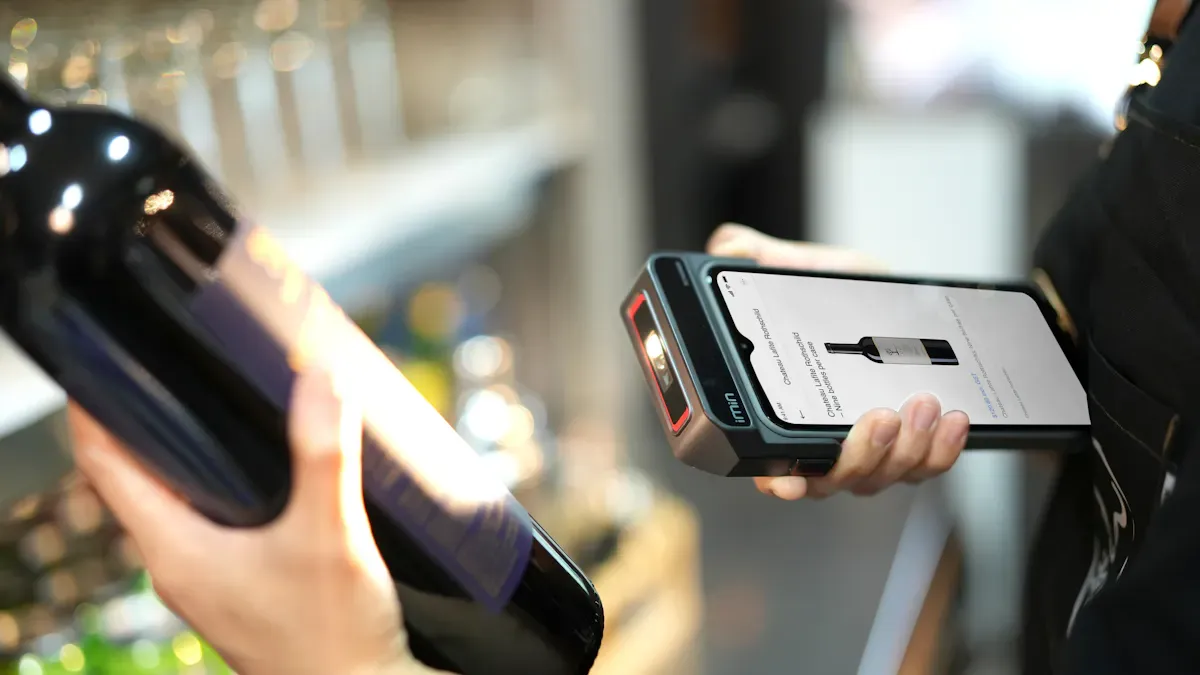
There are different kinds of wireless RFID readers. Each kind works best for certain jobs and places. Let’s learn about the main types and how they help you track things.
Handheld Readers
Portability
Handheld RFID readers are easy to carry. You can walk with them anywhere you need. They are good for checking a few items at a time. You do not have to set up a big station. Just grab the reader and start scanning.
Use Cases
You can use handheld readers to check shelves, tools, or student badges. They are great when you need to move around. For example, you can scan all student tags in a classroom in just a few minutes. Handheld readers do not cost much and are simple to use.
Fixed Readers
Continuous Monitoring
Fixed RFID readers stay in one spot. You put them at doors, gates, or docks. These readers scan every tag that goes by. You do not need to touch or move them. They work all day and night and give you data all the time.
Coverage
Fixed readers can watch over big areas. They are good for busy places like factories or warehouses. You can see every item that comes in or goes out. These readers need more setup and cost more money, but they cover a lot of space.
Tip: Fixed readers like the MR7901P from SHENZHEN MARKTRACE CO.,LTD. can read tags from far away and scan many tags at once. This makes them great for places with lots of people or things.
Mobile & Vehicle-Mounted Readers
Flexibility
Mobile and vehicle-mounted readers go on moving vehicles. You can put them on forklifts, trucks, or buses. These readers scan tags as the vehicle moves. You do not have to stop to scan.
Applications
You can use mobile readers to track school buses, trucks, or warehouse vehicles. The MR7902 from SHENZHEN MARKTRACE CO.,LTD. uses Bluetooth and GPRS. It can read tags from up to 200 meters away in open areas. This helps you track things over long distances.
Comparing Reader Types
Type | Operation | Reading Range | Cost | Best For |
|---|---|---|---|---|
Fixed RFID Readers | Automated, continuous | Extensive, fixed | Higher | High-traffic, large operations |
Handheld RFID Readers | Manual, flexible | Limited, specific | Lower | Flexible, on-site tasks |
Mobile RFID Readers | On-the-move, dynamic | Long, mobile | Medium | Vehicles, wide-area tracking |
Active vs. Passive Readers
Active RFID readers use tags with batteries inside. These tags send out signals by themselves. You can track things up to 100 meters away. This is good for real-time tracking and safety.
Passive RFID readers use tags without batteries. These tags get power from the reader’s signal. The range is shorter, but the price is lower. You can use them for stores or door access.
The MR7903 from SHENZHEN MARKTRACE CO.,LTD. is a special reader that uses active RFID. It helps you track and find things very well. You can use it for many IoT jobs.
High-Accuracy Wireless RFID Readers come in many types. You can choose the one that fits your needs, like if you want to carry it, cover a big area, or use it on a moving vehicle.
Features Driving High Accuracy
Advanced Antennas
You get better results from RFID readers when you use advanced antennas. These antennas help the reader pick up signals from tags that are far away. They also make the signals clearer. This means you can track more items at once and get the right data every time. Advanced antenna designs let you use RFID readers in many places, like warehouses, schools, or hospitals. You do not have to worry about missing a tag because the antenna can reach it. When you use a reader with a strong antenna, you see fewer mistakes and faster updates. This helps you keep track of your assets with more confidence.
Tip: If you want to cover a large area or need to read tags through walls or shelves, choose a reader with a high-quality antenna. This will help you get the best performance.
Signal Processing
Signal processing is a key part of high-accuracy RFID systems. It helps the reader find the right tag, even when there are many signals in the air. Good signal processing makes sure you get the correct data, even in busy or noisy places.
You can use RFID readers in places with lots of metal or thick walls. The signal processing helps the reader find the tag, even when other things block the way.
Advanced signal processing lets the reader tell the difference between many tags at once. This means you can scan a whole shelf or a group of students quickly.
You get fewer errors because the reader can ignore signals that do not matter. This helps you trust the data you collect.
When you use a reader with strong signal processing, you do not have to worry about interference. You get fast and accurate results every time.
Tag Compatibility
Tag compatibility means your RFID reader can work with many types of tags. You might use different tags for tools, people, or vehicles. A good reader can read all of them. This makes your system flexible. You do not have to buy new readers when you add new tags. You can use the same reader for many jobs.
Some readers, like those from SHENZHEN MARKTRACE CO.,LTD., support both active and passive tags. This lets you track things over short or long distances. You can use one system for many needs. Tag compatibility helps you save money and makes your work easier.
Note: Always check if your RFID reader supports the tags you want to use. This will help you avoid problems and get the best results.
Environmental Adaptation
Sometimes you need to track things in hard places. Warehouses, factories, and outside areas can be dirty or wet. They might be hot, cold, or have a lot of metal. High-accuracy wireless RFID readers can still work well in these places. They have special features that help them adjust.
First, pick RFID readers that keep out dust and water. Many good readers have an IP65 rating. This means dust cannot get inside. Water will not break the device. You can use these readers outside or in messy spots without worry.
Next, your RFID reader should work in very hot or cold weather. Some readers work from -30°C to +70°C. You can use them in freezing or super hot places. This helps your tracking system work all year long.
It is also important that your RFID reader is tough. Some readers have MIL-STD-810 certification. This means they can handle drops, shocks, and rough places. You do not have to worry if you drop the reader or use it in hard spots.
Sunlight and chemicals can hurt devices too. Good RFID readers use cases that do not crack in the sun. They also do not get ruined by chemicals or salt. Your device will last longer, even if you use it outside every day.
Metal and water can block radio signals. Advanced RFID readers use smart signal processing to fix this. The reader changes how it listens when it senses metal or water. You still get good data, even in tricky places.
Here is a table that shows the main features you should look for:
Feature | Description |
|---|---|
IP Rating | At least IP65 for dust and water resistance |
MIL-STD-810 Certification | Survives extreme temperatures and environmental stress |
Operating Temperature Range | Works from -30°C to +70°C |
UV and Corrosion Resistance | Enclosures last longer in sunlight and harsh chemicals |
Environmental Interference | Adaptive signal processing reduces problems from metal and moisture |
Tip: Always check the specs before you buy an RFID reader. Make sure it fits the place where you want to use it.
If you pick an RFID reader with these features, you can track things almost anywhere. You do not have to worry about weather, dirt, or metal. Your things stay easy to find, and your data stays correct.
Benefits for Asset Tracking
Inventory Accuracy
You want to know where your things are all the time. High-Accuracy Wireless RFID Readers help you do this. These readers can scan hundreds of tags in just a few seconds. You do not have to count each item by hand. This means you make fewer mistakes and your numbers are more correct. When you use RFID, you can trust your inventory records. You see what you have and what you need to buy. This helps you not run out of things or buy too much.
Here is a quick look at how RFID and old ways compare:
Benefit | Traditional Method | RFID Technology |
|---|---|---|
Accuracy Rate | 60-70% | |
Time for Inventory Counts | Days | Hours |
Reduction in Human Error | High | Low |
You can see that RFID makes your inventory more correct and saves you time.
Operational Efficiency
You want your team to work faster and make fewer mistakes. RFID technology helps you with this. The system collects data by itself. You do not have to write down numbers or scan each item one at a time. This makes your work go faster and lets you finish jobs in less time. You can also use the data to plan better and stop delays.
Some main ways RFID helps you work better:
You get real-time tracking and can see your assets right away.
The system collects data automatically, so you make fewer mistakes.
Inventory management is faster, which helps you get more done.
Workflows are smoother, so you save time and do less paperwork.
When you use RFID, you spend less time looking for things. Your team can do more important work.
Asset Visibility
You need to see your things at every step. RFID gives you this power. You can track items as they move through your warehouse, factory, or school. The system updates your records right away. You always know where your things are and who has them.
Here is how RFID helps you see your assets in logistics and supply chain:
Benefit | Description |
|---|---|
RFID technology lets you track assets in real time, so you can see them in logistics. | |
Increased efficiency and cost savings | Using RFID saves money and makes work faster by automating tasks. |
Improved accuracy and availability of data | RFID gives you better data, so you make fewer mistakes in inventory. |
Better control over production processes | RFID helps you watch production, so you get better quality and can trace items. |
Access to comprehensive management info | RFID systems give you lots of details about your supply chain, which helps you make choices. |
With RFID, you get a clear view of your things. You can make better decisions and keep your work running well.
Labor Reduction
You want to make your work easier and faster. High-accuracy wireless RFID readers help you do that. These devices take over many tasks that people used to do by hand. You do not have to spend hours counting items or searching for lost things. The system does most of the work for you.
When you use RFID readers, you see big changes in your daily routine. You do not need as many workers for inventory checks. You do not have to double-check lists or fix mistakes from manual counting. The system captures data automatically. This means you can trust the numbers you see on your screen.
Here are some ways RFID readers help you reduce labor:
Enhanced Accuracy: The system captures data from tags without human help. You do not have to worry about mistakes from typing or writing numbers.
Cost Savings: You spend less money on labor because you need fewer people for tracking and counting. You also lose fewer assets, which saves more money.
Faster Decision-Making: You get real-time data. You do not have to wait for someone to finish counting or updating records. You can make choices right away.
Streamlined Workflows: Your team spends less time on boring tasks. They can focus on more important jobs, like planning or solving problems.
With RFID, you can finish inventory checks in minutes instead of hours. You can also track assets as they move, so you do not waste time looking for missing items.
Let’s look at a simple example. In a warehouse, workers used to spend hours walking up and down aisles, scanning barcodes or writing down numbers. Now, with RFID readers, one person can scan hundreds of items in just a few minutes. The system updates your records right away. You do not need to hire extra staff during busy times.
You also see fewer mistakes. Manual tracking often leads to errors. Someone might skip an item or count it twice. RFID readers do not make these mistakes. This means you do not have to spend time fixing errors or searching for lost items.
Here is a quick table to show how RFID reduces labor:
Task | Manual Method | With RFID Readers |
|---|---|---|
Inventory Counting | Many workers needed | Fewer workers needed |
Data Entry | Done by hand | Automatic |
Error Correction | Takes extra time | Rarely needed |
Asset Searches | Long and difficult | Fast and easy |
You can see that RFID readers make your work easier. You save time, spend less money, and get better results. Your team can focus on what matters most.
Applications and Case Studies
Manufacturing
Factories change a lot when they use high-accuracy wireless RFID readers. These readers help you keep track of tools, parts, and finished products as they move. You can scan many things at the same time, so you do not waste time. You always know where each item is, which helps you plan better.
Manufacturers use RFID readers to:
Watch production lines as things happen.
Track raw materials and finished products.
Make fewer mistakes in assembly and shipping.
Check quality more easily.
When you use readers like the MR7901P from SHENZHEN MARKTRACE CO.,LTD., you get correct data about every step. You can find problems early and fix them quickly. This keeps your factory working well and helps you send products on time.
Tip: RFID readers help you find lost tools or parts fast. You do not have to stop work to look for missing items.
Warehousing & Logistics
You can make your warehouse smarter with wireless RFID readers. These devices let you track thousands of items at once. You do not need to scan each box by hand. You get updates right away as goods move in and out.
RFID makes inventory easier by tracking product tags in real time.
You make fewer mistakes and get better numbers.
You speed up work and save money on labor.
You make better choices with live inventory data.
Wireless RFID readers, like the MR7902, let you scan items even through boxes. You see where every pallet and shipment goes. Automated systems do the work for you, so you spend less time doing things by hand.
Evidence Description | Impact on Inventory Management and Shipment Accuracy |
|---|---|
Better tracking for every shipment, pallet, and box, leading to trusted inventory numbers. | |
Automated systems do the work for you. | Reduces manual scanning, increasing efficiency and reducing errors. |
You can track items as they move through different stages of transportation. | Ensures real-time visibility of inventory, enhancing accuracy in shipment tracking. |
RFID technology helps warehouses and distribution centers spend less money. You get trusted inventory numbers and send shipments faster.
Healthcare
You can help patients and manage hospital tools better with high-accuracy wireless RFID readers. These devices help you track medical equipment, medicines, and patient badges. You always know where things are, so you do not lose important tools.
Benefit/Outcome | Description |
|---|---|
Patient Safety | Makes patient information safer and helps identify patients correctly. |
Operational Efficiency | Automates simple jobs, so staff can care for patients more. |
Inventory Management | Shows where equipment is in real time, so you do not need to check by hand. |
Cost Efficiency | Stops equipment from getting lost and helps you use it better, saving money. |
Medication Management | Makes sure medicine is given out right and cuts down on mistakes. |
Asset Utilization | Tracks how equipment is used and if it is ready, so you have less downtime. |
Security and Compliance | Watches over important areas and lets only the right people in. |
Utilization Rates | Helps plan when to use and fix equipment based on how much it is used. |
You use RFID readers to do simple jobs automatically. Staff spend more time with patients and less time looking for tools. You keep track of medicine and make sure patients get the right amount. You also protect important places and keep your hospital safe.
Note: Hospitals that use RFID readers lose fewer tools and respond faster. You help your team do better work and keep patients safe.
Education & Access Control
You see big changes in schools and colleges when you use high-accuracy wireless RFID readers. These devices help you track students, staff, and assets in real time. You can make your campus safer and more organized.
RFID readers, like the MR7902 and MR7903 from SHENZHEN MARKTRACE CO.,LTD., give you powerful tools for education. You can use them for school bus tracking, attendance, and access control. Students tap their RFID cards when they enter the building or board the bus. The system records their presence right away.
You do not need to call roll or mark attendance by hand. The RFID system does this for you. You save time and avoid mistakes. Teachers and staff can focus on teaching instead of paperwork.
You can set up alerts for absenteeism. The system sends messages to parents and staff if a student does not show up. This helps you keep everyone informed and safe.
You can connect RFID readers to your school management software. The system updates records in real time. Parents can check attendance and bus status from their phones. You get a smooth flow of information between teachers, staff, and families.
Here is a table that shows how wireless RFID readers help with attendance and access control:
Functionality | Benefit |
|---|---|
Automated attendance tracking | Improves accuracy and saves instructional time by allowing students to tap RFID cards. |
Real-time data syncing | Enables immediate alerts for absenteeism, enhancing communication with parents and staff. |
Integration with management systems | Supports seamless connection with parent portals and learning management platforms. |
You can also use RFID readers to control access to buildings and rooms. Only people with the right RFID cards can enter. This keeps your campus secure. You can track who enters and leaves each area. If you need to find someone, the system shows their last location.
Schools use RFID readers to manage assets like laptops, tablets, and lab equipment. You can see where each item is and who used it last. This helps you stop loss and misuse.
Some schools use RFID readers for bus tracking. You know when students get on and off the bus. You can check routes and make sure everyone is safe. The MR7902 reader, with Bluetooth and GPRS, works well for this job. You get updates even when the bus is far from the school.
Tip: You can use RFID readers to make your school safer, save time, and keep better records. You help teachers, students, and parents work together.
You see that wireless RFID readers make education and access control easier. You get accurate data, real-time updates, and strong security. Your school becomes more efficient and safer for everyone.
Choosing the Right RFID Reader
Assessing Needs
You need to know what your group wants from an RFID system. Every business is different, so you must check a few key things before you pick one. Here is a table to help you see what matters most:
Criteria | Description |
|---|---|
Technology Compatibility | Make sure the reader works with your current systems. Flexible APIs and standards help a lot. |
Range and Accuracy | Longer read ranges and higher accuracy make your work faster and reduce mistakes. |
Scalability | Choose a system that can grow with your business. Modular or cloud-based options are best. |
Security Features | Look for data encryption and user authentication to keep your information safe. |
Cost and TCO | Think about the price, maintenance, and if the pricing model fits your budget. |
Customer Support & Service | Good support and training help you get started and solve problems quickly. |
Vendor Reputation & Track Record | Pick a company with a strong history and proven results. |
Innovation & Roadmap | Vendors who invest in new technology can offer future-proof solutions. |
You should write down your most important needs. For example, if you want to track things far away, focus on range and accuracy. If you plan to add more readers later, look for systems that can grow.
Performance Metrics
When you look at different RFID readers, you need to see how well they work. Here are some main things to check:
Metric | Description |
|---|---|
Speed | How fast the reader can process tags. |
Accuracy | How precise the location data is. |
Data Storage Capacity | How much data the reader can hold. |
Durability | How well the reader handles tough environments. |
Functionality | The features and abilities of the reader. |
Cost | The price you pay for the technology. |
Scalability | How easily you can expand the system. |
Environmental Factors | How the reader works in your physical space. |
You should also think about these things:
How accurate you need your tracking to be.
How often you want updates for each item.
How many items you want to track and how valuable they are.
What happens if you lose something.
How simple the system is to use.
How you will get and move your data.
These ideas help you choose the best High-Accuracy Wireless RFID Readers for your group.
Integration & Scalability
You want your RFID system to work with your other business tools. Good integration means you can connect your readers to warehouse management systems, ERP software, or IoT platforms. This makes your work easier and helps you use your data better.
Feature | Description |
|---|---|
Integration with Systems | Connects easily with WMS, ERP, and IoT systems for better efficiency. |
Network Connectivity | Supports Ethernet, Wi-Fi 6, or 4G/5G for real-time data and cloud analytics. |
Scalability | Lets you manage and expand across many sites as your business grows. |
You should pick readers that work with new network types. This helps you get updates right away and run your system from anywhere. As your business gets bigger, you can add more readers and cover more places without starting over.
Tip: The RFID market is growing quickly. Many companies want real-time tracking and better supply chain views. Picking a system that is easy to grow and connect helps you stay ahead.
Cost Considerations
You need to think about costs before picking a high-accuracy wireless RFID reader. You want your money to help your business. First, decide what you want to do. Maybe you want to stop losing items or make inventory more accurate. Clear goals help you see if you succeed.
You can use these steps to figure out cost and ROI:
Define the Objectives
Set your goals. You might want to stop inventory shrinkage or make asset tracking faster.Quantify the Benefits
Guess how much you will save. Look at less money spent on labor or fewer lost items.Assess the Costs
Write down all costs. Include RFID readers, tags, software, setup, and training. Remember to add costs for fixing and updating the system.Calculate the ROI
Use this formula:ROI = (Net Benefits / Total Costs) x 100
Net benefits are your savings minus your costs.Consider the Payback Period
Find out how long it takes to get your money back. Shorter payback means you get returns faster.
???? Tip: You can use easy math to see if RFID saves you money. Compare what you spend now with what you will save after using the system.
Here is a table showing common costs you might have:
Cost Type | Description |
|---|---|
Hardware | RFID readers, tags, antennas |
Software | Management platforms, integration |
Installation | Setup, wiring, testing |
Training | Teaching staff to use the system |
Maintenance | Repairs, updates, support |
Expansion | Adding more readers or tags later |
You can see costs come from different places. You need to plan for the start and for later.
Many industries have seen big gains from RFID:
Retail: Stores made inventory better. Sales went up by 10%. Shrinkage dropped by 20%.
Healthcare: Hospitals lost fewer tools. Equipment loss fell by 15%. This saved money and helped patients.
Manufacturing: Factories had less downtime by 25%. Productivity went up and mistakes went down.
Note: You can use these examples to guess your savings. Every business is different, so your numbers may change.
You should look at both costs and benefits. If you plan well, you can get your money back fast and see strong ROI. High-accuracy wireless RFID readers help you save money, work faster, and keep better records. You make smarter choices and help your business grow.
You get lots of good things when you use High-Accuracy Wireless RFID Readers for real-time asset tracking. You make your asset tracking more accurate and faster. You also have better control over your items. It is important to pick the best solution for your business and industry. If you want to be ready for the future, try these steps:
Pick solutions that can grow as your needs change.
Keep learning about new technology features.
Connect your RFID system to other business tools.
Make plans for rules and standards in your industry.
Teach your team how to use the newest RFID features.
You can check out new products from SHENZHEN MARKTRACE CO.,LTD. These products help your group manage assets and get ready for new challenges.
FAQ
What is a wireless RFID reader?
A wireless RFID reader is a device that reads information from RFID tags without wires. You can use it to track items, people, or vehicles in real time. It sends data to your computer or phone.
How far can RFID readers detect tags?
Detection range depends on the reader and tag type. Some readers, like the MR7902, can read tags up to 200 meters in open areas. Always check the product details for exact range.
Can I use RFID readers outdoors?
Yes, you can use many RFID readers outdoors. Look for readers with high IP ratings, like IP65. These readers resist dust and water. They work well in rain, sun, or dusty places.
What types of assets can I track?
You can track tools, equipment, vehicles, people, and inventory. Schools use RFID for student attendance. Warehouses use it for pallets and boxes. Hospitals use it for medical tools.
Do RFID readers work with different tags?
Most high-accuracy readers support many tag types. You can use active or passive tags. Always check if your reader matches your tags for best results.
How do I connect RFID readers to my system?
You can connect RFID readers using Wi-Fi, Bluetooth, or cellular networks. Many readers work with warehouse or school management software. This lets you see data in real time.
Are RFID systems secure?
RFID systems use encryption and user authentication to keep your data safe. You should set strong passwords and update software often. This helps protect your information.
- Next>:The Future of Logistics with Long-Range Wireless RFID Readers

 2025-12-10
 Blogs
Blogs