
Help me find a car parking RFID reader manufacturer
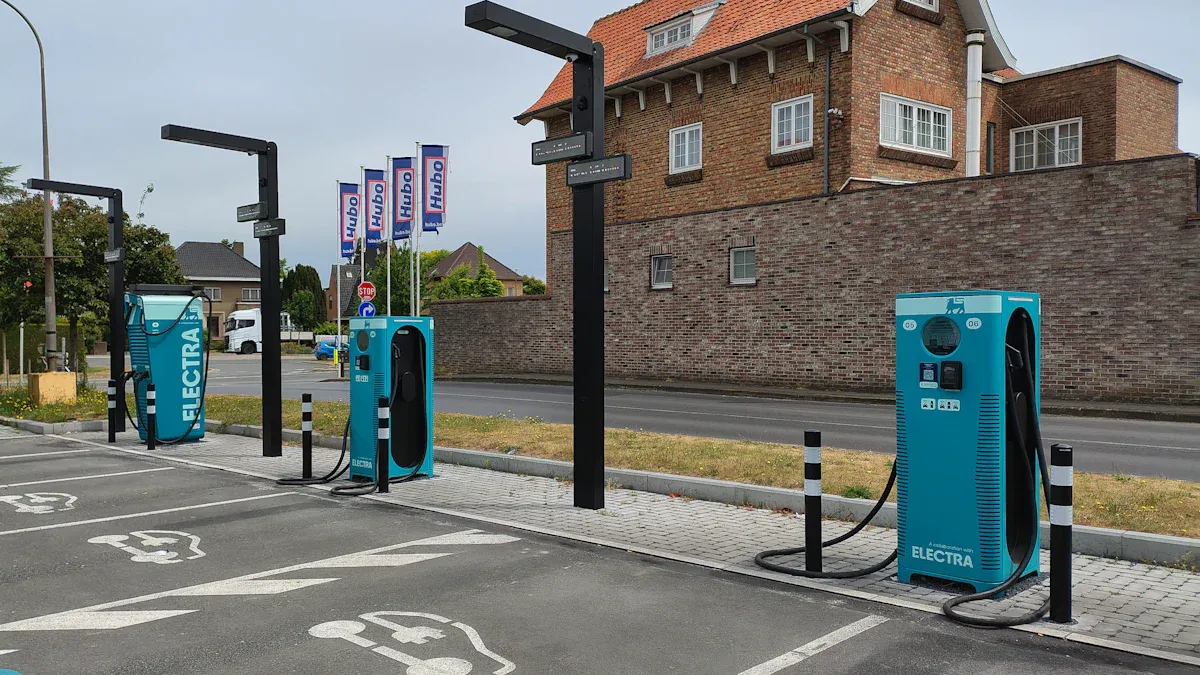
Finding a good car parking RFID reader manufacturer follows a clear, repeatable process. You don't need luck or a long list of cold calls. You need a clear method and steady rules.
The path has seven steps:
Define what you need.
Research possible suppliers.
Check technical performance.
Confirm it fits your use.
Check compliance.
Compare total costs.
Verify reliability with references and testing.
Each step builds on the one before it. A weak requirements list leads to weak quotes. Skipping a pilot test hides integration problems until after you pay.
You can use this guidance this week. Start with your requirements list, then contact three suppliers and score them the same way.
Key Takeaways
Figure out your parking area and what you want it to do before you reach out to suppliers.
Find suppliers by using directories, trade shows, and referrals to make a list.
Check the technical specs and run a pilot test to confirm how it performs in the real world.
Make sure the reader works for your site by looking at case studies and customization options.
Check compliance documents like FCC and CE to make sure the device can legally operate.
Compare the full costs, like setup and downtime, not just the price of one unit.
Check the references and warranty terms to make sure the reader will last a long time.
Pick three manufacturers and rate them the same way, so your choice is based on facts.
Define Requirements
Your requirements list guides every comparison you make later. A clear list keeps quotes similar and stops you from comparing prices that don't match. Write down your site conditions, performance goals, and integration needs before you contact any supplier.
Map the Parking Environment
Surface lots, garages, and gated entries
Each environment brings different problems. Surface lots leave readers open to direct sun, rain, and dust. Garages have low ceilings, concrete walls, and signal reflections. Gated entries need fast reads so cars do not pile up at the barrier.
Walk your site and note these conditions. Take photos of each lane and record where you can mount readers and antennas. This record becomes the base for your specification.
Lane width and traffic volume
Lane width affects your antenna choice and mounting position. A wide lane may need a different antenna pattern than a narrow one. Traffic volume sets your read-speed goal and how many missed reads you can accept.
Count vehicles during peak hours. A lane that serves hundreds of cars each morning cannot afford retries. A low-volume resident gate can accept a slower read.
Specify Frequency and Read Range
UHF vs. HF for vehicle ID
UHF suits vehicle identification because it reads from a distance. HF works best for close-range, hands-free credentials. The table below sums up typical UHF performance.
Frequency Band | Typical Range | Suitability for Long Range |
|---|---|---|
UHF (860–960 MHz) | 3~15+ meters | Highly suitable (vehicle access, parking) |
UHF readers work in the 860–960 MHz spectrum and are built to detect RFID tags over long distances from 3 meters up to 15 meters or more, depending on environmental and hardware conditions.
Read distance, antenna type, and vehicle speed
Long-range performance depends on lane width, antenna choice, and vehicle speed — not reading distance alone. Field measurements show how placement matters. A license plate tag with a plate holder reached about 10.3 m in an open field. The same tag on the front bumper reached 9.4 m.
Plan tag placement with care. Avoid mounting tags on metal surfaces or heated areas. Metal detunes the antenna, and heat breaks down the inlay. Test your chosen position before you commit.
List Durability and Integration Needs
Weather, vandalism, and temperature ratings
Specify ingress protection and operating temperature ranges that match your climate. Coastal sites need corrosion-resistant housings. Public lots need tamper-resistant mounting hardware.
Interfaces with access control and payment software
List every system the reader must talk to: barrier controllers, payment platforms, and central management software. Confirm the supported interfaces, such as Wiegand, RS-485, or Ethernet, before you request quotes.
Where to Find an RFID Reader Manufacturer
You now have a requirements list ready. The next step is to build a pool of possible suppliers. Four channels work well together: industry directories, B2B platforms, trade shows and associations, and referrals from integrators and peers. Each channel fits a different stage of your search. Use them together, and you will cover the market without wasting weeks on cold outreach.
Industry Directories and B2B Platforms
Directories and B2B marketplaces give you a wide view fast. You can pull a long list of suppliers in one afternoon. Treat this list as a starting point, not a shortlist. A listing tells you a company exists and sells readers. It does not tell you how the company performs on a wet, busy lane at 7 a.m.
Filters that matter in supplier listings
Filter hard to keep the list manageable. Focus on suppliers that state their product category clearly, such as UHF vehicle readers rather than general-purpose scanners. Look for listings that name supported frequency bands, because a supplier who publishes 860–960 MHz UHF specs likely builds for your market. Check whether the listing mentions parking, access control, or vehicle identification use cases. A supplier with parking deployments will understand your integration questions. Finally, note whether the listing links to datasheets and certification documents. A supplier that publishes documentation upfront tends to be easier to evaluate later.
Trade Shows and Associations
Trade shows put hardware in your hands. You can watch a reader detect a tag on a moving vehicle and ask the engineer standing next to it how the antenna handles a narrow lane. That conversation often saves a week of email.
Parking and mobility associations add a second layer. The International Parking & Mobility Institute (IPMI) is a leading parking and mobility association. It publishes Parking & Mobility magazine and hosts the IPMI Parking & Mobility Conference and Expo, a key event for parking technology professionals. Events like this gather suppliers, integrators, and operators in one place.
The table below lists relevant events and associations, with 2024 attendance noted where available.
Trade Show / Association | Type | Attended in 2024 |
|---|---|---|
ISC West (International Security Conference & Exposition) | Security/RFID trade show | Yes |
Southwest Parking & Transportation Association | Parking association | Yes |
California Mobility & Parking Association (CMPA) | Parking association | Yes |
AGTA (Airport Ground Transportation Association) | Transportation association | Yes |
Campus Parking and Transportation Association (CPTA) | Campus parking association | Yes |
Parking Industry Expo (PIE) | Parking trade show | Yes |
IPMI Parking & Mobility Conference & Expo | Parking association/trade show | Yes |
National Parking Association (NPA) Convention & Expo | Parking association | Yes |
PIPTA Conference & Expo | Parking/transportation association | Yes |
RFID Journal Live! | RFID trade show | No (attended 2016) |
Why in-person demos shorten the shortlist
A live demo answers questions a datasheet cannot. You see how a reader behaves at an angle, watch how the software shows a tag event, and judge build quality with your own eyes. You also meet the people who will support you after the sale. A short talk at a booth often removes two or three candidates from your list before you ever request a quote.
Referrals from Integrators and Peers
Integrators install readers every week. They know which units survive a coastal winter and which ones create support tickets. Ask your access control integrator which RFID reader manufacturer they trust for vehicle lanes. Ask peers at other parking operations about their deployments. A referral comes with context: the site type, the traffic volume, and the problems that showed up after installation.
Questions to ask before calling a manufacturer
Prepare a short set of questions so every referral gets the same treatment. Ask how long the referrer has used the product. Ask how many lanes run on it today. Ask about failure rates and how fast the supplier responded. Ask whether the supplier gave integration support during setup. Ask if the referrer would buy again. These answers tell you more than any brochure.
Once you gather names from all four channels, you will have a working list. The next step is to test each candidate against your requirements.
Evaluate Technical Performance
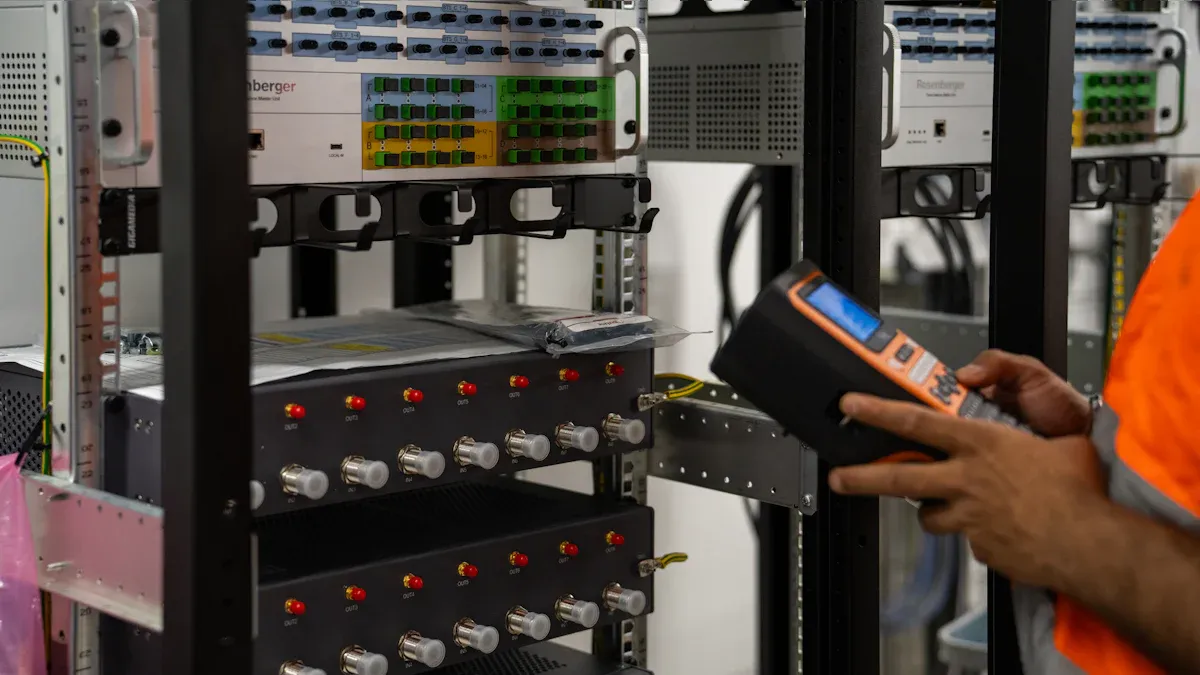
Your working list is ready. Now you test each candidate against your requirements. Specs on a page tell you what a supplier claims. Your job is to separate claims from performance you can verify.
Read Specs Critically
Read rate, accuracy, and interference handling
Read rate and accuracy decide whether cars flow or queue. Ask how many tags the reader captures per second and how it handles a crowded lane. Interference handling matters in garages, where concrete walls bounce signals. A reader with adjustable RF power lets you tune output to the lane instead of blasting the whole structure.
Compare published figures side by side. Ask each supplier for its read rate, sensitivity, and antenna gain figures, and check that the test conditions behind them match your lane. Treat any published specs as sample figures a buyer might compare, not a required brand.
Environmental and MTBF ratings
Check the operating temperature range and ingress protection against your site survey. Ask for mean time between failures (MTBF) figures and the test conditions behind them. A rating without a stated test method tells you little.
Confirm Certifications and Reports
Documents to request
Ask every candidate for the same document set. A supplier who answers quickly and completely signals an organized operation.
Document | What It Confirms |
|---|---|
FCC approval | Legal sale and use in the U.S. |
CE marking declaration | Compliance for European markets |
ISO 18000-6C (EPC Gen2) compliance | Tag interoperability |
Test reports | Independent verification of specs |
Run a Sample or Pilot Test
Pass/fail criteria before testing
Write your pass/fail criteria before the hardware arrives. Define the read success rate you need at peak speed, the maximum acceptable missed reads per hundred vehicles, and the integration checkpoints. Without written criteria, every result looks arguable.
A pilot without pass/fail criteria is a demo, not a test.
Mount the sample reader on your actual lane. Run real vehicles at your busiest hour. Score the results against your criteria, and ask the RFID reader manufacturer to explain any gap. A supplier who supports your pilot openly earns a place on the shortlist.
Confirm Application Fit
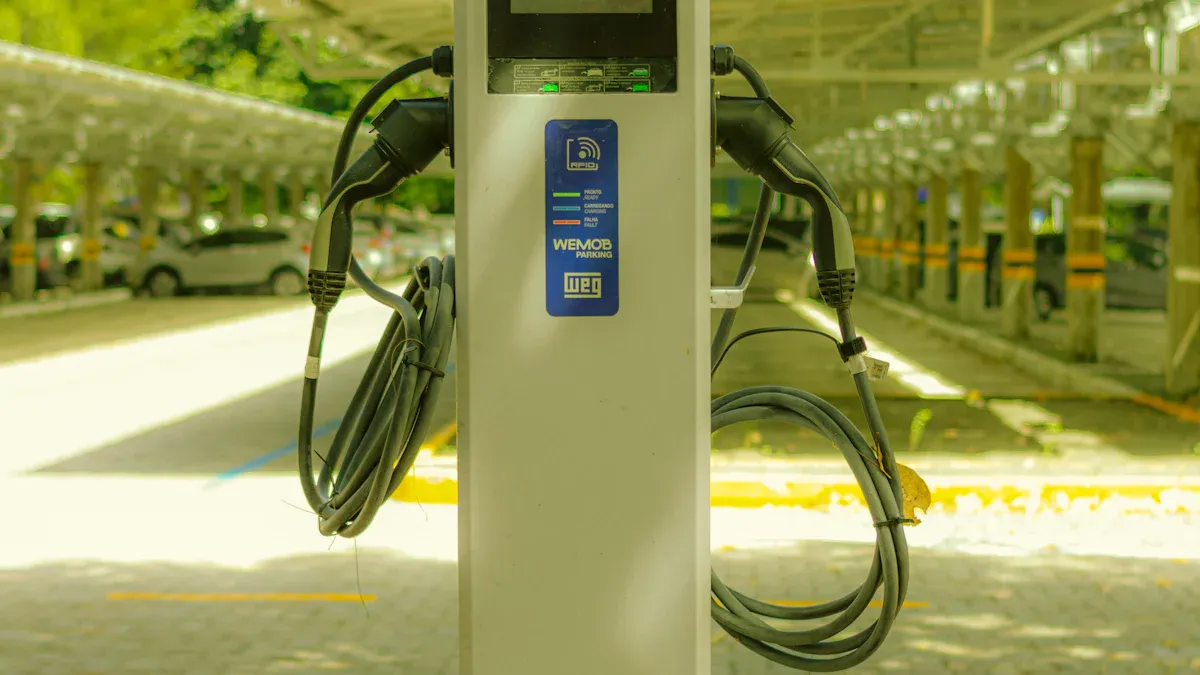
Technical specs tell you what a reader can do. Application fit tells you whether it suits your site. This step checks the supplier's track record, flexibility, and software support against your own operation.
Review Parking Case Studies
Matching their use case to yours
Ask each candidate for parking case studies. Read them for site type, lane count, and traffic pattern. A gated community deployment tells you little about a busy commercial garage. Look for a case that mirrors your environment and volume.
Then compare the problems they solved with your own list. A supplier who has handled your lane width and peak flow will answer your integration questions with confidence. Ask for a reference contact at a similar site and follow up.
Check Customization Options
Firmware, housing, and protocol options
Few sites fit a stock product exactly. Ask what the manufacturer can change. The table below shows common customization categories.
Customization Category | Options Offered |
|---|---|
Firmware / OS | Firmware configuration, software SDK, firmware support for OEM projects |
Housing / Enclosure | Housing color and appearance, modified or new housing designs, connector type |
Protocols | ISO/IEC 18000-6C, EPC Class 1 Gen 2, and some models ISO/IEC 18000-6B |
Frequency Band | Tunable 860 MHz to 960 MHz for EU, US, and other regional spectrum needs |
Antenna | Antenna type and antenna gain customization |
Interfaces | RS232, RJ45/TCP-IP, USB, GPIO, RS485, Wiegand, relay or trigger ports |
Suppliers also offer branding support, such as private labeling and tailored packaging. Confirm which options carry extra cost and lead time before you commit.
Assess Software and Integration Support
SDKs, APIs, and documentation quality
Software support decides how fast your system goes live. Ask for the SDK languages and API types the manufacturer provides. Typical offerings include Java and C# SDKs, RESTful APIs, and native APIs. Readers usually connect over TCP/IP, RS232, or USB.
Request the documentation set and read it yourself. Clear API references and sample code save your developers weeks. Ask whether the supplier offers engineering support during integration. A stable SDK and API documentation set is a valuable feature for integration, so treat documentation quality as a scored criterion, not an afterthought.
Check Compliance
Compliance decides if you can legally install and run a reader at your site. A unit that works in the lab but lacks the right approval for your market creates risk you cannot fix with firmware. Check approvals before you compare prices.
Confirm Market Approvals
FCC for the U.S. and CE for Europe
In the United States, UHF readers must follow FCC Part 15.247 for unlicensed operation in the 902–928 MHz band. Devices must use FHSS or digital modulation, with power up to 1 W conducted (4 W EIRP with a 6 dBi antenna). Manufacturers test readers for spectral emissions, frequency stability, and power compliance. Approved devices get an FCC ID that must be clearly marked on the product. Only FCC-certified devices may legally be sold and operated in the U.S.
For Europe, ask for a CE RED Certificate of Compliance under Radio Equipment Directive 2014/53/EU. The certificate should list the certificate number, the notified body or test lab, the date, the model list, and the test standards. Also request a CE EMC Certificate of Conformity under EMC Directive 2014/30/EU, which names the EMC test standards such as EN 55032.
Local radio regulations
Frequency bands and power limits change by country. The table below shows the main differences you will meet.
Region | Frequency Band | Max EIRP | Key Requirements |
|---|---|---|---|
FCC (USA) | 902–928 MHz | 4 W (36 dBm) | DFS and TPC not required; channel hopping optional |
CE (EU) | 865–868 MHz | 2 W (33 dBm) | Mandatory DFS and TPC; 10% duty cycle per channel |
Europe adds operating rules under CEPT/ETSI 302-208. Shared operation in the 865–868 MHz band runs at transmit powers up to 2 W ERP, confined to 200 kHz sub-bands. Readers must use listen-before-talk (LBT), with a listening time of more than 5 ms before each transmission and a maximum continuous transmission period of 4 seconds. Readers without LBT capability are limited to a 0.1% duty cycle. Other markets set their own limits: Japan uses 952–954 MHz at up to 4 W EIRP, India uses 865–867 MHz at up to 4 W EIRP, and Singapore uses 923–925 MHz at up to 2 W ERP.
Verify Safety and Quality Standards
ISO and industry certifications
Ask for ISO 18000-6C (EPC Gen2) compliance, which confirms tag interoperability across vendors. This matters in parking, where you may enroll tags from several suppliers. A reader that meets the standard reads compliant tags from other makers without custom work.
Request Compliance Documentation
Test reports and declarations
Request the same document set from every candidate. Ask for the FCC SDoC declaration with its number, model, responsible party, and standard applied. Ask for the CE RED and EMC certificates with their test standards. Compare the model numbers on each document against the unit you plan to buy. A certificate for a different model protects no one.
Certified readers also help you avoid radio interference with gate control electronics, video cameras, and nearby tolling equipment. Treat missing paperwork as a stop sign, not a detail to settle later.
Compare Costs
Look Beyond Unit Price
Installation, cabling, and mounting
The sticker price only covers the reader itself. Your real bill includes mounting hardware, cable runs, power, and the labor to install each lane. A long-range reader may need a strong pole, a clear antenna sightline, and shielded cable back to the controller. Ask each supplier for a typical bill of materials per lane. Compare those lists side by side, because a cheap reader with costly mounting can cost more than a premium unit that installs cleanly.
Software licenses and integration labor
Software adds a second layer of cost. Ask whether the platform charges per reader, per lane, or per vehicle. Then price the integration work. Your developers will spend time on the SDK, the API, and the barrier controller handshake. Request a written estimate of integration hours from the supplier's engineering team. That number often separates two quotes that looked identical on paper.
Calculate Total Cost of Ownership
Maintenance, spares, and replacement cycles
Maintenance schedules differ by system type. Integrated RFID readers are solid-state devices with no moving parts, so they avoid mechanical jams and physical wear-and-tear. This design reduces emergency repair calls compared with ticket dispensers or magnetic stripe readers.
System Type | Maintenance Frequency |
|---|---|
Manual/Legacy Systems | Quarterly (due to mechanical wear) |
Integrated RFID (2026 standard) | Annual (solid-state electronics) |
Selecting hardware with a minimum IP67 rating is the threshold for ensuring a 7-to-10-year hardware lifecycle, as it guarantees the device can survive temporary submersion and is completely dust-tight.
Plan annual inspections with a simple checklist:
Annual inspections should check for housing cracks.
Annual inspections should ensure mounting brackets have not corroded.
Even IP68-rated readers are not maintenance-free, since UV radiation can embrittle plastic housings over time. Budget for spares on critical lanes and note the replacement cycle in your cost model.
Downtime cost in a parking operation
A failed reader blocks a lane. Cars queue, revenue stops, and staff must intervene. Estimate the cost of one hour of downtime at your busiest gate, then multiply it by the failures you expect each year. This figure belongs in your comparison, because a low-cost unit with frequent outages can drain more money than a reliable one.
Weigh Cost Against Reliability
When a higher upfront price pays off
A higher price pays off when it buys fewer failures, longer life, and faster support. Compare finalists on total cost of ownership, not the invoice. A reader that lasts through a full replacement cycle without emergency calls usually wins, even at a premium. Score each candidate on the same sheet, and let the numbers settle the decision.
Verify Reliability
You have compared specs, checked compliance, and weighed costs. Now you must confirm that the supplier will still perform years from now. Reliability is not a claim on a datasheet. You verify it through references, warranty terms, and a structured shortlist process.
Check References and Track Record
Years in business and deployed units
Ask each candidate how long they have built RFID readers for vehicle access. A supplier with a long history has survived market shifts and product cycles. Ask how many units they have deployed in parking and gated environments. A large installed base gives you a deeper pool of references to call.
Do not accept a vague answer. Request the number of active deployments in your region. Ask for the typical lane count per site. A supplier who serves many small sites may not understand a busy commercial garage. A supplier who serves large operations may overbuild for a small resident gate. Match their track record to your scale.
Customer retention and repeat orders
Repeat business tells you what customers do after the first purchase. Ask what percentage of customers buy again. Ask whether any customer has expanded from one lane to a full site. A supplier with strong retention usually supports its products well after the sale.
Request two or three references from customers who have run the product for at least two years. Ask those references about failure rates, spare parts availability, and how quickly the supplier responded to problems. A reference who would buy again is worth more than a glossy brochure.
Review Warranty and Support
Warranty length and RMA process
Ask for the warranty length in writing. Confirm what the warranty covers: the reader, the antenna, the housing, or the full assembly. Ask how the return merchandise authorization (RMA) process works. A clear RMA process includes a stated turnaround time and a named contact.
Compare warranty terms across finalists. A longer warranty signals confidence in the product. A short warranty with a fast RMA process may still work for you. The key is to know the terms before you sign.
Response times and support channels
Ask how the supplier handles technical support. Confirm the channels: phone, email, or a ticketing portal. Ask for the typical response time during business hours and after hours. A parking lane that fails at 6 a.m. needs help before the morning rush.
Ask whether support staff speak your language and understand parking operations. A support team that knows barrier controllers and payment software will resolve your issue faster than a general help desk.
Shortlist RFID Reader Manufacturers
Scorecard for comparing finalists
Build a simple scorecard so every finalist gets the same treatment. Score each category on a fixed scale, such as 1 to 5. Weight the categories to match your priorities. The table below shows a sample structure.
Category | What You Score | Weight |
|---|---|---|
Technical specs | Read rate, range, RF power, sensitivity | High |
Compliance | FCC, CE, ISO 18000-6C documents | High |
Cost | Total cost of ownership, not unit price | Medium |
Support | Warranty, RMA, response time | High |
References | Track record, repeat orders | Medium |
Add the weighted scores and rank the finalists. A supplier who leads on price but trails on support will fall down the list. The scorecard keeps the decision objective and gives you a record to justify the choice.
Pilot deployment before full rollout
Run a pilot on one lane before you commit to a full rollout. Write your pass/fail criteria first. Define the read success rate you need at peak speed. Set the maximum acceptable missed reads per hundred vehicles. List the integration checkpoints, such as a successful barrier open and a correct payment record.
A pilot with written pass/fail criteria turns a sales demo into evidence you can defend.
Mount the sample reader on your actual lane. Run real vehicles at your busiest hour. Score the results against your criteria. Ask the RFID reader manufacturer to explain any gap and to propose a fix. A supplier who supports your pilot openly earns the rollout. A supplier who deflects the results does not.
Once the pilot passes, you have verified reliability with your own data. You can move to full deployment with confidence.
Seven steps turn a vague search into a choice you can trust. First, define what you need, then research suppliers through directories, trade shows, and referrals. Check technical performance with real specs and a pilot test. Confirm the product fits your site through case studies and software support. Check compliance documents for your market. Compare total costs, not just unit prices. Verify reliability with references and warranty terms.
Reliability is proven, not assumed. Write your requirements list before you contact any RFID reader manufacturer. A clear list keeps every quote easy to compare.
Shortlist three manufacturers this week. Run each one through the same scorecard, and let the evidence decide.
FAQ
How long does it take to choose a car parking RFID reader manufacturer?
Plan for several weeks. You will spend about a week on requirements and research. Reviewing documents and getting quotes takes another week. A pilot on one lane adds more time before rollout. Rushing the pilot saves a few days now but costs you weeks later.
Can one reader cover more than one lane?
Sometimes it can, but test it first. A reader with adjustable RF power lets you tune the coverage. Reads from the wrong lane cause false opens and billing errors. Mount antennas to aim at one lane, then confirm with a pilot before you rely on shared coverage.
Which tag should I use on vehicles?
Choose an ISO18000-6C (EPC Gen2) UHF tag. This standard keeps tags working across different vendors. Avoid mounting tags on metal surfaces or heated areas. Test the position on your own vehicles before you enroll a whole fleet.
How long should a pilot run?
Run the pilot through at least one full peak cycle, like a Monday morning rush. Score the results against written pass/fail criteria. Extend the pilot if results sit near the threshold. One quiet afternoon tells you little about a busy lane.
What warranty terms should I expect?
Ask for the warranty length in writing and confirm what it covers: reader, antenna, housing, or full assembly. Request the RMA turnaround time and a named contact. Compare terms across finalists before you sign.
Will a UHF reader interfere with my gate electronics?
A certified reader lowers this risk. FCC and CE approvals cover spectral emissions and power limits. Keep antennas away from cameras and tolling equipment. Test for interference during the pilot, not after rollout.
Do I need a different reader for the U.S. and Europe?
Yes, in most cases. The U.S. uses 902–928 MHz under FCC rules. Europe uses 865–868 MHz under CE rules with listen-before-talk requirements. Confirm the model carries the approval for your market before you order.
How many manufacturers should I shortlist?
Three works well. Fewer limits your comparison. More wastes evaluation time. Score all three on the same sheet, covering specs, compliance, cost, support, and references. Let the evidence rank them.
- Next>:I need a dependable school attendance reader supplier

 2026-09-20
 Blogs