
Help me find a reliable 2.45 GHz RFID reader supplier for industrial tracking
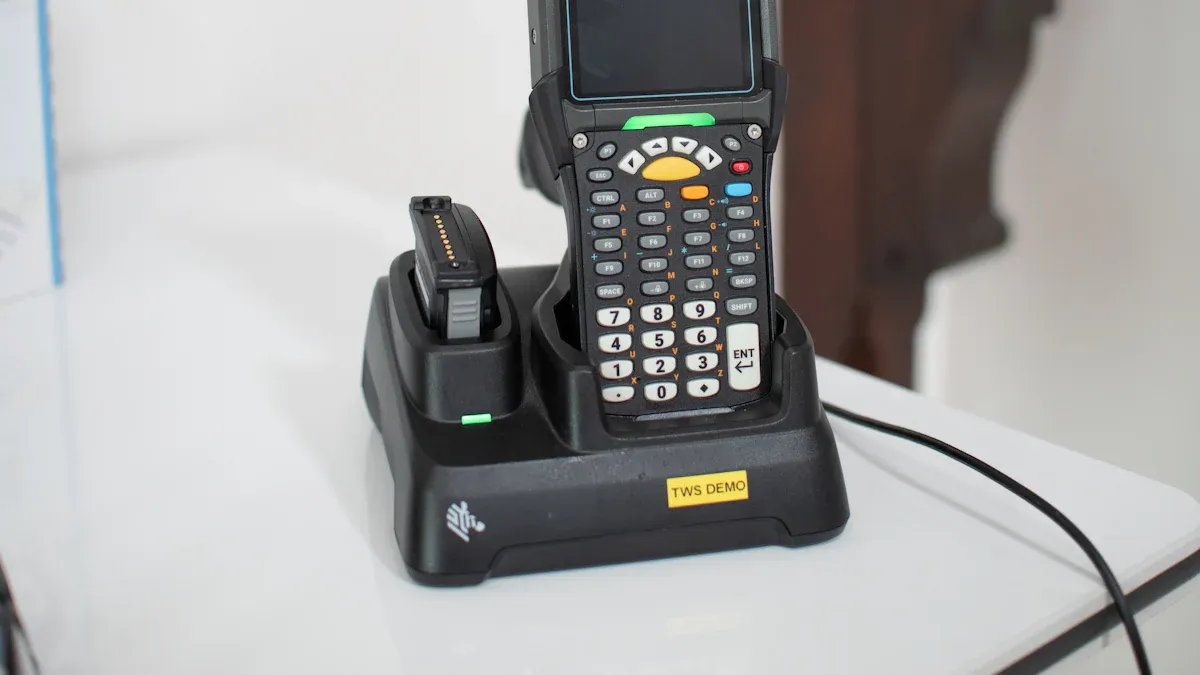
A trustworthy 2.45 GHz RFID reader supplier proves itself with a strong record in factories, ISO, CE, and FCC approvals, tough hardware with IP ratings and wide temperature ranges, proven long-range performance, and helpful after-sales tech support. You need all five.
Industrial tracking is hard on weak hardware. Dust, vibration, extreme temperatures, and long read distances break consumer-grade readers fast. Rules and approvals add another layer that low-quality suppliers cannot meet.
This post gives you a step-by-step vetting framework. You will learn how to check specs and certifications, verify suppliers through references and samples, find the right sourcing channels, and spot red flags before you commit.
Key Takeaways
Check IP ratings and temperature ranges to make sure readers can handle dust, washdown, and extreme temperatures.
Ask for CE, FCC, RoHS, and network access license certificates to follow local rules and avoid customs problems.
Ask for examples from factories and talk to customers who use the product to check how well it works in real life.
Order samples and test them in your building with your tags and products before you buy in bulk.
Check how well the seller helps after the sale. Look at how fast they reply, their warranty, spare parts, and firmware updates.
Find suppliers at trade shows, B2B platforms, and associations, but confirm if they are makers or resellers.
Avoid warning signs such as prices that seem too good to be true, missing official approvals, and vague technical answers.
Run a demo trial with clear success measures to show the reader works in your setting.
Critical 2.45 GHz RFID Specs and Certifications
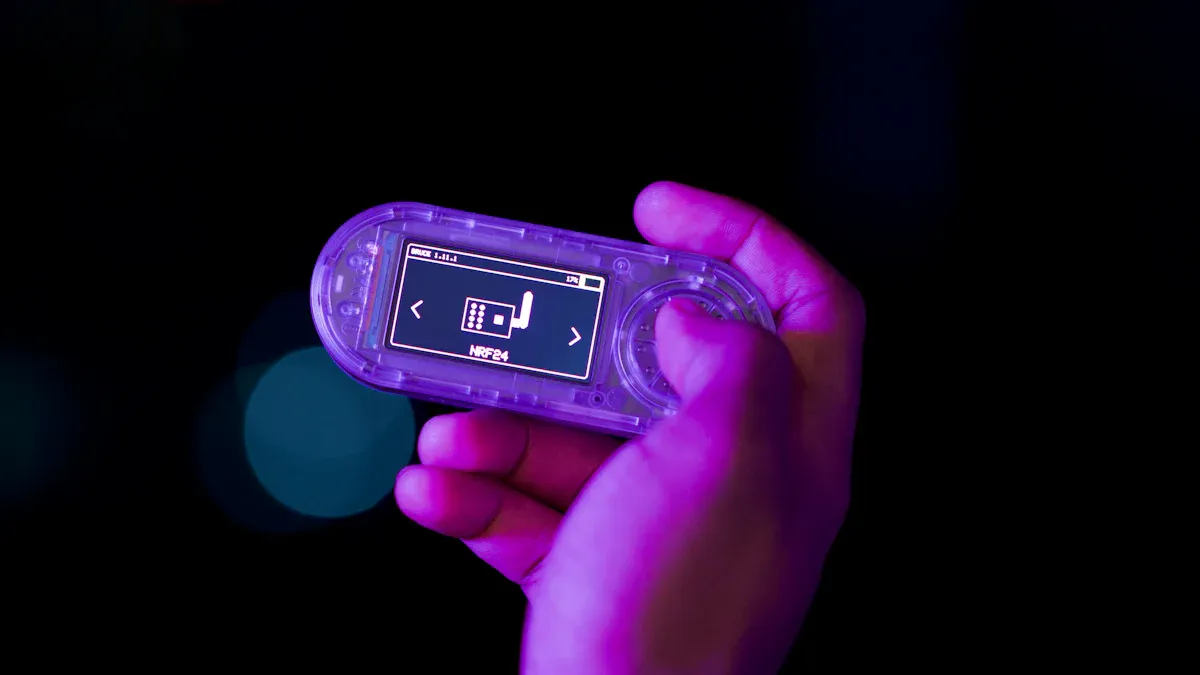
You cannot judge a supplier by its sales pitch. You judge it by the hardware data it publishes. Checking every spec against your industrial project needs is a key step when you pick a 2.45 GHz RFID reader supplier. A reader that fails in a freezer aisle or on a shaking conveyor line costs you much more than the unit price.
Industrial Hardware Requirements
IP Rating and Temperature Range
Industrial sites put readers in dust, washdown, and extreme heat or cold. The ingress protection (IP) rating shows how well the enclosure seals against solids and liquids. The operating temperature range shows where the electronics keep working. Compare these two common industrial grades:
Specification | Value |
|---|---|
IP Rating | |
Operating Temperature | -4°F to 140°F (-20°C to 60°C) |
IP Rating | |
Operating Temperature | -40°C to +60°C |
An IP66 unit stands up to strong water jets. An IP67 unit survives being briefly underwater. Both ranges cover most factory floors, but cold-chain and outdoor yards need the wider -40°C to +60°C span. Ask the supplier for the test report behind the rating, not just the label.
Reliable readers often feature IP67 protection and can run 24/7 without issue, making them suitable for demanding environments.
Shock, Vibration, and Enclosure Durability
Forklifts hit racks. Conveyors shake. Readers mounted on moving assets take in constant vibration. Ask how the supplier tests the enclosure against drop, shock, and vibration. Look for potted circuit boards, locking connectors, and metal or reinforced polymer housings. A reader with a weak plastic shell will crack long before its warranty ends.
RF Performance Specs
Frequency Accuracy and Power Output
The 2.45 GHz RFID band is license-free in most regions, which makes it popular for active tracking. Frequency accuracy keeps the reader inside its allowed band. Power output decides how far the signal reaches and how much interference it makes. Ask for the conducted power figure and the tolerance around the center frequency. A drifting oscillator causes dropped reads and regulatory trouble.
Read Range and Multi-Tag Handling
Long-range reading is the main reason buyers pick active 2.45 GHz RFID for industrial tracking. State your required distance and your tag population per zone. Then ask the supplier for a live demonstration. A reader that claims a long range but reads only a few tags at once will choke on a busy dock door. Multi-tag handling depends on anti-collision algorithms, so request the documented tag-per-second rate.
Compliance Certifications
ISO, CE, FCC, and Regional Approvals
Standards compliance separates professional suppliers from hobbyist vendors. The key standard for this band is ISO/IEC 18000-4.
ISO 18000-4 standardizes low-power applications of ultra-high frequency (UHF) systems, typically operating in the 2.45 GHz frequency band.
Beyond ISO, you need CE for Europe, FCC for the United States, and the network access license for China. Each region enforces its own radio rules. A supplier that cannot show these certificates will leave you exposed at customs and in the field.
RoHS and Environmental Documentation
RoHS documentation proves the reader holds no restricted hazardous substances. Many industrial buyers also need REACH statements and material declarations for their own compliance audits. Request these files before you order. A reliable supplier should hold CE, FCC, RoHS, and network access license certifications, ensuring real field reliability across many deployments.
A reliable supplier should offer products designed for stable performance in demanding industrial environments. Check the specs, demand the certificates, and verify the numbers. Your supplier's paperwork and test data will tell you more than any brochure.
Checking Out a 2.45 GHz RFID Supplier
A good spec sheet is just the beginning. You still need to make sure the supplier can really deliver, support, and stand behind its hardware. This part walks you through the vetting process step by step.
Before you look at references and samples, think about what the supplier offers. A vendor that gives you a full tracking solution — tags, readers, and software — makes your industrial tracking setup much easier. You skip the hassle of piecing together parts from three different companies. Some suppliers are full-solution providers, with in-house hardware design for reader motherboards, antenna modules, and tag types. They also provide complete SDKs, APIs, and technical support. That kind of integration lowers compatibility risk and speeds up your deployment.
Check Industry References
Ask for Industrial Case Studies
Ask the supplier for case studies from industrial projects like yours. Look for deployments in manufacturing, logistics, or asset tracking. A supplier with real experience will share detailed stories. They will explain the problem, the solution, and the measured results. Vague claims like "we serve many factories" mean little. Specific examples with named industries and outcomes carry weight.
Talk to Existing Customers
Case studies are marketing material. A direct talk with an existing customer is far more valuable. Ask the supplier to connect you with a client who uses their readers in a similar environment. Prepare questions about read reliability, downtime, and how fast the supplier responds to problems. If the supplier hesitates or refuses, treat that as a warning sign.
Review Documentation and Samples
Ask for Datasheets and Test Reports
A professional supplier publishes full datasheets. The document should list every key parameter you need for your project. Use the table below as a checklist when you review a datasheet for a 2.45 GHz RFID reader.
Category | Parameter | Specification |
|---|---|---|
RF Parameter | Operating Frequency | 2.400–2.48 GHz |
RF Parameter | Operation Mode | FHSS or fixed frequency |
RF Parameter | Modulation | GFSK |
RF Parameter | Communication Rate | 1 Mbps |
RF Parameter | Receiving Sensitivity | -95 dBm |
RF Parameter | Communication Interfaces | RS-232, 10M/100M Ethernet |
RF Parameter | Expansion Interfaces | RS-485, Wiegand26/34 |
RF Parameter | I/O Port | 2-channel relay output, 2-channel trigger input |
RF Parameter | Firmware Upgrade | Serial port support |
RF Parameter | Application Software Platform | API C++, C# |
Tag Operation | Tag Protocol | Private Protocol |
Tag Operation | Reading Range | 0–260 m (depends on tag power output) |
Tag Operation | Max Simultaneous Tag Detection | 300 |
Tag Operation | Identification Accuracy | >99.99% |
Mechanical & Electrical | Dimensions | 315 mm × 200 mm × 110 mm |
Mechanical & Electrical | Weight | 1.6 kg |
Mechanical & Electrical | Power Supply | AC180V~240V input (optional external power adapter) |
Mechanical & Electrical | Power Consumption | 300 mW |
Mechanical & Electrical | Operating Temperature | -40°C~+60°C |
Mechanical & Electrical | Humidity | 5%~95% (non-condensing) |
Mechanical & Electrical | Waterproof | IP67 |
If a datasheet leaves out these values, ask for them in writing. A supplier that cannot provide them does not know its own product well enough to support you.
Order Samples for Field Testing
Free-air read-range numbers are only a starting point. You must confirm actual read probability and inventory time using representative products and packaging. At 2.45 GHz, propagation loss and reflections are significant because the wavelength is short compared to many environmental features. Building walls that are only half a wavelength deep at 915 MHz become almost two wavelengths deep at 2.45 GHz, causing greater attenuation. Packaging materials that are lossy at 2.45 GHz may have no effect at 915 MHz. When an antenna is mounted in its final environment, its match, bandwidth, and center frequency can shift dramatically. One example showed a tag tuned to 2.625 GHz in free air shifting to 2.45 GHz when mounted in metal.
Test your samples under real conditions. Check tag orientation, polarization, distance, motion speed, tag density, nearby metal, liquids, reader antenna placement, and multipath reflections. A read range measured in free air should not be assumed to repeat on a production line, conveyor, warehouse rack, pallet, or vehicle.
Check After-Sales Support
Support Response Times and Channels
Downtime costs money. Ask the supplier how fast their engineers respond to a support ticket. Reliable suppliers offer round-the-clock service. They staff their support desk with experienced engineers, not junior staff reading from a script. Confirm the channels available: phone, email, and remote diagnostics.
Warranty, Spare Parts, and Firmware Updates
Get the warranty terms in writing. A standard warranty covers free maintenance during the warranty period. Ask about spare parts availability and lead times. A supplier that cannot ship a replacement reader within a reasonable window will leave your line down for days. Firmware updates matter too. A supplier that actively improves its firmware protects your investment over time.
Some suppliers in North America provide strong regional support for 2.45 GHz active RFID readers. Whether you source locally or overseas, apply the same vetting standard to every candidate.
Where to Find Trusted Suppliers
You have your checklist ready. Now you need to find suppliers worth checking out. Three main paths work well for industrial buyers.
Trade Shows and Expos
RFID and Automation Events
Trade shows put many suppliers in one place. You can touch the hardware, watch live demos, and talk to engineers in person. Big events include RFID Journal LIVE in the United States and the RFID & Wireless IoT Tomorrow show in Europe. Automation fairs like Hannover Messe also have strong RFID sections. Check the exhibitor list before you go. Mark the booths that fit your project needs.
Questions for Supplier Booths
Walk up with a plan. Ask the booth staff three questions. First, "What is your read range on a moving asset in a metal-heavy environment?" Second, "Can you show me a case study from a factory like mine?" Third, "Who handles technical support after the sale?" Watch how they answer. Engineers give direct answers. Sales staff avoid hard questions. Collect business cards and write down your thoughts while they are still fresh.
B2B Platforms and Directories
Alibaba, Global Sources, Made-in-China
Online B2B platforms give you quick access to hundreds of suppliers. Alibaba, Global Sources, and Made-in-China lead this space. Use their filters to narrow by certification, years in business, and response rate. Treat listings as a starting point, not a final answer. Many listings reuse the same photos and specs. Cross-check every claim against the supplier's own website and documents.
Trading Companies vs. Manufacturers
A trading company resells products from many factories. A manufacturer builds the hardware itself. Trading companies often offer lower prices and faster shipping on small orders. Manufacturers give you better quality control, custom options, and direct technical help. Ask the supplier directly: "Do you own your factory?" Request a video tour of the production line. A direct-manufacturer model, where the supplier owns its factory, ensures strict quality control and a stable supply chain, removing a middle layer.
Associations and Direct Manufacturer Contact
RFID Associations and Standards Bodies
Industry associations connect buyers with trusted suppliers. The RFID Alliance and GS1 keep member directories and publish standards guidance. These groups screen members for basic skills. A supplier listed in a recognized association has passed some level of review. Use these directories to build your shortlist.
Approaching OEM/ODM Manufacturers
You can contact OEM and ODM manufacturers directly for custom 2.45 GHz RFID hardware. This path suits buyers with specific technical needs. Prepare a clear requirements document before you reach out. Include your read range, tag count, environmental conditions, and interface needs. Strong manufacturers respond with a detailed proposal. Suppliers with global deployments and large enterprise clients demonstrate the capabilities of a direct manufacturer at scale.
Red Flags to Avoid
Catching a bad supplier early saves you money and trouble. The warning signs below show up often in failed industrial tracking projects. Learn them well.
Pricing and Quality Warning Signs
Unrealistically Low Quotes
A quote far below normal price should make you doubt. No factory can make good hardware at a loss. Low quotes often mean bad parts, no testing, or extra costs added later. Ask the supplier to explain the price. A clear quote lists the reader, antenna, cables, software license, and shipping separately. A reliable supplier offers fair prices with no hidden fees.
Undisclosed Component Origins
Ask where the key parts come from. The RF chipset, power module, and antenna parts decide how well the reader works. A supplier that will not name its part sources is hiding something. Good manufacturers track every part in their materials list. A strong portfolio of patents and intellectual property rights shows deep control over its own designs.
Documentation and Communication Gaps
Missing Certifications or Test Data
A serious supplier keeps its certificates ready. CE, FCC, RoHS, and network access license documents should be one email away. If the supplier delays or sends blurry scans, walk away. The same rule applies to test reports for IP rating and temperature range. Real data exists for real products.
Slow or Evasive Technical Responses
Send a technical question before you buy. Ask about receiving sensitivity or anti-collision performance. Watch how fast the answer comes back. Engineers answer with numbers and explanations. Vague replies like "it works fine" tell you the supplier does not know much. A supplier with many years of R&D experience will handle tough technical questions confidently.
Support and Scalability Concerns
No Local Support or RMA Process
Ask what happens if a reader breaks at your site. A good supplier has a clear return and fix process. They share response times and warranty terms. A supplier with no return path leaves you with broken hardware. A low repair rate indicates that products rarely fail.
Inability to Scale or Customize
Your small test project might grow into hundreds of readers at many sites. Ask the supplier about making enough units and custom options. A vendor that cannot increase production will slow your launch. A vendor that cannot make changes will give you a poor fit. Test this early with a small request. Ask for a different cable length or a custom firmware setting. A 2.45 GHz RFID supplier that handles small changes well will also handle big ones.
Final Checklist and Demo Trial
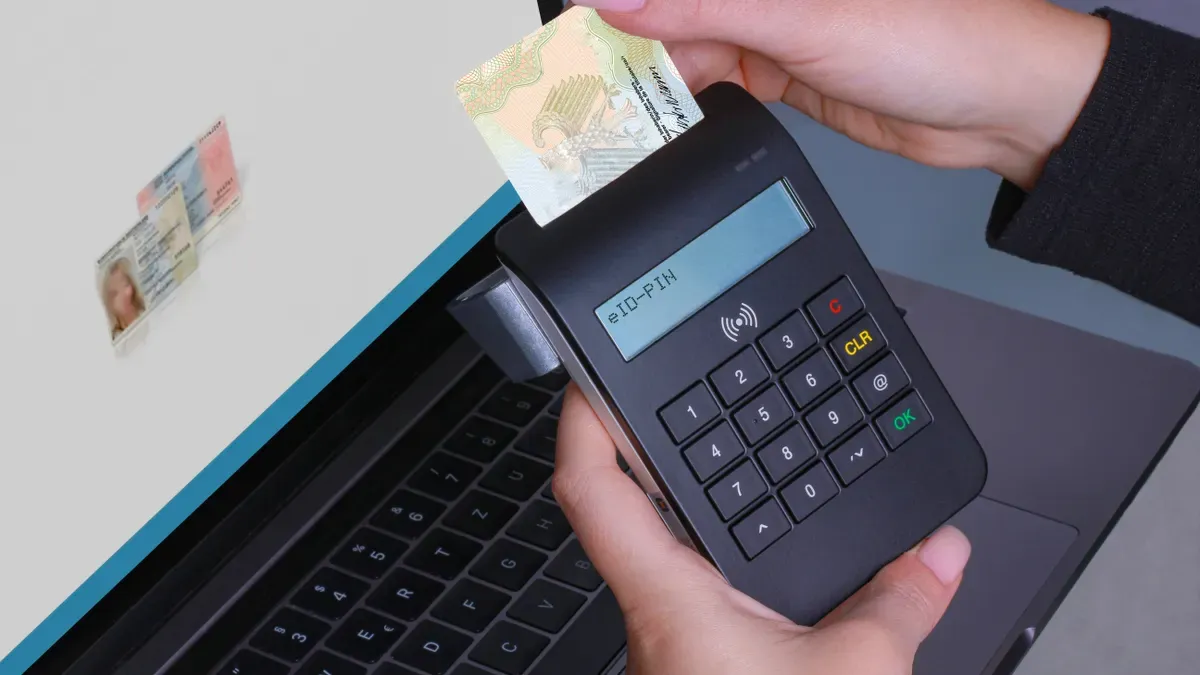
You have the framework. Now use it to make your final choice. A trustworthy supplier meets every point on your checklist. Start with specs and certifications. Then check references and samples. Finally, run a demo trial at your own site.
Supplier Evaluation Checklist
Specs, Certifications, and Documentation
Start with the hardware specs. Confirm the IP rating and operating temperature range. Check frequency accuracy and power output. The read range must fit your industrial setting. For a 2.45 GHz RFID reader, check the documented range on moving assets. Do not trust static free-air numbers. Multi-tag handling rates matter too. A reader that handles 300 tags at once works for busy dock doors.
Next, ask for the certifications. Look for CE, FCC, RoHS, and a network access license. ISO compliance adds another layer of trust. Ask for the test reports behind each certificate. A supplier that holds these certifications and demonstrates a low repair rate proves real-world reliability. A supplier that shares raw data shows confidence in their product.
References Verified and Samples Tested
Ask for at least two case studies from industrial projects like yours. Read them carefully. Then ask the supplier to connect you with a reference customer. Prepare three questions. How often does the reader fail? How fast does support respond? Would you buy again? Honest answers reveal the real supplier experience.
Order samples for field testing. Do not rely on lab numbers. Mount the reader in your actual environment. Test with your tags, your products, and your packaging. Check read probability at different angles, distances, and motion speeds. A reader that works well in free air may fail on a metal conveyor. Test everything before you commit.
Requesting a Demo Trial
Defining Trial Success Metrics
Set clear metrics before the trial starts. The goal is to prove the reader works in your environment. Start with handheld readers. They cost less than fixed infrastructure and cover your whole facility. Pilot two workflows first: inbound receiving through a dock portal and cycle counting with a handheld.
Define specific success thresholds. Inventory accuracy should climb above 95 percent within 90 days. Cycle count duration should drop 80 to 95 percent. Out-of-stocks should fall 20 to 40 percent. Shrinkage should drop 40 to 60 percent in tagged categories. If these metrics do not move in 90 days, treat it as a tag-application or read-rate problem. Re-survey the site and adjust.
Negotiating Pilot Pricing and Terms
Match tags to surfaces to control costs. Use cheap labels for non-metallic items. Use mid-range on-metal tags for machinery and IT assets. Save rugged tags for harsh environments only. On 5,000 assets, a blanket three-dollar rugged tag costs $15,000. A mixed spec with 3,500 labels at ten cents, 1,200 on-metal tags at two dollars, and 300 rugged tags at three dollars costs only $3,650. That is a real saving.
Consolidate your orders into one annual purchase. Standardize on two or three tag models. This moves you up the volume pricing table. Buy tags pre-encoded from the supplier. It removes a $1,500 to $6,000 capital line plus labor. Phase your rollout by asset class, not by building. Start with the highest-pain category. The accuracy data from that phase funds the next one. Sequence matters. Specification decisions are cheap before purchase and expensive after.
Some suppliers offer full customization and end-to-end solutions for industrial tracking. Use the checklist, run the trial, and pick the supplier that passes every test.
You now hold a complete vetting framework. A reliable supplier delivers industrial-grade specs, verified certifications, proven references, responsive support, and transparent pricing. Those five criteria separate real manufacturers from resellers.
Samples, reference calls, and demo trials remain your best defense against low-quality vendors. Test a 2.45 GHz RFID reader in your own facility before you commit to bulk orders.
Apply the checklist today. Contact suppliers, request documentation, and run your pilot. Your industrial tracking project deserves hardware that survives the floor, not just the brochure.
FAQ
What certifications must a 2.45 GHz RFID reader supplier provide?
You need CE for Europe and FCC for the United States. RoHS papers show the parts are safe. A network access license is needed for China. These certificates tell good suppliers from bad ones. Always ask for copies before you buy.
How do I test a reader before bulk commitment?
Order samples. Put the reader in your real work area. Test with your tags and packing. Check read reliability at different distances and angles. A reader that works in open air may fail on a metal conveyor. Test everything first.
What does IP67 mean for industrial RFID readers?
IP67 means the reader can handle being underwater for a short time. It also keeps dust out completely. This rating works for factory floors, washdown areas, and outdoor yards. Ask for the test report behind the rating. Do not trust only the label.
How long do active RFID tags last in industrial use?
Battery life depends on tag design and how often the tag sends a signal. Your supplier should give you written battery specs. The exact life changes with how you use the tag and where. Ask for real-world data.
What repair rate should I expect from quality readers?
Quality suppliers often have very low repair rates documented in their field data. Always ask any supplier for their written failure rate before you order.
Can I use 2.45 GHz RFID readers outdoors?
Yes, with the right hardware. Look for an IP67 rating and a -40°C to +60°C temperature range. These specs handle rain, dust, and extreme weather. Check these numbers in the datasheet before buying.
Should I buy from a manufacturer or a trading company?
Manufacturers give you better quality control and direct tech support. Trading companies sell products from many factories. For industrial tracking, choose a manufacturer. You get custom options and faster help when problems come up.
- Next>:Recommend a professional 2.4G RFID reader manufacturer for large-scale IoT projects

 2026-08-31
 Blogs
Blogs