
I need a dependable RFID tags supplier for logistics tracking projects

You need dependable rfid tags to keep your logistics running well. When you pick dependable rfid tags, you get more than just tools. You also get better control over your things and lower risks. Dependable rfid tags help you keep track of inventory and see your supply chain in real time. They also help you track containers better. These good things help you stop running out of stock, find problems fast, and stop losses. Dependable rfid tags make your logistics smarter and your asset management better. Always choose dependable rfid tags with good features and a reliable supplier for the best results.
Key Takeaways
Reliable RFID tags help logistics work better by letting you track items right away, lose fewer things, and deliver faster. Using good RFID tags lowers problems like counting mistakes and system breakdowns, which saves you money over time. Pick RFID tags that follow industry rules and have the right certificates to keep your supply chain safe and dependable. Choose RFID tags made for tough places so they still work in very hot, cold, or wet weather. Make sure RFID tags work with your current systems so you do not have problems that could stop your logistics work. Read what other customers say and check how much experience the supplier has to find RFID tag suppliers you can trust for your needs. Buying a lot of RFID tags at once can help you spend less and get better prices, which helps you manage your logistics budget. Testing RFID tags in real situations lets you find problems early, so you can use them smoothly in your logistics tracking.
Why Dependable RFID Tags Matter
Impact on Logistics Efficiency
Dependable RFID tags help your logistics work better. RFID tags let you see your things in real time. You always know where your assets are. This helps stop losses and mistakes. It also helps stop theft and wrong deliveries. RFID tags make warehouse work easier. They help with picking, packing, and counting items. You can deliver faster and use less fuel. Better tracking helps you plan good routes. You save both time and money. RFID tags make deliveries 23.5% faster. They lower transport costs by 18.2%. Your logistics work gets 21.8% better. Warehousing turnover goes up by 19.4%. You have more control over your supply chain and assets.
Tip: Use RFID tags to see your supply chain clearly and make logistics smarter.
Risks of Unreliable RFID Tags
Bad RFID tags can cause problems in your logistics. Very hot or wet places can make RFID tags not work well. Metal can block RFID tags from being read right. You need to pick the right RFID tags for your place. If you put tags in the wrong spot or set up readers wrong, they may not work. Metal and liquids can mess up RFID tags. If you choose the wrong RFID tags, your system might not work. You will pay more for fixing and replacing things. Your logistics will not run as well. Inventory mistakes will happen more. Big inventory errors cost more money. Some stores lost less when RFID tags worked better. You need RFID tags that work everywhere to keep your supply chain safe.
Common risks with unreliable RFID tags:
More money spent on repairs
Less work gets done
More mistakes in inventory
Higher costs to run things
Systems can break
Cost and Productivity Implications
Good RFID tags help you save money and work faster. You avoid big mistakes in your logistics. You track and count things better. RFID tags cut costs by stopping errors and making things run smoother. You do not spend as much on repairs. You can see your supply chain better. Managing assets is easier. You lose less and have less shrinkage. RFID tags help you manage your supply chain with real-time data. You can make better choices. Your logistics keep running well. You get more from your RFID investment.
Note: Buying good RFID tags helps you work better and manage your supply chain well.
Choosing a Dependable RFID Tags Supplier
Product Quality and Certifications
Industry Standards
You want RFID tags that follow the best rules. When tags meet industry standards, your supply chain is safer. This helps your logistics work better. Good suppliers make sure their tags have the right certifications. These certifications mean the tags are safe and legal. They also show the tags can be used around the world.
Here is a table of the most important certifications for RFID tags in logistics:
Certification Type | Importance |
|---|---|
FCC Certification | Needed to follow U.S. laws and local rules. |
CE Mark | Shows the tag is safe and trusted in Europe. |
GDPR Compliance | Keeps data safe and helps you avoid fines. |
Always look for these marks before you buy RFID tags. They help you avoid trouble and keep your tracking strong.
Quality Assurance
Quality is important in your supply chain. You need RFID tags that pass tough tests. The best suppliers use outside labs to check their tags. These tests show the tags work well and last a long time.
Here is a table showing how suppliers prove quality:
Certification Body | Certification Type | Significance |
|---|---|---|
OmniAir Consortium | Independent | Checks if RFID tags are safe and work with other systems. |
Neology | OmniAir Certified | Shows the supplier cares about quality and follows rules. |
When you see these certifications, you know you can trust the RFID tags for your logistics and tracking needs.
Durability and Environmental Resistance
Performance in Harsh Conditions
Your supply chain can be tough on RFID tags. You need tags that work in hot, cold, or wet places. Good tags keep working even when the weather changes. This keeps your tracking system working well.
Here is a table that shows what makes RFID tags strong in harsh conditions:
Feature | Description |
|---|---|
Temperature Range | RFID readers work from -40°F to 185°F. |
Housing Materials | Aluminum or polycarbonate cases stop damage from heat or cold. |
Sealed Electronics | Special coating keeps out water and dust. |
Battery Performance | Heated batteries work better in the cold. |
Antenna Tuning | Readers adjust to keep reading tags in cold places. |
Thermal Shutdown Prevention | Readers turn off if too hot, then start again when cool. |
Real-World Applications | Used in cold storage at -22°F and near hot furnaces. |
You want RFID tags that can handle any tough job. This keeps your supply chain moving and your tracking right.
Material Quality
Good materials help RFID tags last longer. Top suppliers use strong stuff like aluminum or polycarbonate. These materials protect the tags from getting broken. They also help the tags work longer in rough places.
Some suppliers make special RFID tags for different jobs. Smartrac makes tags for animals and factories. GAO RFID has tags for tracking things in hard places. Some companies make custom tags for tough jobs. Look for these features when you pick your RFID tags.
Compatibility and Integration
System Integration
Your RFID tags should work with your current systems. If they do not, your supply chain can slow down. Sometimes, RFID systems do not match with your software or databases. This can cause delays and mistakes.
To stop these problems, you should:
Check if the RFID tags work with your software and hardware.
Pick suppliers who help with integration.
Ask experts for help if you need it.
Top suppliers like Zebra, Avery Dennison, Impinj, and Honeywell make RFID tags that work with most logistics software. They give you tools to track things in real time. This makes your supply chain smarter and your logistics faster.
Frequency Support
RFID tags use different frequencies. You need to pick tags that match your readers. If you use the wrong frequency, your system may not work right. Always check the frequency and protocol before you buy new tags.
Here are some tips for frequency support:
Make sure your RFID tags and readers use the same frequency.
Do not mix tags from different systems unless you check first.
Pick tags that work with your supply chain’s protocols.
If you do this, your RFID system will work well. You will track things better and have fewer problems.
Tip: Always test a few RFID tags in your real supply chain before you buy a large batch. This helps you spot any integration or compatibility issues early.
Supplier Reputation
Customer Reviews
You should trust your supplier before buying rfid tags. Reading customer reviews helps you know if the supplier is honest. Other buyers share how well the rfid tags work for tracking. You can learn about the supplier’s service and how fast they deliver. You also find out if the rfid tags are good quality.
Customer reviews tell you if rfid tags work well.
You can see if people have the same problems or praise.
Reviews help you stay away from bad suppliers.
Case studies show how suppliers fix real tracking problems.
You can check if the rfid tags work in your business.
When you read reviews and case studies, you see what the supplier does best. This helps you make smart choices for your tracking needs.
Industry Experience
A supplier with lots of experience knows how to solve hard problems. You want a partner who understands your tracking needs. They can give you good solutions that work. Experienced suppliers have helped many logistics projects. They know the best ways to track things like assets and containers.
Look for suppliers who have worked with big companies or in your field. They can teach you what works best and help you avoid mistakes. Their knowledge helps you set up your rfid system faster. You feel better knowing your supplier has done this before.
Technical Support and Customization
Support Services
You need more than just rfid tags for your project. You need a supplier who helps you when you need it. Good support helps you pick the right rfid tags. You get help with setup and fixing problems.
Suppliers give advice on the best rfid label for you.
You get help with installing your tracking system.
Support teams answer your questions fast.
Experts help if your rfid tags do not work right.
A good supplier makes you feel safe. You know you can get help anytime. This keeps your tracking working well.
Custom Tag Options
Every project is different. Sometimes you need special rfid tags for your job. The best suppliers offer custom rfid tags for your needs. You can ask for tags that work in tough places or have special features.
Service Type | Description |
|---|---|
Custom RFID Tags | Special tags made for your tracking needs. |
Service Bureau Customization | Choices for marking and programming rfid tags, even printing. |
Custom Tagging Solutions | Unique tags for special tracking jobs. |
You can get rfid tags in different shapes and sizes. Some suppliers let you print your own info on the tags. Others help you program the tags for your system. Custom rfid tags help you track things anywhere, like in warehouses or outside.
Tip: Pick a supplier who gives good support and custom rfid tags. This helps you get the best results for your tracking projects.
If you want a good solution, try MarktraceRFID’s 2.4GHz Active Tag. This tag has a long read range and uses little power. You can change the range for your needs. The tag works in many places. MarktraceRFID also gives support and custom options for your project. With the right supplier, you get good rfid tags and help for every step of your project.
RFID Tags Features for Logistics
Read Range and Accuracy
Picking RFID tags for logistics means you want good read range and accuracy. These features help you track containers and assets in your supply chain. You need to know where each item is all the time. This is important for real-time tracking and shipping container tracking.
Consistent Performance
RFID tags must give you accurate reads every time. If a tag misses a read, you lose track of containers or assets. This can cause big problems in logistics. Consistent performance means you always know where your containers are. You avoid mistakes and keep things running smoothly.
Here is a table showing read ranges and accuracy for different RFID types used in logistics and container tracking:
RFID Type | Frequency | Typical Read Range | Maximum Reported Range |
|---|---|---|---|
Low Frequency (LF) | 125-134 kHz | Up to 10 cm | 0.5-1.5 m |
High Frequency (HF)/NFC | 13.56 MHz | 4-50 cm, up to 1 m | 1.5 m |
UHF Passive (standard) | 860-960 MHz | 4-6 m | 10-30 m |
UHF Passive (specialized) | 860-960 MHz | 40 m on metal | 90+ m |
Active RFID (with battery) | Various | 90-100 m | 500 m+ |
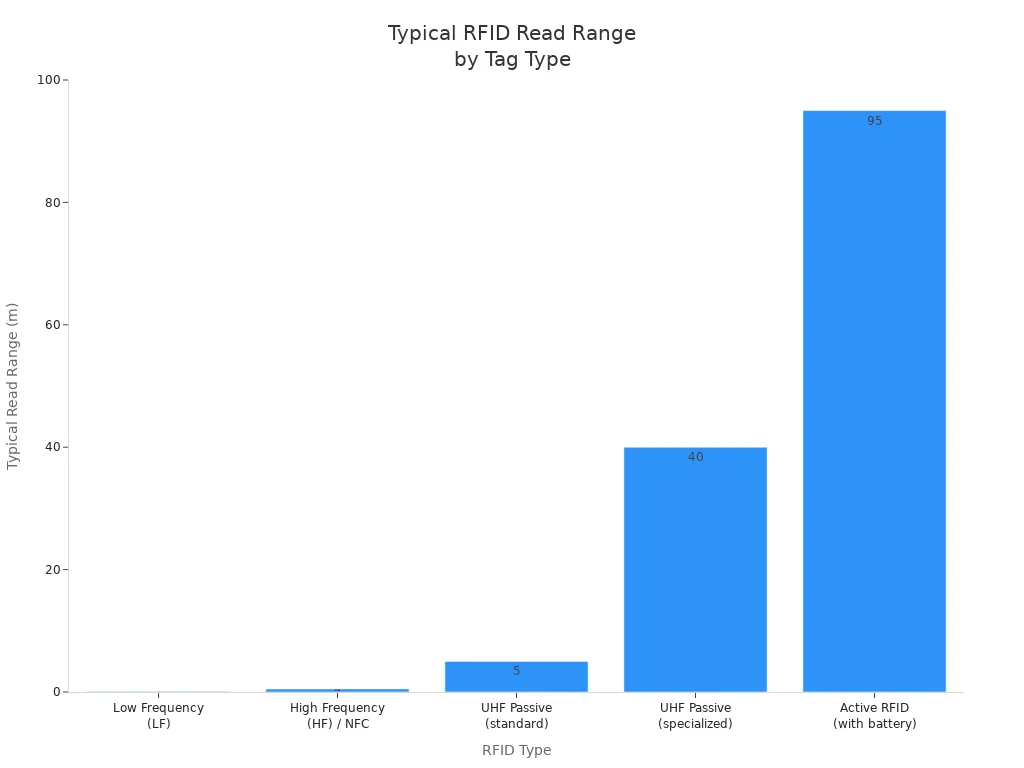
Active RFID tags have the longest range. They are great for tracking containers in big yards or warehouses. You get high data accuracy and real-time tracking for all your containers.
Adjustable Range
You need your RFID tags to be flexible. Sometimes you want to track containers far away. Other times, you need to track things close by. Adjustable read range lets you set the distance for each RFID tag. This helps you avoid interference and keeps your tracking accurate.
For example, MarktraceRFID’s 2.4GHz Active Tag lets you change the read range with software. You can set it for close tracking or long-range tracking. This feature gives you control and makes your data more accurate.
Tip: Adjustable range lets you match your RFID system to your logistics needs. You get better accuracy and fewer missed reads.
Resistance to Harsh Environments
Logistics can be tough. You need RFID tags that work in heat, cold, and wet places. Real-time tracking only works if your tags survive every environment. This is important for container tracking in outdoor yards or ports.
Temperature and Moisture
RFID tags must handle hot and cold temperatures and wet conditions. If your tags stop working, you lose data accuracy and real-time tracking. You want tags that keep working in hot warehouses, cold storage, or rainy docks.
RFID tags for extreme conditions keep working in high and low temperatures.
Moisture-proof RFID tags protect the electronics inside, so you keep tracking containers even in humid places.
In farming and outdoor logistics, moisture-proof RFID tags help you manage inventory and containers without worry.
You keep your containers visible and your tracking accurate, no matter the weather.
Physical Durability
Logistics means lots of movement. Containers get bumped, dropped, or stacked. Your RFID tags must survive rough handling. Durable tags keep your tracking and data accuracy high.
Put tags in safe spots to avoid damage.
Use protective housings or cushioning to shield tags from impacts.
Check your tags often to catch problems early.
With the right RFID tags, you keep tracking containers and assets through every step of logistics. You avoid lost containers and keep your real-time tracking strong.
Data Security
You must protect your data in logistics. RFID tags carry important information about containers and assets. If someone tampers with your tags, you risk losing containers or leaking sensitive data. Secure RFID tags keep your tracking safe and your data accurate.
Encryption
Modern RFID tags use strong encryption to protect your data. For example, some tags use AES-128 bit encryption. This keeps your container tracking secure. Each scan can create a unique, encrypted URL. This stops hackers from copying or reusing your data.
Tamper detection alerts you if someone tries to open or change a tag.
Secure dynamic URLs prevent replay attacks and allow real-time authentication.
Tamper-evident tags show clear signs if someone tries to remove or move them.
You keep your containers safe and your logistics data private.
Security Feature | Description |
|---|---|
Tamper Detection | Instantly flags if the label has been opened or altered. |
Secure Dynamic URL | Each scan generates a unique, encrypted URL for real-time authentication. |
AES-128 Bit Encryption | Ensures all data exchanges are secure and traceable. |
Tamper Evident | Shows clear signs if removed, stopping reuse or fake tags. |
Compliance
You must follow data protection laws in logistics. RFID tags must meet rules like the California Consumer Privacy Act (CCPA). This protects personal data and builds trust with your customers.
Regulation | Description |
|---|---|
California Consumer Privacy Act (CCPA) | Sets strict rules for collecting and using RFID data. Users control their information. |
Data Protection Measures | Companies must use strong security to stop data leaks. |
Transparency Requirements | You must tell users how you collect, use, and share their data. |
When you use RFID tags that meet these rules, you keep your logistics safe and your customers happy. You protect every container and asset with strong data accuracy and real-time tracking.
Note: Secure and compliant RFID tags help you avoid fines and keep your logistics running smoothly.
Compact Design and Mounting
Asset Suitability
You want rfid tags that fit your assets perfectly. A compact design makes this possible. Small rfid tags attach to many types of items, from IT equipment to valuable tools. You can use them on containers, pallets, or even small handheld devices. This flexibility means you do not need different tracking systems for each asset. You get one solution that works everywhere.
A compact rfid tag does not get in the way. It keeps your assets looking neat and professional. You can place these tags in tight spaces or on surfaces with limited room. This helps you track more items without changing how you store or move them. MarktraceRFID’s 2.4GHz Active Tag shows how a small, powerful rfid tag can fit many needs. Its slim shape works for IT assets, instruments, and valuable items. You get strong tracking without bulky hardware.
Here is a table showing why compact rfid tags are the smart choice for logistics:
Advantage | Description |
|---|---|
No Line of Sight Required | You can read rfid tags even when you cannot see them. This makes inventory checks fast and easy. |
Scan Multiple Tags Simultaneously | You can read many rfid tags at once. This saves time during audits and shipments. |
Long-Range Reads for Automation | You can track assets from far away. This helps with real-time updates and automatic inventory. |
Rugged and Versatile | Compact rfid tags work in tough places. You can use them indoors or outdoors. |
Less Dependence on Human Behavior | Fixed rfid readers do the work. You do not need to scan each item by hand. |
Locate Specific Assets Quickly | You can find the right asset fast, even in a crowded warehouse. |
Faster Inventory and Audits | You finish checks faster. This keeps your records accurate and reduces losses. |
You get more control and better results with compact rfid tags. You can track everything, everywhere, with less effort.
Installation Ease
You need rfid tags that are easy to install. Fast mounting means you can start tracking assets right away. You do not waste time with complicated setups. Simple installation also lowers the risk of mistakes. You get reliable reads and fewer problems.
When you mount rfid tags quickly and correctly, your logistics project moves faster. You avoid delays and keep your supply chain running. Easy mounting also means you can scale up your system when your business grows. You add more rfid tags without slowing down your operations.
The right rfid tag, like the MarktraceRFID 2.4GHz Active Tag, offers user-friendly mounting options. You can attach it with adhesive, screws, or zip ties. You pick the best way for your assets. This flexibility helps you avoid interference and keeps your tracking accurate.
Tip: Always plan your rfid tag placement before you start. Test a few tags in your real environment. This helps you spot any issues early and ensures your system works from day one.
You want rfid tags that combine compact design with easy installation. This gives you a powerful tool for real-time tracking, anti-jamming, and ultra-low power use. You get a system that grows with your needs and keeps your logistics on track.
RFID Supplier Evaluation Steps
Research and Shortlisting
Online Directories
Begin your search by checking online directories. These websites list many rfid suppliers together. You can sort by where they are, what they sell, or what industries they serve. This helps you find suppliers that fit your needs. Look for suppliers with clear product info and good customer ratings. Many directories show certifications and how long the supplier has been in business. This lets you find trustworthy partners quickly.
Peer Recommendations
Talk to people in your industry for advice. Peer recommendations give you real stories about how suppliers work. You learn which suppliers deliver on time and which ones help customers well. Trusted peers share their experiences with rfid tags and tracking solutions. Their feedback helps you avoid mistakes and pick suppliers who know how to work with your systems.
Comparing Offerings
Specs and Features
You should compare rfid tag choices side by side. Focus on the specs and features that matter most for your logistics. Think about tag type, operating frequency, and how well the tags fit your needs. Some tags are better for asset tracking, while others work for cold chain or vehicle management. Always check if the tags work with your current systems.
Tip: Pick tags that make your work faster and more accurate. RFID tags collect data quickly and do not need to touch items. This saves time and cuts down on errors.
Pricing Analysis
Price is important, but value is even more important. Compare prices for each tag type and see what you get for your money. Here is a table to help you understand the main options:
Tag Type | Overview | Use Cases | |
|---|---|---|---|
Passive RFID Tags | $0.05 – $0.50 | Cheapest, no battery, powered by reader’s waves. | Retail inventory tracking, access control, etc. |
Active RFID Tags | $10 – $50 | Battery-powered, long read range, real-time tracking. | Tracking high-value assets, vehicle management. |
Semi-Passive RFID Tags | $1 – $10 | Battery-assisted, combines features of passive and active tags. | Cold chain monitoring, healthcare logistics. |
Buying more tags at once lowers the price per tag. Match the tag type to your needs for the best results.
Vetting Reliability
Certifications
Check each supplier’s certifications. Certifications show the supplier meets industry standards. Look for marks like FCC, CE, or GDPR compliance. These show the supplier cares about safety and quality. Certified suppliers give you peace of mind and help you avoid legal trouble.
Customer Feedback
Read customer reviews before you decide. Reviews tell you if the supplier keeps promises. Look for comments about product quality, delivery speed, and support. You want a supplier who answers quickly and fixes problems. Good feedback means you can trust the supplier for your next rfid project.
Remember: Reliable suppliers have the right certifications and happy customers. This keeps your tracking system running smoothly.
Check if the supplier can make enough tags for your needs.
Visit the supplier if you can to see their work.
Ask about their staff and equipment flexibility.
Review their maintenance practices.
Learn about their logistics network to avoid supply chain delays.
Picking the right supplier takes time, but it is worth it. You get better products, easier setup with your systems, and a tracking solution you can trust.
Pilot Testing
You need to check if your RFID tags work well before using them everywhere. Pilot testing lets you test the tags in a safe way. You can find problems early and save money. Start with a small test to avoid big mistakes.
Small-Scale Trials
Begin with a small test in one part of your warehouse or yard. Set up the RFID hardware the way you plan to use it. Use your real inventory to see how the system works. Watch your team use the system during their normal work. This helps you see if the tags are easy for them to use. You also find out if the system fits your daily work.
Here is a simple table that shows the steps for a good pilot test:
Step | Description |
|---|---|
Conduct Pilot Trials | Try RFID in a small area before using it everywhere. |
Use Real Inventory | Test the system with your real items to find problems. |
Monitor Performance | Set goals to see how well the system works. |
Collect Feedback | Ask your team what works and what does not. |
Pilot projects let you try RFID tags in real work settings. You can spot problems and fix your system before spending a lot of money. Testing on a small scale helps you see if RFID is right for you.
Tip: Always use your real inventory when you test. This gives you the best results and helps you find problems you might miss in a lab.
Real-World Results
You need to see how RFID tags work in your real logistics work. Real-world results show if the tags do what you need. Run the test with your normal work steps. Track containers, assets, and shipments like you do every day. Look for missed scans, slow reads, or things that block the signal.
Make a list of things to measure, like read speed and accuracy. Ask your team what they think about the system. They can tell you if it is easy or hard to use. Use their ideas to fix problems and make the system better.
Pilot testing helps you:
Find problems before using RFID everywhere.
Test tags in real work places.
Get feedback from your team.
Measure how well the system works.
Make changes to get better results.
You feel sure your RFID system will work for your business. You avoid big mistakes and get the best results for your logistics.
Note: Pilot testing is the best way to make sure your RFID tags work well. Start with a small test, check everything, and use real data to help you decide.
Negotiating Terms
SLAs
You need clear rules with your RFID supplier. Service level agreements (SLAs) set these rules. SLAs say how fast you get help and when you get your tags. They protect your business and make sure you get good service. Ask your supplier to write down response times and support hours. Make sure the SLA says what happens if you need a replacement.
SLAs should cover:
When you get your RFID tags.
How fast you get help.
What happens if a tag breaks.
Promises about how well the tags work.
A good SLA helps you feel safe. You know your supplier will help if something goes wrong.
Warranty Policies
Warranty policies are important when you buy RFID tags. You want to know your supplier will fix or replace broken tags. Ask for clear warranty rules. Find out how long the warranty lasts and what it covers. Make sure you can get new tags or repairs if something fails.
Good warranties cover:
Problems with how the tags are made.
Getting new tags if yours break.
Help if you have trouble installing tags.
You protect your money and avoid surprise costs. Good suppliers give strong warranties and stand by their products.
Tip: Always check SLAs and warranty rules before you sign anything. This helps you get good RFID tags and support for your logistics project.
Overcoming RFID Implementation Challenges
Inconsistent Tag Performance
Troubleshooting
Sometimes, RFID tags do not work right. They might miss scans or show wrong data. This can slow down your work and make things confusing. First, check where you put the tags. Do not put them near metal or water. Move the tags if you see problems. Try your readers in different places. Change the settings to help them work better. Clean the tags and readers often. Dirt can block the signals. If you notice other signals causing trouble, try a new frequency. You can also use tags that fight signal jamming. MarktraceRFID’s 2.4GHz Active Tag is good at stopping jamming. It helps you get good reads even when it is busy.
Tip: Test your system after you make changes. This helps you find problems before they mess up your supply chain.
Supplier Support
You need a supplier who helps when things go wrong. Good suppliers answer fast and give clear help. MarktraceRFID gives you support and helps you set up and fix problems. If tags stop working or miss scans, call your supplier right away. They can help you fix things or send new tags. Good support keeps your work going and stops long delays.
Integration with Legacy Systems
Compatibility Checks
You might use old computers or machines in your work. New RFID tags must work with these old systems. Check the tag’s frequency and rules. Make sure your readers and software can use the new tags. Try a few tags before you use them everywhere. This helps you avoid big problems later. Many teams have trouble adding RFID to old systems. Making RFID work with your old systems keeps your supply chain running well.
Integration Services
Some suppliers help you connect RFID tags to your old software and databases. Ask your supplier for help if you need it. MarktraceRFID helps you set up your system. You get advice and tools to make things easy. These services save you time and stop mistakes. Your data stays right and your work goes smoothly.
Supply Chain Disruptions
Multiple Suppliers
Problems in the supply chain can stop your work. You need backup plans. Work with more than one supplier. This helps you always have enough RFID tags. If one supplier is late, you can get tags from another. Good suppliers help you avoid running out and keep your tracking working.
Inventory Planning
Plan your tag supply carefully. Keep extra RFID tags in your stock. Watch how many tags you use and order more before you run out. Good planning stops delays and keeps your work moving. Use real-time data to check your tag levels. Advanced RFID tags, like MarktraceRFID’s 2.4GHz Active Tag, help you track your tags and avoid shortages.
Here is a table showing common RFID problems and how to fix them:
Challenge | Solution |
|---|---|
Integration with Existing Systems | Make RFID work well with your old systems |
Cost Considerations | Spend money wisely for the best results |
Data Accuracy and Consistency | Use good tags for the right data |
Reader Collision and Interference | Pick anti-jamming tags and change settings |
Tag Read Range Limitations | Use tags that let you change the range |
Environmental Factors | Choose tags made for tough places |
Staff Resistance and Training | Teach your team so they use RFID easily |
Note: You can beat RFID problems with the right supplier, smart planning, and good tags. Take action now to keep your logistics strong and working well.
Cost Management
Managing costs is a big part of any logistics tracking project. You want to get the best value for your money. You need to balance quality and budget. You also need to look for bulk discounts that help you save more.
Quality vs. Budget
You face a choice. Should you buy the cheapest RFID tags or invest in higher quality? Cheap tags may look good at first, but they can cause problems. Low-quality tags break easily. They miss scans. They fail in harsh environments. You spend more money fixing mistakes and replacing broken tags.
High-quality RFID tags, like MarktraceRFID’s 2.4GHz Active Tag, give you reliable performance. You get long read range, anti-jamming, and ultra-low power use. These features help you track assets without errors. You avoid costly downtime and lost inventory.
Here is a simple table to help you compare:
Option | Upfront Cost | Long-Term Value | Risk of Failure | Support & Warranty |
|---|---|---|---|---|
Cheap RFID Tags | Low | Low | High | Limited |
Quality RFID Tags | Medium-High | High | Low | Strong |
Tip: Invest in quality tags. You save money over time. You get fewer errors and better support.
Bulk Discounts
Buying RFID tags in bulk helps you lower your costs. Suppliers offer discounts when you order large quantities. You pay less per tag. You also get better deals on shipping and support.
You should ask your supplier about bulk pricing. MarktraceRFID offers bulk discounts for the 2.4GHz Active Tag. You can order tags for your whole warehouse or fleet. You get strong tracking and save money.
Here are some ways to maximize your savings:
Plan your tag needs for the year.
Combine orders with other departments.
Negotiate for extra services, like free setup or extended warranty.
Ask for custom tags in your bulk order.
Note: Bulk buying gives you more power. You get better prices and stronger support. You also make your logistics project run smoother.
You control your costs by choosing quality and buying in bulk. You get reliable RFID tags that help your logistics work better. You avoid hidden costs and keep your supply chain strong. Take action now. Contact your supplier and ask for bulk pricing on dependable RFID tags.
You want your logistics tracking to run smoothly. Start by mapping your inventory and analyzing your storage environment. Clarify your goals and estimate your return on investment. Look for RFID tags that match your needs and test them in real conditions. Check if the tags work on your surfaces and in tough environments. Use this checklist to compare suppliers. Reach out to your top choices and ask for a pilot test. Take action now to secure a reliable RFID solution for your business.
FAQ
What makes an RFID tag supplier dependable?
A dependable supplier has strong certifications and good quality. They answer your questions fast. You should look for suppliers with happy customers. Pick one with lots of experience. Choose a supplier who lets you change the tags for your needs. They should also promise to fix problems with their products.
How do I know if RFID tags will work in my environment?
Try the tags where you will use them. Ask the supplier for a small test first. Look for tags that can block signal problems and handle tough weather. You can see how well they work before you buy a lot.
Can I customize RFID tags for my logistics project?
Yes, you can get tags in special shapes and sizes. Some suppliers, like MarktraceRFID, make tags just for you. Custom tags help you track things in places that are hard to reach.
What is the typical read range for logistics RFID tags?
Active RFID tags, like MarktraceRFID’s 2.4GHz Active Tag, can read up to 80 meters. You can change the distance using software. This helps you track things in big warehouses or yards.
How do I protect my logistics data with RFID tags?
Pick tags that use encryption and show if someone tries to open them. Ask if the tags follow privacy rules. Secure tags keep your information safe and help your customers trust you.
What support should I expect from an RFID supplier?
You should get help with setting up, fixing problems, and connecting your system. Good suppliers answer fast and give easy-to-understand help. This keeps your logistics working well.
Are bulk discounts available for RFID tags?
Yes, you pay less when you buy many tags at once. Suppliers give better prices and sometimes extra help for big orders. Plan how many tags you need and ask for a discount.
How do I start with RFID tags for logistics tracking?
First, make a list of what you want to track. Set your goals. Pick a few good suppliers by checking their features and if they are reliable. Ask for a small test. Use real results to choose the best one. Start now to make your logistics better.
- Next>:Suggest a trusted UHF RFID reader factory for Auto Par and Car Parking System

 2026-07-06
 Blogs
Blogs