
Recommend a professional RFID parking solution provider
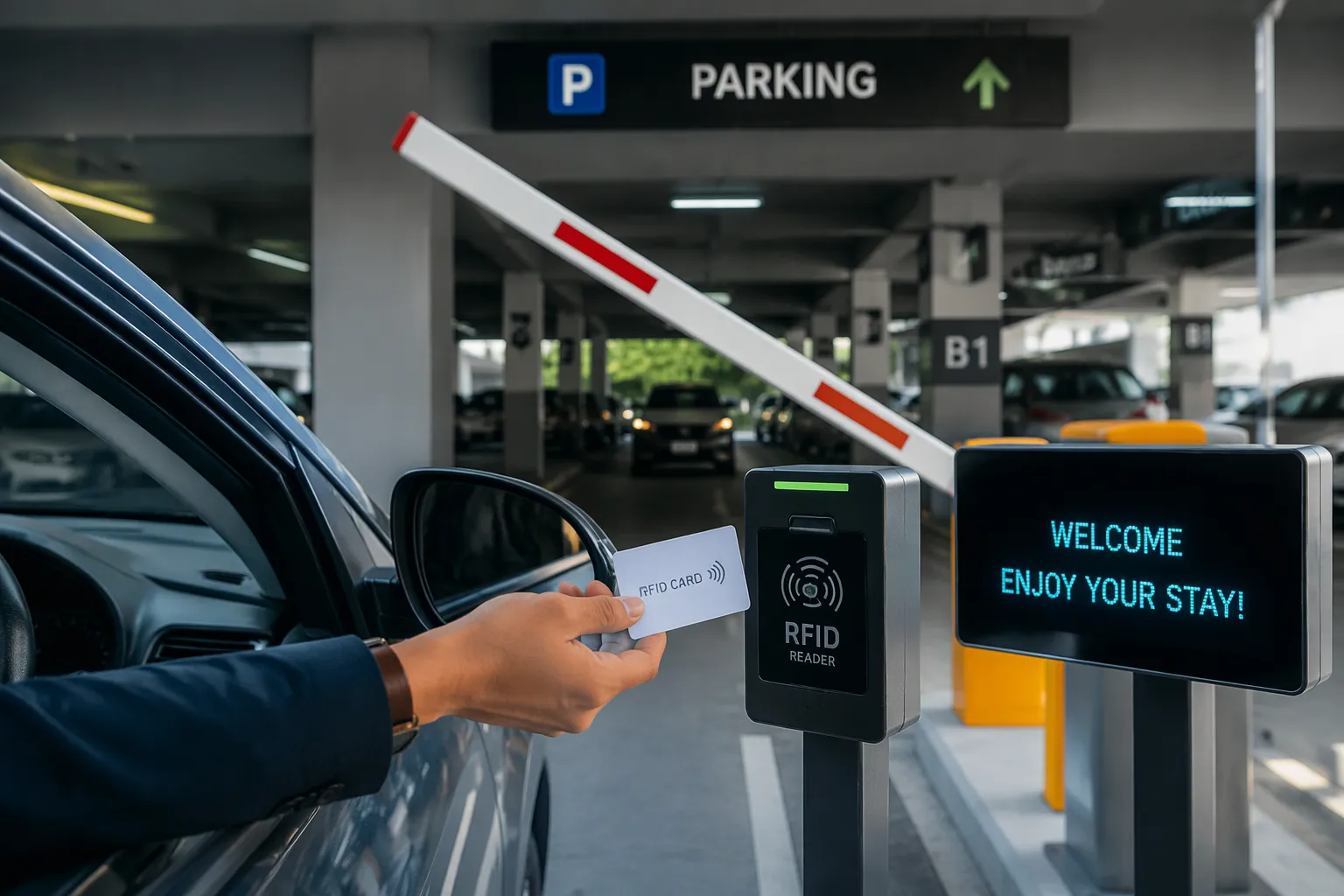
You need an RFID parking solution provider you can trust. Your operation depends on it. Start with five factors: technical fit, compliance, cost, track record, and support. Each one shapes how well your system performs on busy days and quiet ones.
Choose well, and you protect revenue, cut downtime, and gain room to grow. Choose poorly, and every lane becomes a daily problem. Treat the selection as a business decision, not a purchase. The right RFID parking solution provider becomes a long-term partner for your parking operation.
Key Takeaways
Pick a provider by looking at five things: technical fit, compliance, cost, track record, and support.
Try the system in your actual lanes to make sure it reads tags correctly at your traffic speed.
Check the radio, EMC, and safety certifications for your area before you sign.
Figure out the total cost over five years. Include hardware, software, installation, and maintenance.
Ask for references and visit similar sites to see the system at work.
Ask for response times and support terms in writing to reduce downtime.
Use a weighted scorecard to compare providers fairly.
Test the top two providers in a real lane before you make a final choice.
Technical Fit
Technical fit decides whether your system works on day one and on your busiest day. Judge every provider against your real lanes, your real traffic, and your real growth plan.
Read Range and Accuracy
Tag and Frequency Compatibility
Ask which tag standard the provider supports. A professional solution should handle ISO18000-6C (EPC Gen2) tags across the ISM 860–960MHz band. That range covers regional frequency rules and keeps your options open when you expand.
Confirm the tag and reader pair together. The MARKTRACE MR6700A card meets ISO18000-6C (EPC Gen2) and works across the full 860–960MHz range. Match tags to readers before you sign, and you avoid a costly swap later.
Real-World Read Rates
Test read rates in your actual lanes, not in a showroom. Vehicle speed, tag placement on the windshield, and nearby metal all affect performance. Run a trial with real cars and real drivers.
A long-range reader should read tags on its own and send data to your control system. The MR6211E does exactly this, so gates open and close without an operator. You gain speed at the lane and less manual work at the booth.
System Integration
Payment and ANPR Compatibility
Your RFID system must talk to your payment platform and your ANPR cameras. Ask the provider to show working integrations, not promises. A clean handoff between tag reads, plate capture, and billing keeps revenue accurate.
Check how the system handles exceptions. A missed read or a mismatched plate should trigger a clear, fast process. Strong integration turns these edge cases into routine events instead of disputes.
Open APIs and Software Ecosystem
Demand open APIs. Open interfaces let your team connect the RFID layer to access control, billing, and reporting tools you already run. Closed systems lock you into one vendor's roadmap.
Ask for documentation and a sandbox. A provider confident in its software will hand you both. Test a simple integration yourself before you commit.
Scalability
Multi-Lane and Multi-Site Growth
Plan for more lanes and more sites than you run today. Ask how the platform adds lanes without re-architecting the core. Multi-site management should sit in one dashboard with per-site controls.
Enrollment capacity matters here too. The MR6261E desktop reader/writer reads up to 200 tags per second at a 3 m range. That speed supports fast onboarding as your fleet and user base grow.
Upgrade and Firmware Paths
Ask for the firmware upgrade path in writing. Regular updates should add features and close security gaps without lane downtime. Confirm whether upgrades are remote or on-site.
Check backward compatibility. New firmware should support your existing readers and tags. A clear upgrade policy protects your investment and keeps the system current for years.
Compliance and Security
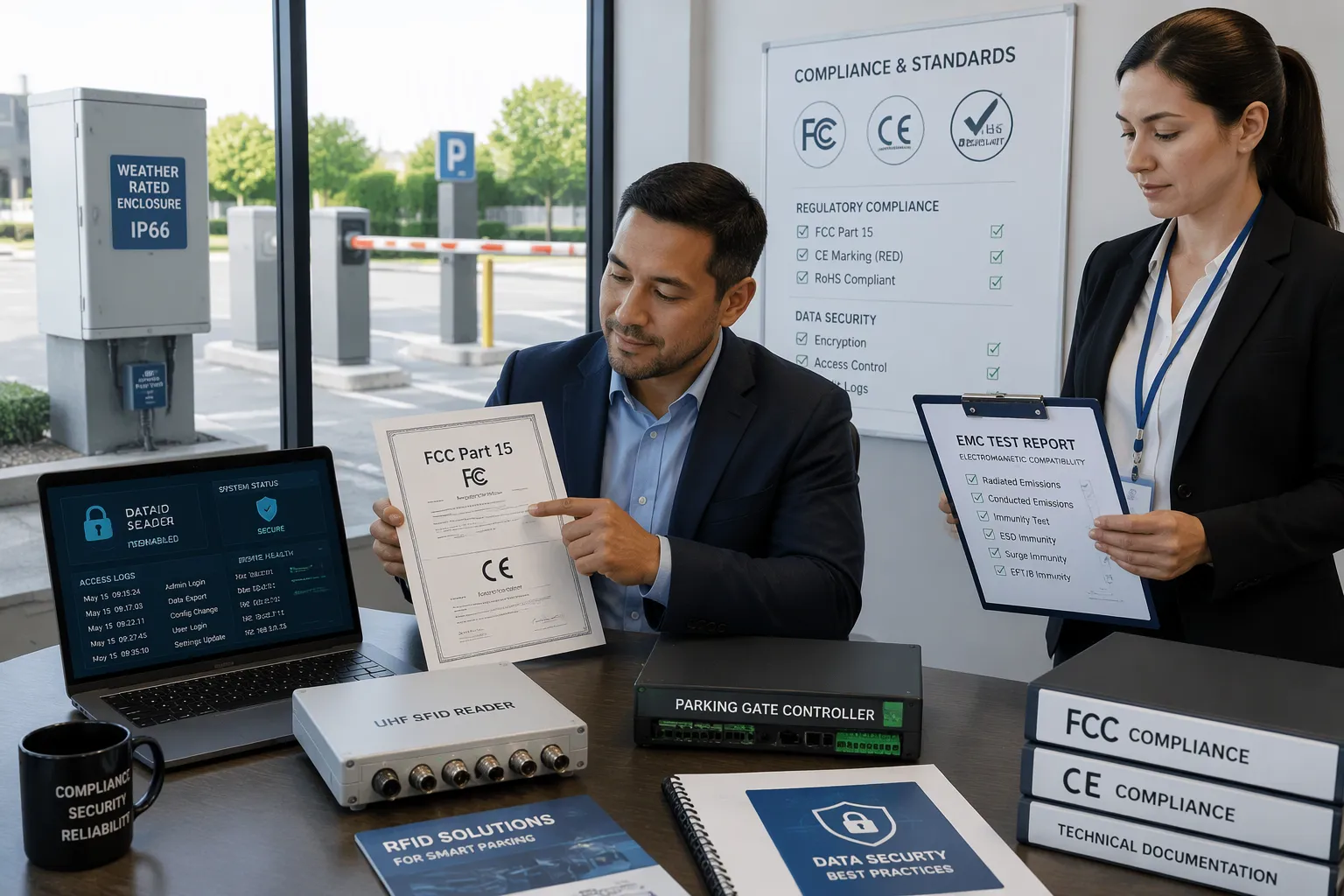
Compliance and security keep your operation safe from fines, breaches, and disputes. Check both before you sign. A provider that treats these as an afterthought will cost you later.
Radio and Safety Certifications
RF and EMC Approvals
Ask for the radio approvals that cover your region. UHF readers send signals in the ISM 860–960MHz band, and each country sets its own rules for that band. A provider should show certificates for the markets you operate in, such as FCC Part 15 in the United States or the CE marking framework in Europe.
Request the EMC test reports too. Electromagnetic compatibility stops your readers from interfering with other equipment and stops other devices from disrupting your lanes. Verify that the certificate names match the exact model you plan to deploy.
Electrical and Site Safety
Confirm the electrical safety approvals for every powered component. Readers, desktop writers, and gate controllers all connect to mains power, and each one needs the right safety certification for your market.
Ask about site safety practices as well. Proper grounding, surge protection, and weather-rated enclosures protect hardware in outdoor lanes. A provider with a clear installation standard shows you it takes safety seriously.
Data Privacy
Payment Data Handling
Your RFID system touches payment data every day. Ask how the provider protects card details and transaction records. The system should follow payment industry data security rules and keep payment data separate from tag reads.
Demand encryption for data in transit and at rest. Ask who can access payment logs and how the provider audits that access. Clear answers here protect you from fraud and regulatory penalties.
Vehicle and Driver Data
Tag IDs, plate numbers, and entry times all count as personal data in many jurisdictions. Ask where that data lives, how long you keep it, and who can see it. The provider should support retention limits and access controls you can configure.
Check how the system handles data deletion requests. A professional platform lets you remove a driver's records on demand. That flexibility keeps you compliant as privacy rules change.
Physical and Network Security
Anti-Cloning and Tamper Resistance
Cloned tags let unauthorized vehicles through your gates. Ask how the provider protects tag authenticity. The MR6700A card uses ISO18000-6C (EPC Gen2), and the system should pair each tag with a verified vehicle record.
Ask about tamper resistance on readers and controllers. Enclosures should resist opening, and the system should log tamper events. These features deter theft and give you evidence when something goes wrong.
Network Hardening
Your readers sit on a network, and every connected device is a potential entry point. Ask the provider about default password policies, firmware signing, and network segmentation. The MR6211E should run on a segmented network that isolates it from your business systems.
Request a security hardening guide before installation. The guide should cover port settings, remote access rules, and patch schedules. A provider that ships this document shows you it plans for security from day one.
Cost and Value
Upfront vs. Lifetime Cost
Hardware, Software, and Installation
Look at the whole bill, not just the price on the first page. Add up hardware, software licenses, and installation labor into one total. Then spread that total over five years. A low sticker price often hides a big cost over time.
Pay close attention to installation. Ask what the quote includes: mounting, cabling, network setup, and commissioning. A provider that lists these costs separately gives you a fair way to compare.
Maintenance and Subscriptions
Ask for the yearly maintenance rate in writing. Include software subscriptions, support contracts, and replacement schedules. Multiply the yearly amount by how many years you plan ahead. That total tells you more than any upfront discount.
Compare subscription models with perpetual licenses. Subscriptions spread out cost and include updates. Perpetual licenses lower long-term spending but may charge for upgrades. Choose the model that fits your budget cycle.
Hidden Cost Traps
Licensing and Upgrade Fees
Read the license terms carefully, line by line. Some providers charge per lane, per site, or per user. Others bill for each major firmware release. These fees add up as you grow.
Ask one direct question: what will a firmware upgrade cost in three years? Get the answer in the contract. A provider that trusts its pricing will put it in writing.
Spare Parts and Service Rates
Request a spare parts price list before you sign. Readers, cards, and controllers all break eventually. Knowing replacement costs now prevents budget surprises later.
Ask about service call rates and after-hours charges. Confirm whether travel time shows up on the invoice. Clear rate cards separate honest providers from ones that make money on surprises.
Return on Investment
Throughput and Revenue Gains
Faster lanes move more vehicles per hour. Automatic tag reading cuts the wait at every gate. The MR6211E reads tags on its own and opens the gate, so traffic flows without stopping.
More throughput means more paying entries at peak times. Track revenue per lane before and after deployment. That difference, measured over a full quarter, gives you a solid ROI figure.
Labor and Downtime Savings
Automation lowers the need for manual staff at gates and booths. Staff can move to enforcement, customer service, and handling exceptions. Count the hours you save each week and price them at your loaded labor rate.
Downtime has its own cost. Every failed read becomes a manual ticket and a delayed driver. Reliable hardware and fast support reduce those events. Add the recovered hours to your ROI model, and the business case usually gets stronger.
Provider Track Record
Proven Deployments
Similar-Scale Projects
Ask for deployments that match your size. A provider with experience in single-lane lots may struggle with a multi-site operation. Request project summaries that list lane counts, site counts, and vehicle volumes. Compare those numbers to your own.
Look for projects in your sector too. A gated community, a commercial garage, and a transit lot each bring different traffic patterns. The MARKTRACE RFID UHF Vehicle Management Solution serves property owners, parking facilities, and gated communities. That spread shows the platform handles varied operations.
References and Site Visits
Request at least three references you can call. Ask each reference about uptime, support speed, and the honesty of the original quote. Prepare direct questions. A reference call takes twenty minutes and saves months of regret.
Push for a site visit when distance allows. Watch the lanes at peak hour. Note how fast gates open and how often staff intervene. A live site shows you the real system, not the sales demo.
Technical Expertise
In-House Engineering Depth
Ask who designs the system and who writes the software. A provider with in-house engineering controls quality and responds faster to problems. Ask how many engineers work on the RFID platform and how long the team has stayed together.
Probe the hardware knowledge. The MR6211E long-range reader reads tags automatically and uploads data to the control system. A strong team can explain that data path end to end. Vague answers signal a reseller, not an engineer.
Certifications and Partnerships
Check the certifications that matter in your market. Radio approvals and safety marks prove the hardware meets local rules. Ask for the certificate for the exact model you plan to deploy.
Review technology partnerships as well. Chipset and tag suppliers shape long-term supply and firmware support. A provider with stable partners keeps your system current and your spare parts available.
Support Commitments
Response Times and SLAs
Get response times in writing. Ask for the time to first response and the time to resolution for each severity level. A gate failure at rush hour deserves a fast, defined path.
Confirm the support hours and the after-hours process. Ask whether remote diagnostics come standard. The MR6261E desktop reader/writer supports fast enrollment at up to 200 tags per second. Fast support keeps that onboarding work on schedule.
Training and Documentation
Ask what training comes with the contract. Your staff need hands-on sessions for enrollment, exception handling, and basic troubleshooting. Confirm the number of sessions and whether refreshers cost extra.
Request sample documentation before you sign. Clear guides for installation, tag placement, and firmware updates protect your team. Good documentation turns a support call into a five-minute fix.
Evaluating an RFID Parking Solution Provider
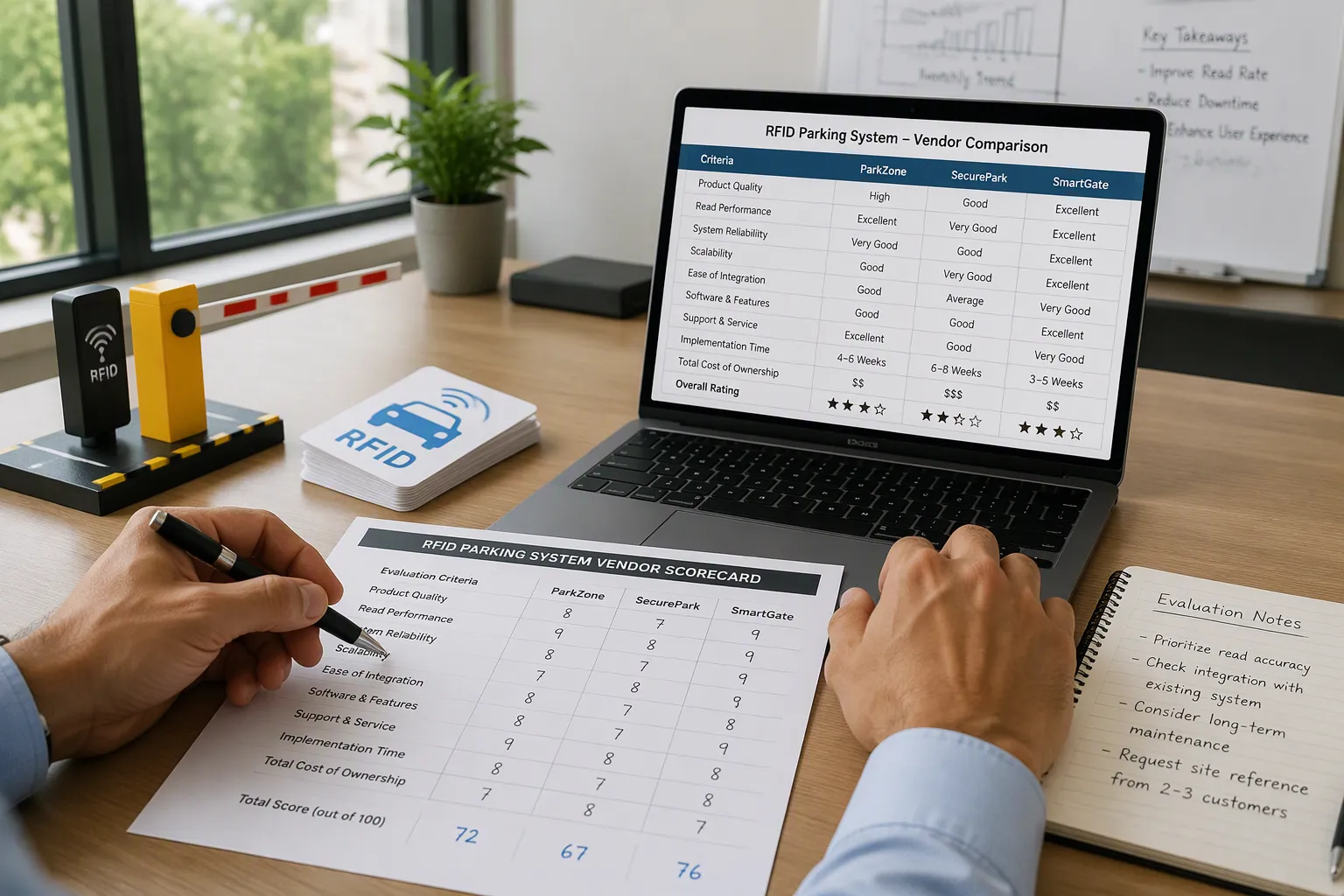
You have your criteria. Now turn them into a decision. A clear evaluation takes guesswork out of the process. It also gives you a record you can defend when you explain your choice to owners, finance teams, or boards.
Weighted Scorecard
Criteria Weighting
Start by giving each criterion a weight. Your business priorities set those weights, not the provider's brochure. A garage focused on revenue may weight throughput and payment integration heavily. A gated community may weight support response and data privacy higher.
Keep the weights simple. Use a scale of one to five, and make the weights add up to 100 percent. Write down why each weight exists. That note keeps the scoring honest when a persuasive sales team enters the room.
Side-by-Side Comparison
Build one table with your shortlisted providers as columns and your criteria as rows. Score each provider against every criterion using the same scale. Multiply each score by its weight, then total the column.
The table does more than rank vendors. It shows weak spots. A provider that wins on price may lose on integration depth. A provider that wins on features may score low on support commitments. You see the trade-offs in one view, and you choose with open eyes.
Structured Vetting
RFI and RFP Question Sets
Send a request for information first. Ask broad questions about capabilities, references, and pricing models. Use the answers to cut your list to three or four serious candidates.
Then issue a request for proposal. Make every provider answer the same questions in the same order. Cover read range, tag compatibility, integration options, certifications, support terms, and total cost of ownership. Identical question sets let you compare answers directly. They also stop a smooth talker from steering the conversation.
Pilot and Proof-of-Concept Testing
Test before you commit. Run a pilot in one lane or one site for a set period. Measure read rates with real vehicles, real tag placements, and real traffic peaks. Time how fast gates open. Count how often staff must step in.
Set pass-fail thresholds before the pilot starts. Agree on them with the provider in writing. A pilot with clear targets turns a sales promise into evidence. It also shows you how the provider behaves when a problem appears mid-test.
Questions to Ask an RFID Parking Solution Provider
Contract and Warranty Terms
Ask what the warranty covers and how long it runs. Confirm whether it includes parts, labor, and travel. Get the response-time commitments in the same document.
Read the fine print on exclusions. Ask what voids the warranty, such as unauthorized firmware changes or third-party repairs. A fair contract states these rules plainly. A one-sided contract hides them in an appendix.
Exit and Migration Clauses
Ask what happens if the relationship ends. Can you export your tag data, transaction records, and configuration settings? In what format, and at what cost?
Confirm the notice period and the wind-down support. Ask whether the provider helps migrate to another platform. Every provider type fits a different buyer here. A large vendor may offer deep resources but slower flexibility. A specialist may offer closer attention but a narrower product line. Match the exit terms to your tolerance for switching risk.
Weigh long-term support expectations in the same review. Ask about roadmap access, account management, and renewal pricing. A dependable RFID parking solution provider answers these questions without hesitation. A weak one deflects them.
Your scorecard and your vetting process now carry the decision. Score every candidate the same way. Test the top two in a live lane. Read the contract before you sign. Then choose the RFID parking solution provider that earns the highest weighted total and the clearest answers.
Five factors guide your choice: technical fit, compliance, total cost, proven track record, and dependable support. Each one protects a different part of your operation. Weigh them together, and you see the whole picture.
A weighted scorecard turns those factors into numbers you can compare. Structured vetting, from RFI to pilot, turns promises into proof. Together, they give you a choice you can trust.
Shortlist your providers now. Score them against this checklist. Test the top two in a real lane. Then sign with the RFID parking solution provider that earns your trust.
FAQ
How do I know a provider's reader will work in my lanes?
Test it with your own cars and drivers. Ask for a pilot in one lane. Check that the reader catches tags at your traffic speed and gate timing. The MR6211E reads tags automatically and opens the gate without an operator, so you can watch real results.
Which tag standard should I demand?
Insist on ISO18000-6C (EPC Gen2) tags that work across the ISM 860–960MHz band. That standard keeps you covered under regional frequency rules. The MR6700A card meets it, so your tags stay compatible as you add lanes or sites.
What certifications should I verify before signing?
Ask for the radio and EMC approvals for your market, such as FCC Part 15 in the United States or CE marking in Europe. Request electrical safety certificates for every powered component. Confirm each certificate names the exact model you plan to deploy.
How fast can I enroll new vehicles?
Enrollment speed depends on your desktop writer. The MR6261E reads up to 200 tags per second at a 3 m range. That pace keeps onboarding quick when you add fleets, tenants, or staff. Ask your provider to demonstrate it during the pilot.
What hidden costs should I watch for?
Read the license terms line by line. Ask what a firmware upgrade will cost in three years. Request a spare parts price list and after-hours service rates. Get every answer in the contract, not in a sales conversation.
How do I compare shortlisted providers fairly?
Build one weighted scorecard. Score each candidate on the same criteria with the same scale. Send identical RFI and RFP questions to every provider. Then pilot the top two in a live lane. Numbers and evidence beat sales pitches every time.
What should the warranty and exit terms cover?
Confirm the warranty covers parts, labor, and travel, and get response times in the same document. Ask whether you can export tag data and settings if the relationship ends. A dependable RFID parking solution provider answers both questions without hesitation.
How do I measure return on investment?
Track revenue per lane before and after deployment. Count the staff hours you free up at gates and booths. Log every failed read that becomes a manual ticket. Add the recovered hours to your model, and the business case usually gets stronger.
- Next>:Suggest a reliable RFID people tracking system company

 2026-08-03
 Blogs