
Help me find a reliable RFID tag supplier for healthcare asset tracking

Start by identifying your requirements for healthcare asset tracking. Look for a reliable RFID tag supplier known for strong product quality. Ensure the supplier complies with healthcare regulations and provides excellent support. Clearly outline your needs, research the supplier’s background, explore various options, and ask straightforward questions. Consider running a small test project. Take it step by step to confidently make the right choice.
Key Takeaways
Figure out what you need for healthcare asset tracking before you look for suppliers. This helps you pick the right RFID tags.
Find suppliers who have done a lot of work in healthcare. Their experience can help avoid problems and make you feel sure.
Make sure the RFID tags are strong and work well. They should handle cleaning and tough hospital conditions.
Check that the RFID tags follow healthcare rules like HIPAA. This keeps patient data safe and private.
Ask suppliers to give you samples to try in your hospital. Testing them in real life lets you see how they work.
Think about all the costs, not just the first price. Remember to include fixing, replacing, and upgrading the tags.
Choose suppliers who give good support and training. Good help after buying makes it easier for your staff to use the system.
Try a small test project before using it everywhere. Testing in one place helps you find problems and fix them.
Define Asset Tracking Needs
Before you look for an RFID tag supplier, figure out what you need to track. This step helps you pick the right tags. It also makes sure your system works well in healthcare.
Asset Types in Healthcare
Hospitals track many things. Knowing what you want to track helps you choose the best RFID tags.
Medical Equipment
You might need to track medical equipment. Some examples are:
Infusion pumps
Ventilators
Defibrillators
Wheelchairs
Stretchers
Hospital beds
Diagnostic equipment
Surgical tools
Medical carts
Tracking these items helps you find them fast. It also lowers the chance of losing or stealing them.
Medications and Supplies
RFID tags help you manage medicines and supplies. You can track:
Temperature-sensitive assets
Sterile assets
Laptops and tablets used for medication management
Environmental sensors that monitor storage conditions
This tracking helps you keep medicines safe and use them the right way.
Patient Identification
Patient safety is very important. RFID tags can be used for:
Patient wristbands for identification
Tracking patient movement within the facility
Monitoring attendance for special treatments or procedures
This helps stop mistakes and makes patient care better.
Environmental Requirements
RFID tags in hospitals deal with tough conditions. Think about where you will use the tags.
Sterilization Compatibility
Many hospital tools need to be cleaned often. Cleaning surgical tools and disinfecting equipment can affect RFID tags. Disinfectants may make tags work less well. You need tags that can handle lots of cleaning.
Temperature and Humidity
Tags must work in places with high or changing temperatures and humidity. Some tags need to survive in fridges or near heaters.
Description | |
|---|---|
High Temperatures | Can the tag endure high heat? |
Temperature Cycling | Does the tag work after rapid temperature changes? |
Shocks and Vibrations | Will the tag stay functional after bumps or drops? |
Moisture or Immersion | Is the tag effective in wet or submerged conditions? |
Exposure to Caustic Fluids | Can the tag resist harsh cleaning chemicals? |
Indoor vs. Outdoor Operations | Is the tag suitable for outdoor use, including rain or sunlight? |
Interference Factors
Hospitals have lots of walls, carts, and electronic devices. These can cause signal problems for RFID tags. Pick tags with strong anti-jamming features for good tracking.
Integration Needs
Your RFID system must work with your current technology. It also needs to keep data safe.
System Compatibility
You need RFID tags that work with your software, like electronic health records (EHR) and asset management systems. Integration can be hard and may need real-time data syncing.
Challenge | Description |
|---|---|
Connecting RFID with EHR and management software can be complex and time-consuming. | |
Scalability Issues | Expanding the system as your needs grow can be difficult. |
Data Security
Keeping patient and asset data safe is very important. RFID systems must stop people from getting sensitive information. Look for suppliers who offer strong privacy and security features.
Tip: Always ask suppliers about their data protection steps and how their tags keep healthcare information safe.
Evaluation Criteria for Reliable RFID Tag Supplier
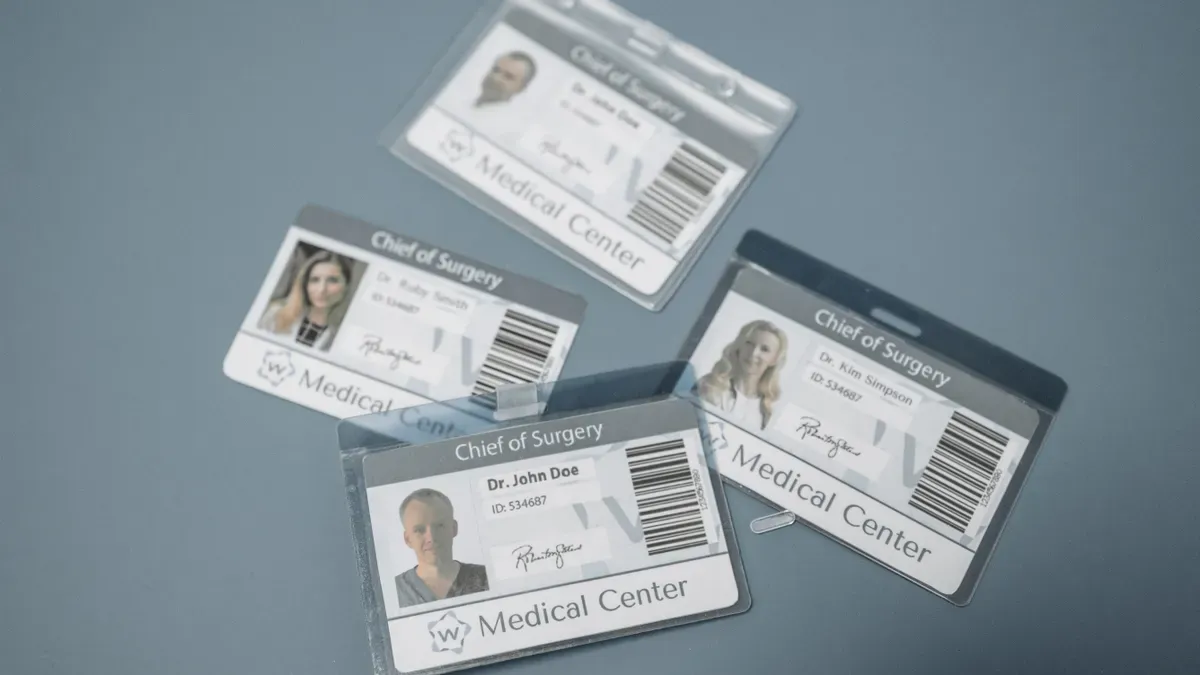
When you pick an RFID tag supplier for healthcare, you need to check a few things. The supplier should meet your needs and follow healthcare rules. Here are some important things to look at.
Industry Experience
Healthcare Track Record
Find suppliers who have worked with hospitals before. This shows they know what hospitals need. MarktraceRFID has given 2.4GHz Active Tags to many places, including hospitals. These tags help track equipment, staff, and patients. HID Global and Zebra Technologies also have experience in healthcare. If you pick a supplier with a good record, you will have fewer problems.
Client Testimonials
Ask for feedback from other hospitals. Good suppliers will show you stories or case studies. These stories tell how the supplier helped other hospitals. You can see if the supplier is on time and helpful. Reading these stories helps you feel sure about your choice.
Product Quality & Certifications
Durability and Reliability
Hospitals need RFID tags that last a long time. Check if the tags can handle cleaning and changes in temperature. MarktraceRFID’s 2.4GHz Active Tags, like MR3848 and HZ801, use strong materials and save power. These tags work well in busy hospitals. You can also look at tags from HID Global and Zebra Technologies. Good RFID tags should still work after many cleanings or bumps.
Tip: Ask for sample tags to try in your hospital. Test if they work well in real life.
Relevant Certifications
Certifications show the tags are safe and good quality. Look for suppliers who can give you certificates. These might be ISO or other healthcare approvals. Hospitals often want tags that follow open standards. This makes it easy to find new tags and can save money. The table below shows what top hospitals look for:
Criteria | Description |
|---|---|
Compliance with Standards | Tags should follow open standards like ISO for better compatibility and cost savings. |
Mandates | Suppliers may need to meet rules about tag type, frequency, and placement. |
Tag Orientation | Tags work best when placed in the right direction with the reader antenna. |
Tag Placement | Placement matters, especially for items with liquids, as water can block radio waves. |
Location within the IZ | The distance from the reader affects how well the tag works. |
Compliance with Healthcare Standards
HIPAA and Data Protection
You must keep patient data safe. A good RFID tag supplier will follow rules like HIPAA. This keeps patient information private. Ask the supplier how they keep data safe. Make sure their system stops people from seeing or stealing private information.
International Standards
Hospitals often follow rules from groups like ISO or IEC. These rules make sure tags are safe and work with other systems. MarktraceRFID, HID Global, and Zebra Technologies have products that meet these rules. If you pick a supplier who follows these rules, your system will be safer and easier to use.
Note: Always ask for proof that the supplier follows healthcare and international rules before you buy.
If you check these things, you can find a good RFID tag supplier. They will help your hospital track things safely and easily.
Customization Options
When picking an RFID tag supplier, you want choices that fit your hospital. Customization lets you track many assets, keep data safe, and use tags in tough places. Not every supplier gives the same flexibility. MarktraceRFID, HID Global, and Zebra Technologies have lots of options. You should check what each supplier can do for you.
Tag Form Factors
Hospitals need RFID tags in different shapes and sizes. Some tools are small, like surgical tools. Others are big, like hospital beds. MarktraceRFID’s 2.4GHz Active Tags have several models. The MR3848 and HZ801 are small and good for tiny items. The MR3837C is strong and works for equipment in rough conditions. Badge-style tags like HX604 and HX605 help track people.
Suppliers let you pick the tag’s material, size, and shape. This makes it easier to attach tags to many things. The table below shows how suppliers can change tags for hospitals:
Customization Aspect | Description |
|---|---|
Material | Made to last in healthcare places |
Size | Changed for different asset types |
Frequency | Picked for tracking needs |
Encoding | Set up for special data needs |
Data Storage | Holds needed information |
Ask your supplier if they can make tags for your needs. You might need waterproof tags for cleaning or flexible tags for curved items.
Frequency and Range
RFID tags use different frequencies. The best frequency depends on what you track and where you use tags. MarktraceRFID’s 2.4GHz Active Tags can be read from far away. Most models reach up to 80 meters. The MR3837C can reach up to 400 meters in open spaces. This helps track things across big hospital areas.
Some suppliers, like HID Global and Zebra Technologies, have tags with low, high, or ultra-high frequencies. Each frequency has its own benefits. Low-frequency tags work well near liquids. High-frequency tags can hold more data. Match the tag’s frequency and range to your hospital’s layout and tracking needs.
Tip: Try different tag types in your hospital before choosing. This helps you find which frequency and range work best for your space.
Support and After-Sales Service
A good RFID tag supplier gives more than just tags. You need strong support and help after buying. Good support helps fix problems fast and keeps your system working.
Training and Onboarding
Your staff should feel confident using the RFID system. Suppliers like MarktraceRFID, HID Global, and Zebra Technologies offer training. These programs teach your team about tags, readers, and software. Some suppliers give step-by-step help so you can start tracking right away.
Training shows how to attach tags, use software, and keep data safe. Good onboarding lowers mistakes and helps your hospital use the RFID system well.
Maintenance and Troubleshooting
Even the best RFID systems need care. Pick a supplier who gives fast and reliable maintenance. MarktraceRFID offers technical support for their 2.4GHz Active Tags. They help you fix problems quickly. Other top suppliers also have teams ready to help.
The table below shows the support you should expect:
Service Type | Description |
|---|---|
Tailored Solutions | Full RFID solution from design to ongoing help. |
Customer Service | One contact for all stages of setup and support. |
Technical Support | Quick and reliable help for fixing and maintenance. |
Ask about response times and support hours. Fast help means your hospital has less downtime.
It keeps patients safe by tracking staff and storing important information.
Good support makes sure your system works well every day.
Note: Always check if your supplier gives both training and ongoing support. This makes your RFID project easier and more successful.
Research and Shortlist Suppliers
You need to pick the best supplier for your hospital. Start by looking in places where experts list trusted companies. Use directories, go to trade shows, and check online platforms. These steps help you make a list of suppliers that fit your needs.
Where to Find Suppliers
Directories and Trade Shows
Industry directories show companies that sell RFID tags. Look for suppliers who work with healthcare. Many directories have company profiles, product details, and contact info. Trade shows let you meet suppliers in person. You can see their products, ask questions, and watch demos.
Healthcare trade shows have companies like MarktraceRFID, HID Global, and Zebra Technologies.
You can compare products and learn about new technology.
Trade shows show how suppliers answer questions and give support.
Tip: Go to trade shows with a list of questions. Ask about tag durability, reading range, and support services.
Online Platforms
Online platforms help you search for suppliers easily. Use websites like Alibaba, ThomasNet, or special industry portals. These platforms let you filter by location, certifications, and product type. You can read company profiles and see customer ratings.
Online platforms help you find suppliers from many places.
You can check if the supplier knows healthcare.
Look for suppliers with clear product descriptions and contact info.
References and Reviews
Peer Recommendations
Ask other hospitals or clinics about their experiences. Peer recommendations help you find suppliers with good service. You can learn about real results and common problems.
Reach out to hospital networks or professional groups.
Ask about supplier reliability, product quality, and support.
Peer feedback gives honest opinions.
Independent Reviews
Independent reviews show how suppliers do over time. Read reviews on industry websites, forums, or online platforms. Reviews talk about product performance, customer service, and delivery times.
Review Source | What You Learn |
|---|---|
Industry Websites | Product quality and certifications |
Online Forums | User experiences and support |
Supplier Websites | Case studies and testimonials |
Note: Always check for recent reviews. Suppliers may change or improve their services.
Product Samples and Demos
Real-World Testing
Ask for product samples or demos from your list of suppliers. Testing tags in your hospital shows how they work in real life. You can check if the tags fit your needs.
Test battery life to see how long tags last.
Check location accuracy for tracking assets.
See signal performance through walls and equipment.
Test durability under cleaning routines.
Review how tags handle temperature changes.
Usability and Performance
You need tags that are easy to use and work well. Put tags on different assets and see if they stay in place. Test battery life during normal updates. Watch how tags handle cleaning and daily use.
Usability matters for staff who attach and read tags.
Performance metrics help you compare suppliers like MarktraceRFID, HID Global, and Zebra Technologies.
Pick a supplier whose tags work best in your hospital.
Tip: Keep notes during testing. Write down how each tag works and how easy it is to use.
You can find a reliable RFID tag supplier by following these steps. Use directories, trade shows, and online platforms to make your list. Check references and reviews to learn about supplier reliability. Test product samples to see how they work in real life. Compare suppliers like MarktraceRFID, HID Global, and Zebra Technologies to choose the best one for your hospital.
Questions for Reliable RFID Tag Supplier
When you talk to RFID tag suppliers, you should ask good questions. This helps you find the right supplier for your hospital. Here are some important topics and questions to help you.
Product Specs and Customization
You want RFID tags that fit your hospital’s needs. Ask about the most important features for healthcare.
Tag Lifespan
Ask how long the tags will last. You want tags that work for many years. Battery life matters if you have lots of assets. Check if the tags can handle cleaning and water. The table below shows what to check:
Specification | Why It Matters |
|---|---|
Accuracy Level | Makes sure you find assets in the right spot |
Battery Life and Replacement | Means you do not change tags often |
Environmental Resistance | Keeps tags working after cleaning and disinfecting |
IP Rating and Water Resistance | Protects tags from spills and water |
Long-term Cost of Ownership | Saves money by not replacing tags all the time |
Ask how often you need to change tags or batteries. This affects your budget and daily work.
Custom Printing
Custom tags help your staff track assets faster. Ask if the supplier offers:
Printing with your hospital’s logo or asset numbers
Laser engraving for marks that do not rub off
Hybrid tags with barcodes or QR codes
Special tuning to stop wrong reads in busy places
Custom printing helps your team find assets quickly. Permanent marks help stop theft and loss.
Warranty and Support
Good support keeps your system working well. You need to know what happens if something breaks.
Warranty Terms
Ask about the warranty for the RFID tags. Find out:
How long the warranty lasts
What the warranty covers, like defects or battery problems
How to get new tags if one stops working
A strong warranty means the supplier trusts their tags.
Response Times
Fast support is important in hospitals. Ask:
How quickly can you get help if a tag breaks?
Is support open all day and night?
Who do you call for urgent help?
Quick help means your hospital does not stop working.
Case Studies and References
You want proof that the supplier has helped other hospitals. Ask for stories and references.
Healthcare Projects
Ask for examples of past hospital projects. Look for stories like:
Case Study Title | Description |
|---|---|
Piedmont Healthcare | Saved $2 million with asset tracking and management |
Arthur M. Blank Hospital | Used RFID to improve care in a large pediatric hospital |
Athens Regional Health System | Used RFID for infant security in the Mother-Baby unit |
Albany Medical Center | Adopted RFID for neonatal care with special tags |
ScienceSoft Surgical Instrument Tracking | Saved up to $155K per operating room with RFID tracking |
ScienceSoft Patient and Staff Tracking | Improved tracking in behavioral health facilities |
These stories show how RFID tags fix real hospital problems.
Outcomes and ROI
Ask about results from other hospitals. For example:
One 600-bed hospital saved enough money in just over 10 months.
Some hospitals got more than 300% back in three years.
These numbers show RFID tracking saves money and helps care.
Tip: Always ask for references you can talk to. Speaking with other hospitals helps you feel sure about your choice.
Final Decision Process
Choosing the right RFID tag supplier for your hospital means looking at every detail. You want a system that works well, fits your budget, and grows with your needs. Here is how you can make a smart choice.
Compare Proposals
When you get proposals from different suppliers, look beyond the price. You need to see what you get for your money and how the system will work over time.
Total Cost of Ownership
Think about all the costs, not just the first price. Here are some things to check:
The cost to set up an RFID system can be around $27,000, but this changes with the type of tags and how complex your system is.
Passive tags can last 10-20 years. Active tags last 3-5 years. This affects how often you need to buy new tags.
A strong RFID system now can save you money later. You will not need as many upgrades, and you will see your assets better.
Remember to add in the cost for fixing or replacing tags.
Cost Factor | What to Consider |
|---|---|
Initial Setup | Hardware, software, and installation |
Tag Replacement | How often you need new tags |
Maintenance | Ongoing support and repairs |
Upgrades | Future changes or expansions |
Value-Added Services
Some suppliers give extra help that makes your system better. Look for:
Training for your staff
Custom reports or dashboards
Help with system updates
Fast customer support
These services can make your RFID project easier and more successful.
Negotiate Terms
You want a fair deal with your supplier. Good negotiation helps you get the best value.
Service Level Agreements
Set clear rules for what you expect. Service level agreements (SLAs) should cover:
How fast the supplier will fix problems
What happens if the system does not work as promised
Support hours and contact methods
SLAs protect your hospital and make sure you get good service.
Payment and Delivery
Talk about payment and delivery before you sign. Here are some tips:
Set clear goals for what you want.
Check prices from other suppliers to know what is fair.
Ask for extra services, like free training or longer support.
Try to get payment terms that help your budget.
Tip: Write down all agreements so there are no surprises later.
Pilot Project Setup
Before you use RFID tags everywhere, test them in one part of your hospital. A pilot project helps you see what works and what needs to change.
Success Criteria
Plan your pilot step by step:
List all assets you want to track.
Write down how you track things now.
Find problems, like lost equipment or wasted time.
Map your hospital and pick the best places for RFID readers.
Check your IT setup and see if you need upgrades.
Decide what success looks like. For example, you might want a 95% read rate or 80% of staff using the system.
Feedback and Adjustments
Run your pilot in one or two departments. Tag 500-1,000 items and install a few RFID readers. Train your staff and ask for their feedback. Watch for:
How well the system finds assets
How easy it is for staff to use
Any problems with signals or software
Use this feedback to fix issues before you expand. When the pilot works well, you can roll out the system to the rest of your hospital.
Note: Testing first helps you pick a reliable RFID tag supplier and avoid costly mistakes.
You can get a good RFID tag supplier if you follow easy steps. Start by knowing what you need to track. After that, look at how much experience the supplier has and if their products are strong. Compare different suppliers and ask clear questions. Try a small test project to see how the system works.
Remember: If you follow each step, you will pick the best supplier.
Talk to the suppliers you like or run a test project to see how well the tags work.
FAQ
What is an RFID tag?
An RFID tag is a small device that stores information. You can use it to track assets. It sends data to a reader using radio waves.
How do I choose the right RFID tag for my hospital?
You should look at asset type, environment, and integration needs. Ask suppliers for samples. Test tags in your hospital before making a decision.
Are RFID tags safe for patient data?
Most RFID tags do not store patient data directly. You must use secure systems. Ask suppliers about their data protection steps.
How long do RFID tags last?
Tag lifespan depends on the type. Passive tags can last up to 20 years. Active tags usually last 3 to 5 years.
Can RFID tags handle cleaning and sterilization?
Many RFID tags are built to survive cleaning and sterilization. You should ask suppliers for tags with high durability and water resistance.
What support should I expect from an RFID tag supplier?
You should get training, technical support, and help with maintenance. Good suppliers answer questions quickly and help you fix problems.
How do I test RFID tags before buying?
Ask for samples or demos. Test tags on different assets. Check battery life, signal strength, and durability in your hospital.
Which suppliers are known for reliable healthcare RFID tags?
Supplier | Notable Products |
|---|---|
MarktraceRFID | |
HID Global | Healthcare RFID Solutions |
Zebra Technologies | Asset Tracking Tags |
- Next>:Looking for a company specializing in real-time people tracking systems

 2026-03-24
 Blogs
Blogs