
Help me identify a strong RFID technology manufacturer in China
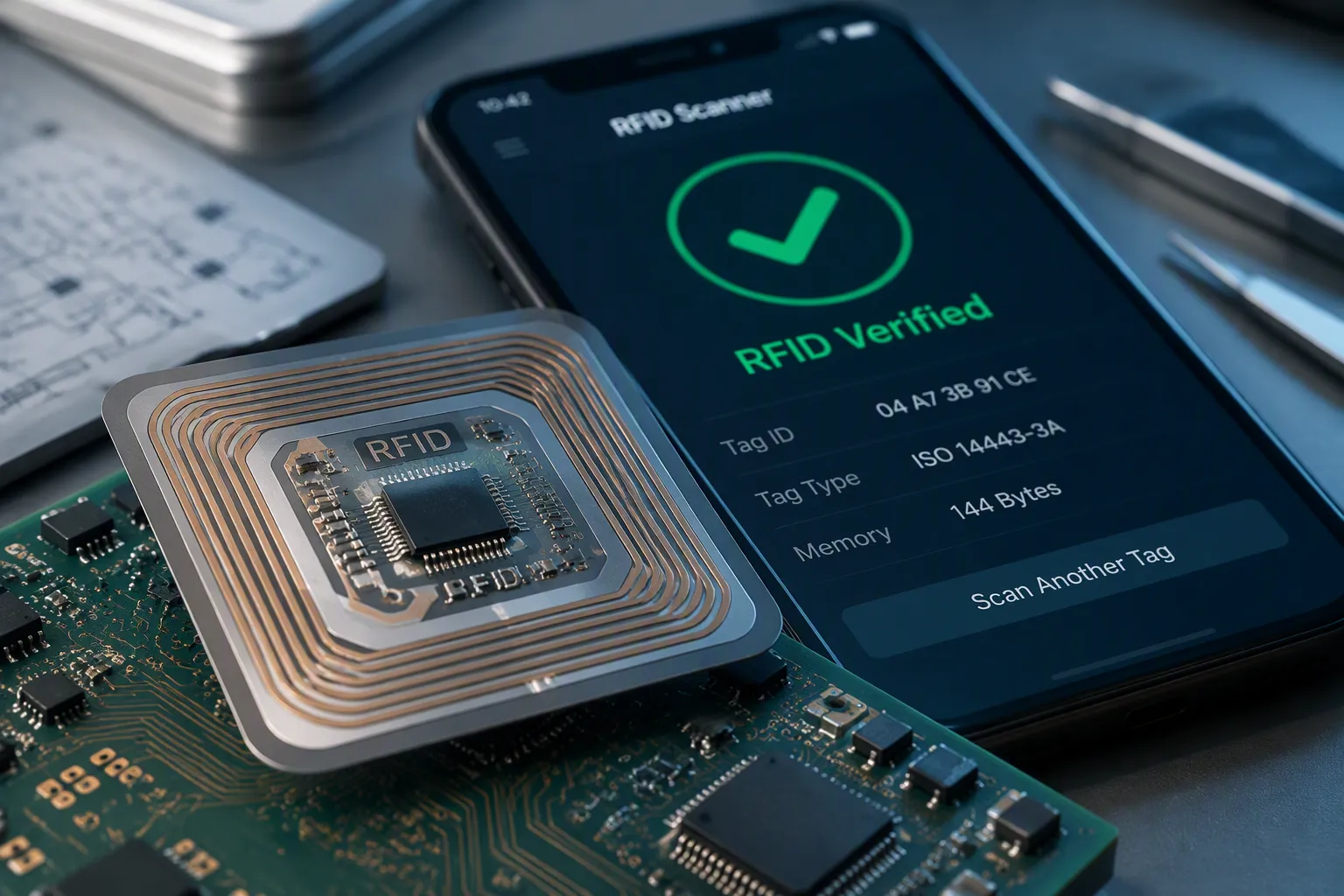
A strong RFID technology manufacturer must combine proven technical expertise, rigorous quality control, relevant certifications, flexible customization, and a reliable supply chain. Industry experts recommend evaluating providers based on five key criteria:
Industry Experience – Providers with proven success in your specific sector understand your unique challenges better than generalists.
Technology Depth – They should offer not just hardware but also ongoing support, training, and system optimization.
Integration Capabilities – The RFID system must work seamlessly with your existing business software; verify this before committing.
Scalability – Choose providers who can scale from a small implementation to a multi-location system as your business grows.
Support Quality – Strong customer support manages the change that RFID brings, making the difference between success and frustration.
Using these criteria, you can systematically compare different strong RFID technology manufacturers.
Key Takeaways
Look for a manufacturer that designs its own products. They should also have experience with multiple frequency bands. This helps them stay flexible and solve problems faster.
Check for international certifications such as ISO 9001, CE, FCC, and RoHS to ensure product quality and market access.
Ask for reports from outside labs and low repair numbers to prove the product is always good and dependable.
Pick a partner that lets you customize products, has low minimum orders for test runs, and can grow production as you expand.
Check how fast they reply and how well they help with technical issues before you agree to work with them for a long time.
Avoid warning signs such as prices that seem too good to be true, unclear details about the product, and weak communication to stop expensive errors.
Begin with a small test order and check the factory to confirm what the maker can do and to build trust.
Technical Capabilities of a Strong RFID Technology Manufacturer
Chip and Antenna Design
In-house vs. outsourced design
You need to know who designs the core parts. Some makers buy standard chips and antennas from suppliers. They put these parts together without any changes. This limits your choices. You cannot adjust read range or power use. You cannot fix interference issues. A strong RFID maker designs its own hardware in-house. This control lets them adjust every part for specific needs.
In-house design also means faster fixes. When a problem shows up in the field, the engineering team knows the whole system. They can find the fault in a specific circuit or antenna trace. They can fix it quickly. Outsourced designs mean waiting for the original designer to reply. That wait costs you time and money. Look for makers who show you their design lab during a factory tour. Ask about their engineering team size and how they design.
Multi-band experience (UHF, HF, NFC)
Your project may need different frequency bands. UHF works for long-range asset tracking. HF handles item-level identification. NFC enables smartphone interactions. A maker with experience in all bands gives you flexibility. You can switch between technologies without changing suppliers. Their engineers know the unique physics of each band. They know how metal affects UHF performance. They know how to tune HF antennas for dense liquid environments. This multi-band knowledge helps you pick the right technology for each use. You avoid costly trial-and-error later.
Inlay Production
Automated production lines
Inlay production needs precision. The antenna must line up perfectly with the chip. Any misalignment lowers performance. Manual assembly adds human error. Automated production lines solve this problem. They place chips with micron-level accuracy. They apply adhesive evenly. They inspect every unit automatically.
Ask about the maker's production equipment. Look for high-speed placement machines and automated inspection systems. Ask about their monthly output capacity. A maker with modern automated lines can handle large orders without quality drops. They also keep consistent quality across millions of units.
Performance testing (read range, sensitivity)
Every inlay should meet specific performance standards. You need to check read range and sensitivity before mass production. Strong makers test each batch thoroughly. They use calibrated readers and standard test environments. They measure read distance at different angles. They test sensitivity across the whole frequency range.
Ask for test reports before placing large orders. A good maker will share these documents willingly. They will also explain their testing methods. This openness shows confidence in their products.
R&D Investment
Custom firmware and prototyping
Your project may need unique firmware features. You might need special data formats or custom commands. A maker with strong R&D can write custom firmware for you. They can also create prototypes quickly. This speed matters when you need to test an idea. Their engineers work with you to build tailored solutions, supporting interface and protocol customization. This level of service helps you bring your product ideas to life faster.
Innovation track record
Check the maker's patent portfolio. Patents show a commitment to innovation. They also protect your investment. A maker with many patents has solved hard problems before. They bring that knowledge to your project. This record shows years of technical growth and deep expertise in RFID technology. When you choose such a maker, you benefit from their gathered knowledge.
Quality and Certifications for a Strong RFID Technology Manufacturer
International Certifications
ISO 9001, ISO 14001
Start by checking for ISO 9001 certification. This standard covers quality management systems. It proves the manufacturer follows written procedures. It shows they track defects and fix problems in an organized way. ISO 14001 covers environmental management. This matters if your company cares about sustainability. Both certifications need regular audits by independent groups. Ask to see the certificates. Make sure they are current, not expired.
A strong RFID technology manufacturer will show these certificates with pride. They will share audit results without any hesitation. If a maker hesitates or makes excuses, treat that as a red flag. Real certifications are public records. You can check them directly through certification bodies.
CE, FCC, RoHS
These certifications affect where you can sell your products. CE marks compliance with European safety and health rules. FCC certification allows sales in the United States. RoHS limits dangerous substances like lead and mercury. Each market has different rules. You need a manufacturer who already meets these standards.
A strong RFID technology manufacturer holds CE, FCC, and ROHS certifications. Their products meet international requirements. This means you can sell their RFID readers and tags in major global markets without re-certification. Ask any manufacturer for copies of these certificates. Check the product models listed on each certificate. Some makers claim certification but only cover a few products.
Local Testing Standards
Chinese mandatory certifications (CCC)
China requires CCC certification for certain products sold domestically. This mark shows compliance with Chinese safety standards. If you plan to sell in China, you need this certification. Even if you sell elsewhere, CCC shows the manufacturer meets strict local requirements. It shows their commitment to quality beyond minimum standards.
Ask about network access licenses too. RFID devices that send radio frequencies need these approvals in China. A strong RFID technology manufacturer holds network access licenses for their products. This approval process involves tough testing of radio performance and interference levels.
Third-party lab reports
Manufacturers can test their own products. But independent checks carry more weight. Third-party labs give unbiased results. They test read range, sensitivity, durability, and environmental resistance. Ask for these reports before choosing a supplier.
Reputable labs include SGS, TÃœV, and Bureau Veritas. Their reports follow international testing standards. You can trust these results because the lab has no stake in the outcome. A manufacturer who shares third-party reports shows confidence in their products.
In-House Quality Control
Incoming material inspection
Quality starts with raw materials. Chips, substrates, adhesives, and antennas must meet specs. A strong manufacturer inspects every incoming batch. They test chip function before production. They check substrate sizes and adhesive properties. This inspection stops bad materials from entering production.
Ask about their supplier approval process. Do they audit their own suppliers? Do they keep approved vendor lists? These practices show a mature quality system.
Process control and final testing
During production, manufacturers should watch key parameters. They check placement accuracy, bonding strength, and antenna alignment. Automated systems can track these numbers in real time. Any problem triggers quick correction.
Final testing happens before packaging. Every unit should get functional testing. This includes read range checks and frequency response tests. A strong RFID technology manufacturer boasts a very low repair rate, demonstrating strong process control and final testing steps. You should ask for similar numbers from any manufacturer you evaluate.
A low repair rate shows strong quality control. Higher rates suggest problems in design, materials, or production processes.
Customization and Flexibility
Label and Packaging Options
Adhesive, material, size selection
Your project may need labels that stick to unusual surfaces. A strong RFID technology manufacturer offers adhesive choices for different materials. You can pick permanent adhesives for long-term asset tracking. You can choose removable adhesives for retail packaging that needs clean removal. Some adhesives work well on glass, plastics, or finished retail packaging. You must match the adhesive to your surface, or the label will fail in the field.
Material selection matters just as much. You can ask for waterproof labels for outdoor use. You can choose temperature-resistant materials for industrial environments. You can even get repeatedly pasteable constructions for temporary applications. Die-cut sizes vary to fit your product dimensions. Specialized antenna patterns help boost performance on challenging surfaces. Full-color custom printing with protective laminates keeps your branding intact in harsh conditions.
Custom printing and encoding
Data encoding adds another layer of customization. You can request UID harvesting, where the manufacturer reads and records each tag's unique identifier. You can specify custom user-memory encoding to store your own data. A reliable maker performs 100% write-verification before shipping. This step confirms every tag contains the correct data. You also get barcode and QR code serialization with sequential numbering. This combination lets you track items with both RFID and traditional barcodes.
Some manufacturers offer a Direct Print & Encode solution. This approach lets you print and encode labels in-house using their integration platform. You control data integrity and serialization yourself. This option works well when you need on-demand label production.
Read Range and Frequency Bands
Adjustable antenna design
Read range depends heavily on antenna design. A manufacturer with in-house engineering can adjust antenna patterns for your specific needs. You might need longer read distances for warehouse tracking. You might need shorter ranges for item-level identification. Adjustable designs let you tune performance without changing the entire tag structure. This flexibility saves you from redesigning your whole system later.
Multi-band support (860-960 MHz, 13.56 MHz)
Different applications require different frequency bands. UHF RFID operates in the 860-960 MHz range for long-distance reading. HF RFID uses 13.56 MHz for near-field applications like access control. NFC also operates at 13.56 MHz and enables smartphone interactions. A manufacturer experienced in both bands helps you choose the right technology. They understand how metal and liquid affect each band differently. This knowledge prevents costly mistakes during deployment.
Minimum Order Quantities
Low MOQ for prototypes
You should test before you commit to large volumes. Many Chinese manufacturers offer low minimum order quantities for prototypes. Some accept orders as small as one piece for custom RFID PCBA products. Sample prices can start around US$1.00 per piece. Prototype turnaround typically takes 5-7 business days. Some manufacturers credit the tooling fee against your bulk order later. This arrangement reduces your initial risk.
Scalable volume for mass production
Once you validate your prototype, you need to scale. Standard custom RFID cards and tags typically require a minimum order of 1,000 to 5,000 pieces for mass production. This range works well for most business launches. A strong RFID technology manufacturer can handle this volume while maintaining quality. They also scale up smoothly as your orders grow. Ask about their monthly production capacity before you commit. You want a partner who can grow with your demand without compromising delivery times.
Supply Chain and Delivery
Raw Material Sourcing
Chip and substrate relationships
Your RFID tags depend on the quality of their raw materials. The chip inside each tag controls its memory and read performance. The substrate, usually PVC or ABS, affects durability and flexibility. A strong RFID technology manufacturer builds direct relationships with authorized chip suppliers. They source authentic ICs from trusted brands like MIFARE, NTAG, Impinj, and Alien. This direct sourcing protects you from counterfeit parts that fail in the field.
Ask any manufacturer about their chip buying process. Do they buy through authorized distributors? Can they show you traceability documents for each batch? A reliable maker keeps full lot traceability. They keep verifiable raw material data sheets for every shipment. This documentation lets you trace any defective tag back to its original materials.
Supplier quality standards
Quality control starts before production begins. A strong manufacturer applies ISO 9001:2015 standards to their entire procurement stage. This certification requires full production traceability and batch-to-batch consistency. Every incoming material must meet written specs before entering the factory.
RoHS compliance also applies to raw materials. All PVC and ABS substrates, inks, adhesives, and inlay materials must be free from hazardous substances like lead, mercury, and cadmium. Incoming Quality Control (IQC) teams audit and test every material delivery. They check substrate dimensions, adhesive strength, and chip function. They reject any batch that fails their standards. This zero-compromise sourcing policy ensures you receive only authentic, legal, and traceable components.
Production Capacity
Monthly output volume
You need to know how many tags a manufacturer can produce each month. This number tells you whether they can handle your order size. A factory with modern automated lines can produce millions of units monthly. Smaller makers might struggle with large orders or face quality drops under pressure.
Ask for their current production capacity and utilization rate. A strong RFID technology manufacturer will share these numbers openly. They will also explain how they scale production during peak seasons. This transparency helps you plan your inventory and avoid supply disruptions.
Typical lead times
Lead time matters for your project timeline. Standard products usually ship faster than custom designs. Prototypes might take 5-7 business days. Mass production lead times vary depending on order size and complexity. Custom printing and encoding add extra days to the schedule.
Ask about their current lead times before placing an order. A reliable manufacturer gives you realistic delivery dates. They also communicate delays early rather than surprising you at the last minute. This honesty builds trust for long-term partnerships.
Logistics and Shipping
Export experience and Incoterms
International shipping involves many decisions. You need to agree on Incoterms before comparing freight quotes. Common options include EXW, FOB, and CIF. Each term assigns different responsibilities for shipping costs and risks. A manufacturer with export experience will explain these options clearly.
Look for makers who export to many countries. This experience means they understand customs paperwork, packaging requirements, and international regulations. They can guide you through the process smoothly. For first orders, courier service reduces coordination effort. For high-volume reorders, air or sea freight offers better cost efficiency. Agree on Incoterms in the commercial invoice to handle customs and VAT properly.
Shipping options and reliability
Your shipping choice affects both cost and delivery time. Courier services like DHL or FedEx deliver quickly but cost more per unit. Air freight balances speed and cost for medium-sized orders. Sea freight offers the lowest cost for large volumes but takes several weeks.
A reliable manufacturer packages products securely for international transit. They use anti-static bags, moisture barriers, and sturdy cartons. They also provide tracking numbers so you can monitor your shipment. This attention to logistics prevents damage and delays.
Always confirm the Incoterm and destination charges before comparing quotes from different manufacturers. Hidden shipping costs can erase your savings from a lower unit price.
Customer Support and Communication

English Fluency and Responsiveness
Dedicated account managers
You need one person who knows your project very well. A dedicated account manager gives you that steady contact. They remember your specs, what you like, and your past orders. You do not have to repeat your needs every time you call. This saves you a lot of frustration.
A strong RFID technology manufacturer gives each client an account manager. That person speaks fluent English. They know technical terms like read range, frequency bands, and antenna gain. They can explain hard ideas in simple words. They also get help from other teams when you need engineering advice or updates on production.
Ask about the account manager's background in your first talk. Do they have technical training? How many clients do they handle at once? A manager with too many accounts cannot give you good attention. Look for someone who knows both the product and your industry.
Response time to inquiries
Time zones cause natural delays between China and your location. A good manufacturer works around this gap. They reply within one business day, often within hours. They also set up calls at times that work for you, even if that means early mornings or late nights.
Test how fast they reply before you order. Send a detailed technical question and see how long they take. Notice if they answer every part of your question or just the easy ones. A full answer shows they read carefully and care about being right. Vague answers mean weak support later.
Technical Support
Application engineering assistance
Your project may need help beyond standard products. Application engineers help you pick the right tag for a metal surface. They tell you where to place readers for the best coverage. They suggest firmware settings for your specific use. This guidance stops costly mistakes when you set up.
A strong RFID technology manufacturer gives pre-sale consulting as part of their service. Their engineers look at your needs and suggest good products. They also provide support for software integration. This support connects the hardware to your existing systems.
After-sales troubleshooting
Problems show up after installation. Tags do not read. Readers lose connection. Data formats do not match your software. A strong manufacturer offers clear troubleshooting help. They write down their return process. They explain warranty coverage in writing before you buy.
Specific Support Offered | |
|---|---|
Warranty Coverage | Covers manufacturing defects; needs clear communication about time, what is covered, and conditions; includes a written return process. |
Troubleshooting Help | Available through 24/7 support by chat and email. |
Technical Guidance | Given as part of full after-sales support. |
Replacement Policy | Free replacements for cards that are defective. |
Account Management | Dedicated account managers for personal service. |
Repair Solutions | Low-cost repair options made for your industry to reduce downtime. |
Ask for their warranty terms in writing. Confirm the return process before you need it. A manufacturer with a written process solves problems faster than one making it up as they go.
Long-Term Partnership
NDA and IP protection
Your project may have special designs or sensitive data. You need legal protection before sharing details. A reliable manufacturer signs Non-Disclosure Agreements without any problem. They also respect your intellectual property rights. They do not use your custom designs for other clients.
Ask about their IP policies in early talks. Do they have experience working with international clients under NDA? Can they show you examples of how they keep things private? A professional manufacturer treats IP protection as normal practice, not a special request.
Willingness to share test reports
Being open builds trust. A strong manufacturer shares test reports freely. They give third-party lab results, batch test data, and quality numbers. They do not hide behind vague claims or marketing talk. This openness lets you check their quality on your own.
A strong RFID technology manufacturer shares their repair rate openly because their process control backs it up. Their low repair rate demonstrates strong process control. Ask any manufacturer for similar data. If they hesitate, doubt their confidence in their own products.
Good after-sales support can help a lot with fixing problems. While these points are important, each business has unique needs that may not fit all. Thinking about your own needs is key to making the right choice.
Red Flags to Avoid

Unrealistically Low Pricing
Hidden costs or inferior components
A quote that sits 30% or more below every other bid for the same specification should trigger your suspicion, not your excitement. That gap rarely means you found a smarter factory. It usually means the manufacturer plans to recover the difference somewhere else. They might swap in cheaper chips that fail under stress. They might use thinner substrates that crack during lamination. They might skip final testing steps to save labor costs. You discover these shortcuts only after your first batch arrives with poor read rates.
Watch for these warning signs during price negotiations:
Price is 30%+ below every other quote for the same specification
Requests unusually high deposit (60-100%) before any sample is approved
Payment requested to a personal bank account, not a company account
Each of these signals points to a different problem. The low price attracts you. The high deposit locks you in. The personal account removes your legal protection. Together, they create a trap that is hard to escape.
Lack of transparency in BOM
A bill of materials (BOM) lists every component inside your RFID tag. A transparent manufacturer shares this document openly. They name the chip brand, the substrate grade, and the adhesive type. They let you verify each part against your requirements.
Red Flag | Supporting Explanation |
|---|---|
Price significantly below all other quotes | Often bait; compensated later by lower quality, extra fees, or non-delivery |
No formal written quotation | Verbal-only quotes leave no basis for dispute if issues arise |
Demanding 100% payment upfront | Removes all buyer leverage; standard terms are 30% deposit / 70% against shipping |
Payment to personal accounts or off-platform | Offers no recourse; corporate T/T or trade assurance provides protection |
Pressure to pay quickly (24-hour validity) | High-pressure tactic to bypass due diligence; legitimate factories don't manufacture urgency |
Refusing quality terms in contract | Signals unwillingness to be held accountable to a standard |
When a manufacturer refuses to share their BOM, ask yourself why. They may hide the use of counterfeit chips. They may substitute lower-grade materials after you approve samples. A written quotation with a detailed BOM protects both sides. Without it, you have no basis for dispute when problems surface.
No Verifiable Certifications
Claims without documentation
Some manufacturers claim ISO 9001 or CE certification but cannot produce the actual certificate. They might show you a scanned copy with a blurry logo. They might say the certificate is "being renewed." These excuses cost you real money when customs rejects your shipment.
Consequence Category | Specific Impact | Supporting Data / Example |
|---|---|---|
Regulatory & Financial | Fines and penalties | 3M fined ~$10M (2020); e.l.f. fined $1M (2019); 35% of companies faced penalties due to expired certifications; global fines reached $19.3B in 2024 |
Supply Chain | Operational disruption | Certified suppliers: 95% on-time-in-full delivery; uncertified: 82%; only 32% of manufacturers conduct monthly compliance checks |
Reputation & Market | Consumer distrust and market barriers | 83% of consumers pay more for ethical sourcing; 25% refuse unethical companies; missing CE/CCC certifications block market entry |
Ask to see the original certificate file. Check the certificate number against the issuing body's database. Verify the product models listed on the certificate match what you plan to buy. A legitimate manufacturer will help you complete these checks.
Vague specification sheets
A vague spec sheet hides more than it reveals. It might list "long read range" without giving exact distances. It might say "high durability" without specifying temperature limits. These vague claims let the manufacturer avoid accountability when their product underperforms.
Demand exact numbers. Ask for read range at a specific power level. Ask for operating temperature with a test report to back it up. A strong manufacturer shares third-party lab results without hesitation.
Poor Communication
Long delays in responding
Time zones already create natural delays between China and your location. A good manufacturer works around this gap. They reply within one business day, often within hours. They schedule calls at times that work for you.
When a manufacturer takes three or four days to answer a simple question, pay attention. That delay signals disorganization. It also predicts how they will handle urgent production issues. A partner who cannot respond quickly during the sales process will not improve after you pay.
Inability to answer technical questions
Your project needs a partner who understands RFID deeply. Ask about antenna tuning for metal surfaces. Ask about read range differences between UHF and HF bands. Ask about firmware customization options. A strong manufacturer answers these questions with specific details.
A weak manufacturer gives vague responses. They say "our engineers will handle that" without explaining how. They avoid technical discussions altogether. This avoidance means they lack the expertise to solve problems when they appear. Choose a partner who engages with your technical questions from the first conversation.
You now have a clear framework for evaluating RFID manufacturers. Use this checklist when comparing options:
Verify in-house design capabilities and multi-band experience
Confirm certifications like ISO 9001, CE, FCC, and RoHS
Request third-party lab reports and repair rate data
Assess customization options, MOQs, and lead times
Test communication responsiveness before committing
The strongest manufacturer excels in every area, not just one. Request samples and conduct a factory audit, either in-person or virtual. Ask for detailed test reports. Then start with a small trial order to verify quality and communication before scaling. This approach protects your investment and builds a foundation for a lasting partnership.
FAQ
What is the typical lead time for a custom RFID tag order?
Prototype orders take 5–7 business days. Mass production lead times vary depending on order size and complexity. Custom printing and encoding add extra time. Your account manager will give you a precise schedule.
Can I test a small quantity before placing a large order?
Yes. You can order as few as one piece for custom RFID PCBA prototypes. Sample prices start around US$1.00 per piece. This lets you validate the design before scaling.
What international certifications do your products hold?
Our products hold CE, FCC, and RoHS certifications. These certifications allow you to sell in major global markets.
How do you customize the read range for my application?
Our in-house engineers adjust antenna patterns to match your specific needs. You can tune for longer or shorter read distances without changing the entire tag structure. This flexibility saves system redesign.
How do you maintain quality across millions of units?
We inspect incoming materials, control processes during production, and test every unit before shipping. Our low repair rate shows strong process control.
Do you provide technical support after installation?
Yes. We offer 24/7 support by chat and email. Dedicated account managers help with troubleshooting. You get complete after-sales assistance.
How do you protect my intellectual property?
We respect your IP rights and do not use custom designs for other clients. Our commitment to innovation ensures your designs remain confidential.
- Next>:Suggest a reliable RFID tag factory for bulk OEM orders

 2026-01-16
 Blogs
Blogs